Mbappe Seizes Another Golden Boot
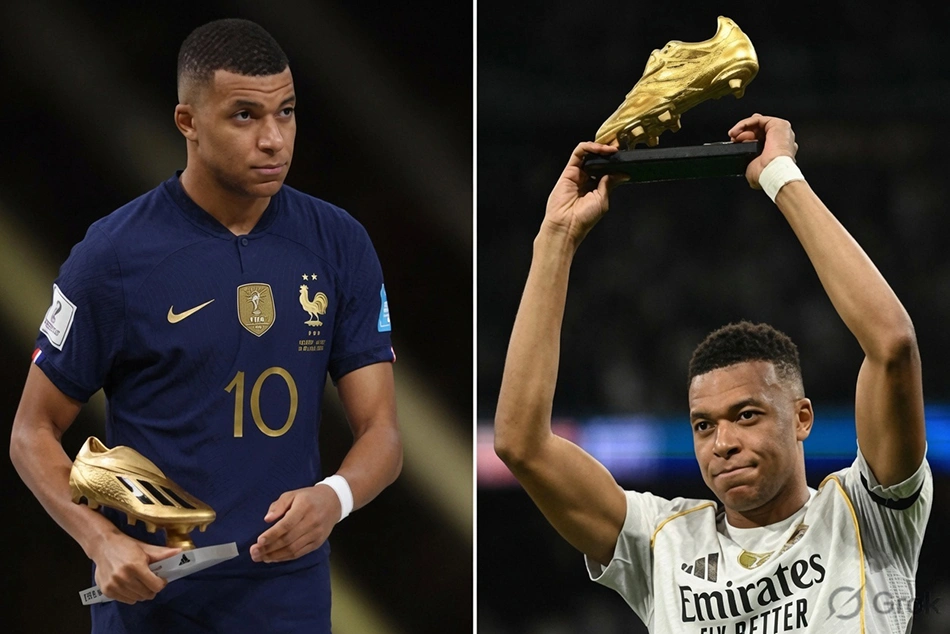
Mbappe Seizes Another Golden Boot
Kylian Mbappe has turned the Golden Boot chase into a familiar ending, but the bigger story is not just his scoring touch. His second top-scorer crown, paired with Spain’s clean sweep of major World Cup honors, points to a tournament that is quietly redrawing football’s power map. The trophy table is not merely decorative. It is a pressure test for elite systems, a spotlight on tactical identity, and a warning to anyone still betting on individual brilliance alone. Mbappe remains the kind of forward who can bend a tournament around himself, but the teams around him are evolving faster than ever. Spain’s dominance in the awards race suggests that technical control, structure, and depth are now as valuable as star wattage. For clubs, federations, and fans, that is the real takeaway.
- Mbappe’s second
Golden Bootreinforces his status as football’s most reliable big-stage scorer. - Spain’s awards sweep underscores the value of system-driven football over isolated star power.
- The tournament highlighted how finishing, control, and squad depth now decide elite outcomes.
- Future international winners may need more than one superstar to dominate the awards table.
Mbappe and the new standard for elite scoring
Mbappe’s second Golden Boot is not just another line on a resume. It is evidence that the modern striker can no longer rely on volume alone. At the top level, scoring is about timing, positioning, repeatability, and the ability to deliver under tactical pressure. Mbappe remains devastating because he combines acceleration with ruthless decision-making. He does not need five chances to punish a defense. Often, he needs one.
That efficiency matters because international football offers fewer opportunities than club football. Tournament matches are compressed, defenses are organized, and margins are thin. A scorer who can stay dangerous even when his team is under strain becomes a strategic advantage, not just a headline.
Mbappe’s value is not just that he scores. It is that he makes every defensive adjustment against him feel incomplete.
Why this Golden Boot feels different
Second-time winners are supposed to prove durability, but this one adds another layer: adaptation. Opponents know Mbappe now. They track his runs earlier, double him wider, and try to cut off the first transition pass. Yet he still finds the spaces that matter. That is what separates elite scorers from temporary sensations.
The broader lesson for teams is clear: speed alone is not the weapon. It is speed paired with timing, support, and a system that creates repeated high-value touches. Mbappe benefits from that environment, but he also elevates it. That mutual relationship is what makes him so difficult to stop.
Spain’s sweep shows how to win the modern tournament
If Mbappe represents the tournament’s most lethal individual performer, Spain represents its most convincing collective answer. Sweeping the major awards is rarely an accident. It usually means a team controlled rhythm, imposed its style, and made every phase of the game look deliberate.
Spain’s success speaks to the current reality of international football: structured possession, press resistance, and coordinated movement are increasingly decisive. The old assumption that one transcendent forward can carry a team through a world event is weaker than ever. Spain’s awards haul suggests that voters, coaches, and the game itself are rewarding coherence.
That matters because award sweeps tend to reflect more than sentiment. They reveal where football believes value lives. For Spain, it appears to live in synchronized buildup, intelligent spacing, and the kind of tactical discipline that turns good players into a dominant unit.
The hidden value of system football
System football does not always produce the most viral highlights. It does, however, produce repeatable success. Spain’s presence at the top of the awards list reinforces a long-standing truth: when a team can control tempo and territory, it reduces chaos and amplifies quality.
For analysts, that means looking beyond scoring charts and into the mechanics of creation. Who progresses the ball? Who dictates pressing triggers? Who keeps the shape stable when possession breaks down? These are the invisible questions that usually decide who walks away with the silverware and the individual prizes.
Teams do not win major tournaments by accident. They win by making their strengths scalable and their weaknesses hard to expose.
What Mbappe Seizes Another Golden Boot says about football now
The phrase Mbappe seizes another Golden Boot is more than a caption-friendly headline. It captures the tension at the heart of modern football: the sport still celebrates individual genius, but only if that genius can survive within a highly engineered team environment.
That balance is changing the way coaches build squads. Instead of stacking talent and hoping it clicks, the best teams are increasingly assembling profiles that fit specific roles. The result is more nuanced football, but also more predictable elite performance. The winners are the teams that can execute repeatedly against different styles of opposition.
Mbappe’s scoring record and Spain’s award dominance together suggest a future where the best players are not just stars. They are nodes in a larger tactical machine. That is not a downgrade. If anything, it makes excellence harder to achieve and more impressive when it appears.
How scouting and recruitment may shift
Clubs watching this tournament should take notes. Recruitment departments have spent years chasing raw output, but the next edge may come from identifying players who can create stable advantages within a system. That means players who press intelligently, recover quickly, and remain effective in compact spaces.
For forwards, the bar is rising too. A striker must now score, yes, but also trigger the press, link phases, and survive against deep, disciplined defenses. Mbappe remains elite because he can dominate in transition, but the overall trend favors complete attackers over one-dimensional finishers.
Why this matters beyond the trophy shelf
Fans often treat award results as a footnote to the main event. They are not. Awards can reveal where the sport is headed. They influence transfer markets, coaching philosophy, sponsorship narratives, and the way young players are developed.
Mbappe’s latest Golden Boot strengthens the case for explosive, high-conversion forwards. Spain’s sweep strengthens the case for technical education, midfield control, and tactical patience. Put together, they sketch a blueprint for the next phase of elite football: players who can create and finish within systems that minimize randomness.
That has real implications for youth development. Academies are likely to keep prioritizing technical security and game intelligence, not just athleticism. The most valuable prospects will be those who can read space quickly and execute under pressure. In a tournament environment, that can be the difference between a promising run and a generational one.
Pro tips for reading award sweeps like a football insider
- Look at role fit: A player’s award often reflects the quality of the system around them, not just individual talent.
- Track chance quality: High-scoring players usually benefit from teams that create repeatable high-value opportunities.
- Watch midfield control: Tournament dominance often starts with who dictates tempo in midfield zones.
- Separate output from influence: The best players do more than score. They shape how the match unfolds.
- Use awards as trend signals: When one style sweeps honors, it often points to the next tactical consensus.
The bottom line on Mbappe and Spain
Mbappe’s second Golden Boot proves he remains football’s most reliable big-match predator. Spain’s awards sweep proves that modern international success increasingly belongs to teams that can control the game before it becomes chaotic. Together, they tell a bigger story about where the sport is going.
The future likely belongs to players who can thrive inside structure and teams that can turn structure into advantage. That is a demanding standard, but it is also what makes elite football compelling. Mbappe can still break a tournament open on his own. Spain, meanwhile, has shown that a coherent system can win the argument more often than a single moment of brilliance.
If you want the clearest snapshot of the modern game, this is it: one unstoppable scorer, one dominant footballing nation, and a tournament that rewards both spectacle and control.
The information provided in this article is for general informational purposes only. While we strive for accuracy, we make no guarantees about the completeness or reliability of the content. Always verify important information through official or multiple sources before making decisions.