Mexico Cartel Violence Displaces Indigenous Families
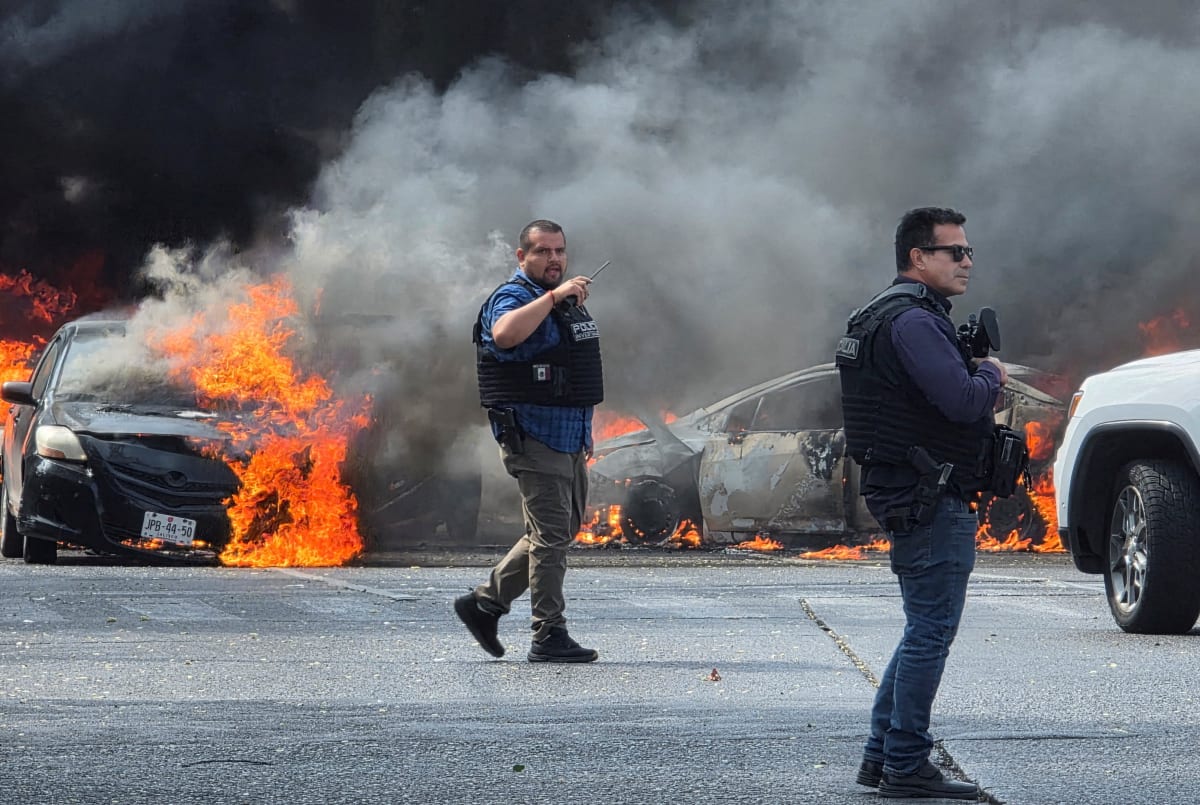
Mexico Cartel Violence Displaces Indigenous Families
When entire Indigenous communities abandon their homes overnight, this is no longer just a security story – it is a test of state legitimacy. The latest wave of Mexico cartel violence in southern Mexico has pushed hundreds of families from their villages, turning remote territory into a front line where criminal groups, weak institutions, and vulnerable civilians collide. For readers trying to understand what this means beyond the headline, the implications are stark: displacement is becoming a recurring feature of organized crime, and Indigenous populations are paying the highest price. What looks like a local conflict is really a national warning sign about governance, impunity, and the limits of military-style security responses that fail to protect people before they are forced to run.
- Hundreds of Indigenous families have reportedly fled escalating attacks linked to cartel and armed criminal activity in southern Mexico.
- These displacements highlight a broader pattern: organized crime is not just trafficking drugs, but reshaping who can safely live on contested land.
- State protection appears inadequate, with communities often left exposed until violence has already triggered a humanitarian crisis.
- The crisis matters beyond Mexico because forced displacement tied to criminal networks is becoming a major regional stability and human rights issue.
Why Mexico cartel violence is triggering a humanitarian emergency
The immediate story is brutal enough: armed attacks, fear campaigns, and mass flight by Indigenous families who no longer believe they can survive in place. But the deeper issue is that Mexico cartel violence increasingly behaves like territorial warfare. Criminal groups are no longer acting only as hidden trafficking networks. In many regions, they operate more like parallel authorities, imposing control through intimidation, targeted killings, road dominance, and forced movement of civilians.
That shift matters because displacement changes everything. Once families flee, they lose homes, crops, income, schooling, and access to healthcare. Communities that spent generations anchored to a specific geography suddenly face the impossible logistics of survival in shelters, temporary camps, or neighboring towns that may already be struggling with poverty and insecurity.
When violence forces civilians to move en masse, the crisis stops being only about crime statistics. It becomes a governance failure measured in empty homes, abandoned land, and broken communities.
Indigenous families are especially vulnerable because many live in isolated areas with limited state presence. Distance from urban centers can mean slower emergency response, weaker media attention, and fewer formal mechanisms to document abuses. In practice, that isolation can become a strategic advantage for armed groups that know they can terrorize communities before authorities react.
How criminal groups weaponize territory
Cartels and allied armed factions often fight over more than drug routes. Rural areas can provide access to transport corridors, mountain cover, local extortion opportunities, and strategic control over roads linking municipalities. Even villages with small populations can sit on land that matters disproportionately to competing groups.
The logic of forced flight
For criminal organizations, driving civilians out can serve multiple purposes. It removes witnesses. It reduces local resistance. It creates a climate of fear that discourages cooperation with security forces. And in some cases, it opens room for control over agriculture, illegal resource extraction, recruitment, or transport routes.
This is why displacement should not be seen as accidental fallout. It can be an intended outcome of violence. That reality changes how governments should respond. Sending security forces after communities have fled may contain headlines, but it does little to reverse the strategic gains armed groups have already made.
Why Indigenous communities face outsized risk
Indigenous populations often hold collective ties to land that are cultural, spiritual, and economic at the same time. Losing territory is not merely a property loss. It can mean the rupture of language, ceremony, food systems, and social structure. That makes the damage from displacement uniquely severe.
There is also a political imbalance at work. Marginalized communities may have fewer formal channels to press for protection, less access to legal aid, and a long history of distrust toward state institutions. If authorities arrive late, or not at all, those communities are left to improvise self-protection against groups with military-grade weapons and established coercive networks.
What this says about the Mexican state
Mexico has spent years cycling through security strategies that promise visible force but deliver inconsistent civilian protection. Troop deployments, national guard operations, and high-profile arrests can generate short-term political wins, yet they often fail to solve the local conditions that let armed groups dominate territory.
The hard truth is that communities do not judge security policy by speeches or arrest counts. They judge it by whether children can walk to school, whether roads are safe after dark, and whether families can sleep without preparing to flee.
If a government can retake a town for a news cycle but cannot keep civilians from being displaced, it has not restored control in any meaningful sense.
This latest displacement crisis reinforces a familiar pattern: the state appears strongest in rhetoric and weakest at the exact moment civilians need preventive protection. By the time families are on the move, the failure has already happened.
The hidden cost of displacement
Coverage of cartel conflict often focuses on body counts, arrests, and dramatic clashes. But forced displacement produces slower, less visible damage that can last for years.
- Economic collapse: families lose harvests, tools, livestock, and local trade networks.
- Educational disruption: children leave schools, sometimes permanently.
- Health deterioration: displaced populations face stress, malnutrition, interrupted treatment, and poor shelter conditions.
- Cultural erosion: Indigenous communities may lose access to sacred sites, communal governance, and traditional livelihoods.
- Legal vulnerability: without documentation or formal support, displaced families may struggle to reclaim homes or land.
These costs rarely stay local. Municipal governments inherit humanitarian pressure. State agencies absorb growing security demands. National politics become more volatile as rural insecurity feeds public anger and distrust. Internationally, repeated displacement incidents can alter how investors, rights groups, and foreign governments assess Mexico’s institutional stability.
Why this matters beyond one region
It is tempting to frame this as another tragic but isolated episode in a country long shaped by organized crime. That would be a mistake. The displacement of Indigenous families under armed pressure captures a broader regional trend: criminal groups are evolving into actors that can reorder daily life, local governance, and population patterns.
That has implications far beyond the immediate victims. If criminal violence can repeatedly depopulate villages with minimal consequence, it sends a message to every vulnerable community in contested areas. It tells them that formal citizenship may offer less protection than geography, luck, or silence.
It also challenges policymakers to stop treating cartel violence exclusively through a law-enforcement lens. This is simultaneously a security crisis, a human rights crisis, and a development crisis. Any response that ignores one of those dimensions will fail the others.
What an effective response would actually require
There is no simple fix, but some priorities are obvious.
Immediate civilian protection
Authorities need rapid, credible protection measures for threatened communities before displacement accelerates. That means not just patrols, but sustained presence, safe evacuation pathways if needed, and direct communication channels residents can trust.
Humanitarian infrastructure
Displaced families need more than emergency shelter. Effective response requires food support, medical access, trauma care, schooling continuity, and legal assistance tied to eventual return or resettlement.
Accountability and local intelligence
Security policy that relies only on large-scale deployments without local trust tends to miss the dynamics that matter most. Investigations must identify who ordered attacks, who profits from territorial control, and whether local officials enabled the violence through corruption, collusion, or neglect.
Indigenous-led recovery
Any durable plan must involve the affected communities in decisions about return, security guarantees, and land rights. Top-down intervention without Indigenous participation risks reproducing the same exclusions that made these communities vulnerable in the first place.
Pro tip for policymakers: if affected communities are absent from the recovery plan, the plan is probably built for appearances, not outcomes.
The editorial bottom line on Mexico cartel violence
The most revealing part of this crisis is not that cartels are violent. That is already known. The more important fact is that they remain capable of forcing entire communities to move, especially those with the least political leverage and the fewest protective buffers. That points to an imbalance of power no democratic state should tolerate.
Mexico cartel violence is often discussed in abstractions: strategy, deployment, sovereignty, pressure, reform. But on the ground, it reduces to a more basic question: who gets to live safely on their own land? In southern Mexico right now, too many Indigenous families know the answer is not them.
If there is any reason for urgency, it is this: displacement tends to normalize fast. Once empty villages become part of the landscape, public attention drifts, institutions move on, and return becomes harder with every passing month. The political system learns to absorb crisis instead of solving it. That is how emergency turns into structure.
And that is why this story deserves more than sympathy. It demands scrutiny, pressure, and a more honest reckoning with what state failure looks like when it reaches the doorstep of Indigenous communities. Not in theory. Not in policy language. In homes left behind because staying became more dangerous than leaving.
The information provided in this article is for general informational purposes only. While we strive for accuracy, we make no guarantees about the completeness or reliability of the content. Always verify important information through official or multiple sources before making decisions.