Mexico Must Seize AI
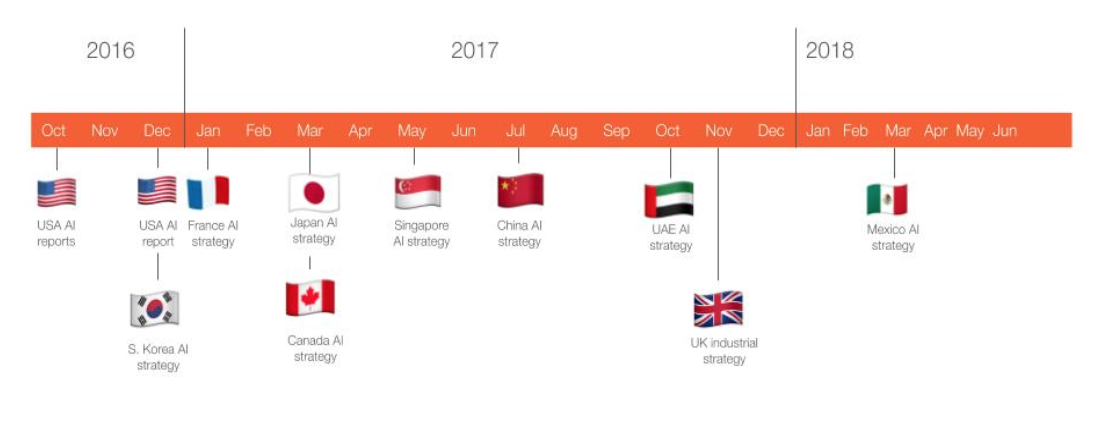
Mexico is standing at a brutal crossroads: let the next industrial shift happen to it, or use it to rewrite the country’s economic power map. The Mexico AI strategy debate is no longer a niche technology conversation. It is now about wages, factories, border politics, national sovereignty, and whether Mexico can move beyond being treated as a low-cost extension of someone else’s supply chain. With Donald Trump’s political movement again shaping the American trade agenda, Mexico faces a familiar pressure campaign. But AI changes the stakes. Automation can hollow out assembly work, but it can also upgrade manufacturing, public services, logistics, agriculture, and education. The countries that win this decade will not be the ones that merely adopt tools. They will be the ones that build institutions around them.
- Mexico needs a national
AIplan that links technology policy to trade, labor, education, and industrial strategy. - Trump-style protectionism raises the urgency for Mexico to diversify economic leverage beyond cheap manufacturing.
AIcan either threaten Mexican workers or upgrade them, depending on public investment and private-sector accountability.- The real opportunity is not replacing people, but making Mexico indispensable in high-value supply chains.
Why the Mexico AI strategy suddenly matters
The old globalization bargain was simple: capital, design, and patents often lived in the United States, Europe, or Asia, while Mexico offered proximity, labor, and manufacturing capacity. That bargain delivered jobs and export growth, but it also trapped parts of the economy in a vulnerable position. When politics in Washington shifts, tariffs, border crackdowns, and renegotiated trade terms can quickly become economic weapons.
AI complicates that relationship. A factory that once competed on wages may soon compete on machine vision, predictive maintenance, robotics integration, and data-driven logistics. A call center that once competed on bilingual talent may be reshaped by large language models. A farm that once depended on seasonal intuition may use computer vision, climate analytics, and automated irrigation.
The central question is not whether
AIreaches Mexico. It already has. The question is whether Mexico becomes a rule-maker, a skilled adopter, or merely a market for tools designed elsewhere.
That distinction matters because AI is not just software. It is infrastructure, data access, energy policy, education reform, cybersecurity, and public trust rolled into one. A serious Mexico AI strategy would treat it as a national capability, not a shiny procurement category.
The Trump factor puts Mexico on a clock
Trump’s political brand has long treated trade with Mexico as a symbol: a border, a factory floor, a threat, a bargaining chip. Whether through tariffs, migration pressure, or supply-chain nationalism, the message is consistent: dependence on the U.S. market can become a vulnerability overnight.
That does not mean Mexico should turn away from North America. Quite the opposite. Nearshoring remains one of Mexico’s biggest advantages. Companies want production closer to U.S. consumers, and Mexico has geographic, cultural, and trade advantages that few countries can match. But nearshoring without technological upgrading is a short-term win with a built-in ceiling.
If Mexican factories simply absorb lower-value work that companies move out of China, the country may gain jobs while missing the larger prize. The next wave of competitiveness will come from pairing manufacturing depth with AI-enabled operations. That includes smarter inventory systems, digital twins, automated quality control, and supply-chain risk modeling.
Mexico cannot compete only on cost
The uncomfortable truth is that low-cost competition is a race that someone else can always undercut. AI makes that race even harsher because routine tasks become easier to automate. If Mexico wants durable leverage, it has to compete on reliability, talent, speed, resilience, and specialized expertise.
That requires a policy shift. Mexico should not merely ask how many factories are arriving. It should ask what kind of capabilities those factories are building locally. Are they training Mexican engineers? Are they sharing technical knowledge with suppliers? Are they investing in regional data infrastructure? Are small and midsize firms gaining access to modern tools, or is the value being captured only by multinationals?
What a serious Mexico AI strategy should include
A credible national plan does not need to mimic Silicon Valley. Mexico does not have to become the next Bay Area to win. It needs to become the best version of itself: a manufacturing powerhouse with stronger public services, better technical education, smarter energy planning, and a more sophisticated digital economy.
- Workforce upgrading: Technical schools and universities should teach practical
AIliteracy, including data analysis, prompt workflows, automation oversight, and cybersecurity basics. - Industrial adoption: Government incentives should reward companies that use
AIto raise productivity while creating higher-skilled jobs. - Public-sector modernization: Carefully governed
AItools can improve tax administration, health triage, fraud detection, permitting, and emergency response. - Data governance: Mexico needs rules for privacy, public data use, algorithmic accountability, and cross-border data flows.
- Regional inclusion:
AIinvestment cannot be limited to elite urban corridors. Southern states and smaller cities need access to training and connectivity.
The risk is that politicians reduce AI to a slogan. A few innovation hubs, a photo op with tech executives, and a national strategy document are not enough. The hard work is boring and administrative: procurement standards, teacher training, broadband reliability, energy capacity, startup financing, and anti-corruption safeguards.
Pro tip for policymakers
Do not begin with abstract promises to become an AI superpower. Begin with five high-value national problems and build measurable programs around them. For example: reduce port delays, improve diabetes screening, cut energy theft, modernize customs processing, and help small manufacturers automate quality control. If AI cannot improve concrete outcomes, the strategy is theater.
The worker question is the moral center
The most dangerous version of the Mexico AI strategy is one that treats workers as an obstacle to efficiency. That would repeat the worst habits of globalization: executives capture productivity gains while communities absorb disruption. Mexico cannot afford that bargain. It would deepen inequality and fuel political resentment.
A better approach is to make workers part of the adoption model. If a factory uses AI to predict machine failures, line workers should be trained to interpret the system. If a logistics company deploys route optimization, drivers should gain safer schedules and higher-value roles. If banks use automated risk scoring, regulators should demand transparency and appeal mechanisms.
AIpolicy is labor policy. Any government that separates the two is already designing failure into the system.
This is where Mexico could lead. Instead of importing a winner-take-all tech culture, it can build a more practical model: productivity with bargaining power, automation with retraining, and innovation with public oversight.
Mexico AI strategy and the sovereignty problem
There is another issue hiding beneath the productivity debate: sovereignty. Most frontier AI systems are developed by a small group of powerful companies outside Mexico. They control models, cloud platforms, chips, and increasingly the operating layer of digital work. If Mexican businesses, schools, hospitals, and agencies become dependent on external systems without domestic capacity, the country trades one form of dependence for another.
That does not mean Mexico should build everything from scratch. That would be unrealistic and wasteful. But it should build enough technical expertise to negotiate well, audit systems, protect sensitive data, and develop localized applications. Spanish-language performance, indigenous-language inclusion, local legal context, and Mexican administrative needs will not automatically be prioritized by global platforms.
The data advantage Mexico is overlooking
Mexico has valuable public and industrial data, but data without governance is a liability. Health data, customs data, agricultural data, mobility data, and energy data could support better decision-making. They could also enable surveillance, discrimination, or corruption if handled badly.
The right path is not open everything or lock everything away. It is to create trusted data systems with clear permissions, anonymization standards, public oversight, and strong cybersecurity. In the AI era, data governance is economic policy.
Why this matters beyond Mexico
Mexico is a test case for middle-income countries facing the same squeeze. The U.S. and China dominate much of the AI conversation. Europe focuses on regulation. But countries like Mexico must answer a harder practical question: how do you use AI to climb the value chain without surrendering control to foreign platforms or sacrificing workers?
The answer will shape migration, wages, trade, and democratic stability. If AI raises productivity while expanding opportunity, Mexico could become one of the most important economic winners of the decade. If it concentrates wealth and automates away ladders into the middle class, it could intensify the very pressures that make politics more volatile on both sides of the border.
Trump-era pressure may feel like a threat, but it also clarifies the stakes. Mexico cannot wait for Washington to become predictable. It cannot rely on cheap labor as a permanent advantage. And it cannot treat AI as an optional upgrade. The country needs a strategy equal to the moment: ambitious, worker-centered, technically literate, and politically honest.
The future of Mexico’s economy will not be decided by AI alone. It will be decided by who controls it, who benefits from it, and whether the country uses this shift to gain leverage rather than lose it. That is the real fight ahead.
The information provided in this article is for general informational purposes only. While we strive for accuracy, we make no guarantees about the completeness or reliability of the content. Always verify important information through official or multiple sources before making decisions.
