Middle East War Updates Expose a Wider Crisis
Middle East war updates are no longer just dispatches from a distant front. They are a live stress test for diplomacy, intelligence, humanitarian response, and media credibility all at once. Every new strike, ceasefire rumor, hostage claim, or retaliatory move changes the political temperature far beyond the battlefield. That is why the latest NPR coverage matters: not because it gives us the comfort of certainty, but because it shows how fragile certainty has become. The conflict is moving fast, the stakes are rising, and the public is being asked to separate verified facts from strategic messaging in real time. That is a brutal ask, especially when civilian lives, regional stability, and global markets are all in play.
- The conflict is increasingly regional, not isolated.
- Verification matters more than velocity in live coverage.
- Civilian harm remains the clearest measure of escalation.
- Diplomacy, energy, and shipping risks now move together.
Middle East war updates are a referendum on credibility
The best live coverage does more than tally casualties or announce strikes. It helps readers understand which claims are confirmed, which are political theater, and which are still being checked. That distinction is now central to the story. In a conflict shaped by drones, missiles, proxy forces, and fast-moving diplomatic back channels, headlines can age out in minutes. A post that is accurate at noon can be incomplete by mid-afternoon. The result is a news environment where the most valuable reporting is often the least dramatic: careful, sourced, and explicit about what is known and what is not.
In a conflict this fluid, the first casualty is certainty. The second is context.
That is why readers should pay attention not only to what is reported, but how it is reported. Does the update distinguish direct observation from official statements? Does it note whether a claim is independently verified? Does it explain the difference between a tactical event and a strategic shift? Those questions separate useful reporting from noise. They also explain why the ongoing stream of Middle East war updates has become a test of institutional trust, not just a record of military developments.
What the Middle East war updates say about the wider conflict
A battlefield that moves across borders
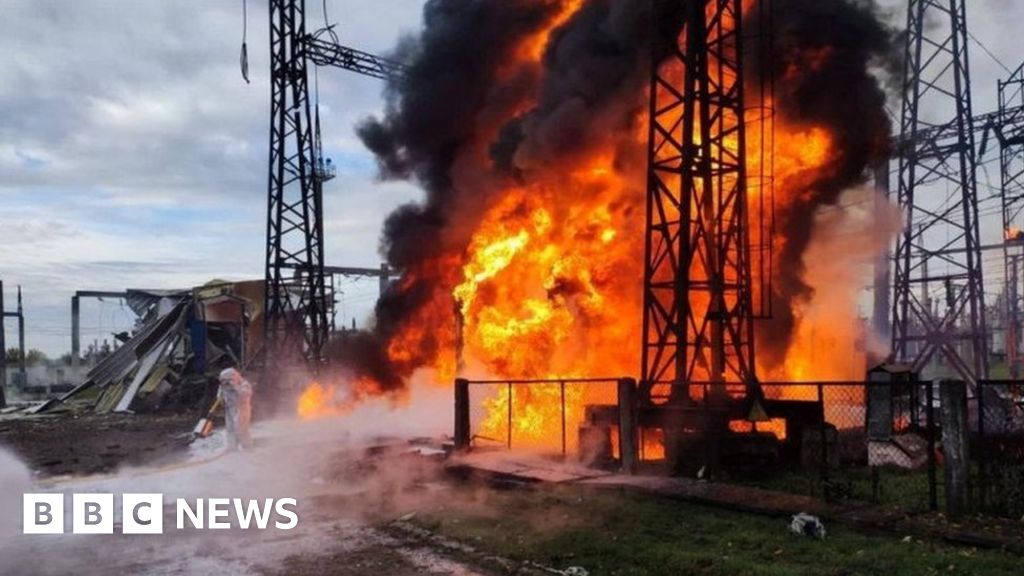
The modern Middle East conflict rarely respects the map. Airspace, sea lanes, cyber infrastructure, and militia networks blur national boundaries. A strike in one place can produce political pressure in another. A diplomatic warning in one capital can affect market behavior thousands of miles away. That is what makes this war so difficult to contain: the battlefield is not only geographic. It is also financial, informational, and psychological. When updates begin to describe retaliation, mediation, and deterrence in the same breath, they are describing a region caught in a looping escalation cycle.
Why this matters: regional spillover raises the odds of miscalculation. One badly read message, one overreaction, or one attack attributed to the wrong actor can widen the conflict before diplomats have time to react.
Civilian pressure is the real headline
Wars are often framed in terms of strategy, but the real story is usually measured in displacement, shortages, trauma, and the collapse of daily life. That is true here as well. Even when the military situation appears momentarily stable, the humanitarian situation can continue to worsen. Hospitals face pressure. Aid routes become fragile. Families move repeatedly. Communications fail. Schools and workplaces shut down. The result is a slow-motion crisis that never fits neatly into a single update, which is exactly why live coverage has to keep returning to the human toll, not treating it as background detail.
There is a temptation, especially among policy watchers, to treat civilian suffering as an unfortunate side effect of a bigger geopolitical game. That frame is not just cold. It is analytically weak. Humanitarian pressure reshapes politics. It affects alliance cohesion, public opinion, and the space available for negotiation. In other words, civilian harm is not separate from strategy. It is part of the strategic environment.
The media challenge behind Middle East war updates
Verification now beats velocity
Speed still matters, but the market for fast news has matured. Readers no longer need another empty timestamp. They need context that earns their attention. That means live blogs and update pages have to do more than refresh. They have to annotate. When an outlet tells you an event is unconfirmed, that is not weakness. It is rigor. In a conflict where misinformation can be weaponized by governments, armed groups, and online networks, careful language is a public service.
Pro tip for readers: watch for updates that separate confirmed facts from interpretation. If a report compresses both into a single sentence, treat it as provisional. If it explains sourcing, timeline, and uncertainty, it is doing the harder and more useful job.
Signal from noise matters more than ever
Live conflict coverage can overwhelm readers with volume. The challenge is not finding information. It is filtering it. The strongest updates help you answer three questions: What happened? Who says so? What changes because of it? If a report cannot answer at least two of those clearly, it is probably more distraction than insight. This is where editorial judgment becomes a competitive advantage. The outlets that resist the urge to dramatize every development tend to produce the most durable understanding.
Readers should reward outlets that slow down enough to get the details right, even when the news cycle demands speed.
That discipline matters because conflict reporting has a long memory. Errors can harden into public belief. In a region already saturated with competing narratives, one sloppy update can travel farther than a corrected one. The better path is transparency. Tell the audience what is verified, what is being investigated, and what remains speculative. That is not just good journalism. It is damage control for the information space.
Why this matters for policy and markets
Middle East war updates are watched closely by diplomats, defense planners, energy traders, humanitarian groups, and ordinary readers who understand that distant conflict rarely stays distant for long. Every escalation carries potential consequences for oil prices, shipping costs, inflation expectations, and alliance politics. Every ceasefire discussion carries its own fragility. The policy challenge is that leaders are often responding to events while the events themselves are still unfolding. That makes caution a strategic asset, not a sign of indecision.
There is also a broader lesson here about how power works now. Military force is only one layer of pressure. Narrative control, alliance signaling, economic leverage, and public patience all matter too. That means the conflict is fought not only with weapons, but with patience, credibility, and the ability to keep coalitions intact long enough to matter.
Three scenarios to watch
- Contained escalation: violence continues, but channels remain open enough to avoid a broader regional break.
- Wider spillover: retaliatory cycles draw in more actors, making diplomacy harder and the humanitarian toll worse.
- Negotiated pause: pressure from allies, publics, and exhausted civilians creates room for a fragile, temporary de-escalation.
None of those outcomes is guaranteed, and all of them can shift quickly. That uncertainty is exactly why live reporting matters. It is not a substitute for analysis, but it is the raw material analysis depends on. Without timely updates, the public is left with stale assumptions. With them, we can at least see the contours of the crisis as they emerge.
The next phase may be political, not just military
The most important question now is not simply whether the fighting intensifies. It is whether the politics around the fighting can catch up to reality. Can mediators turn reactive diplomacy into durable pressure? Can regional powers avoid turning every incident into a prestige battle? Can media consumers demand accuracy without mistaking caution for weakness? Those are not abstract questions. They will shape the next phase of the conflict and the next round of headlines.
Bottom line: Middle East war updates are more than a news feed. They are a window into how modern conflict spreads, how information becomes a weapon, and how quickly the costs of war move beyond the battlefield. The smartest readers will not just skim for the latest strike. They will read for the pattern underneath it.
The information provided in this article is for general informational purposes only. While we strive for accuracy, we make no guarantees about the completeness or reliability of the content. Always verify important information through official or multiple sources before making decisions.