NCAA Five Year Eligibility Rule Shakes College Sports
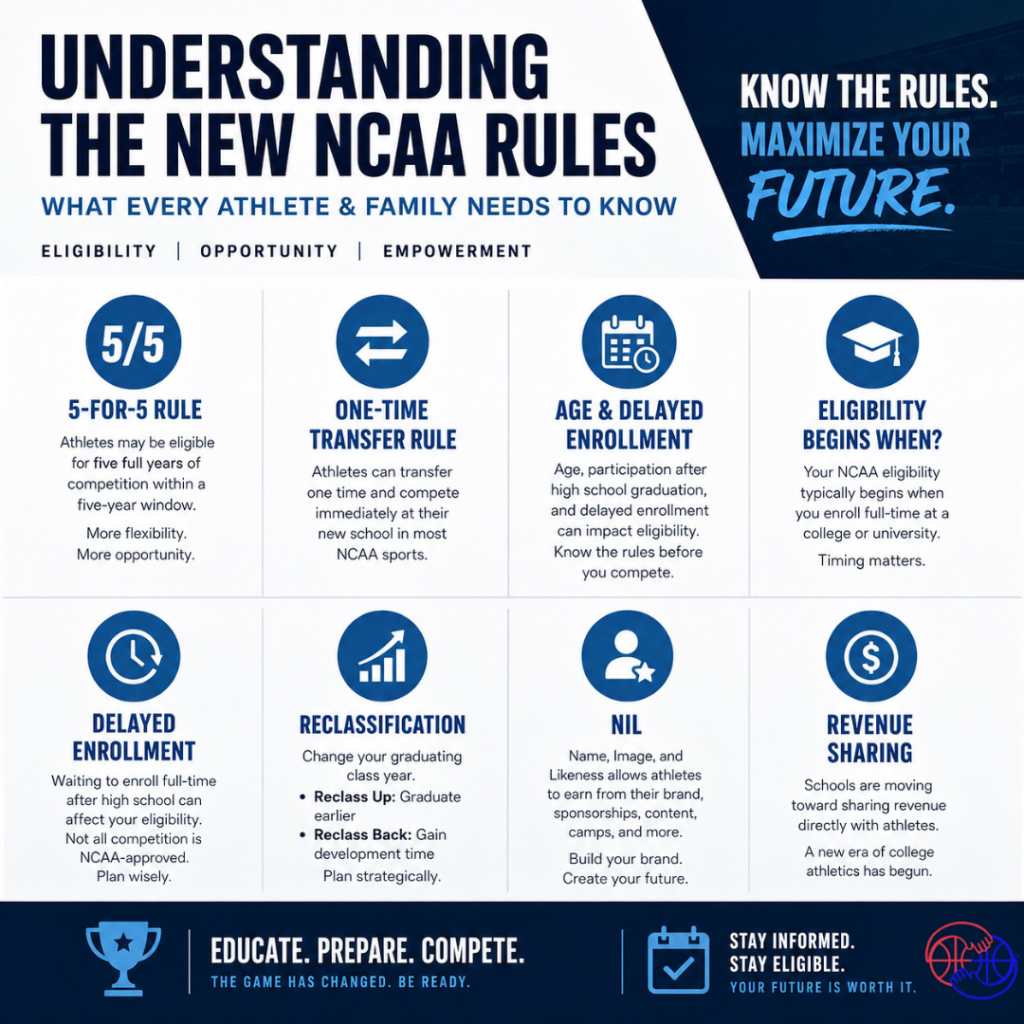
NCAA Five Year Eligibility Rule Shakes College Sports
The NCAA five year eligibility rule is no longer a background compliance detail. It is now a front-line issue shaping roster construction, transfer decisions, redshirt strategy, and the economics of college football and basketball. As player movement accelerates and programs chase every possible edge, the clock is becoming one of the most important variables in the sport. Coaches want flexibility. Athletes want options. Administrators want clarity. The problem is that the current framework often delivers the opposite: uncertainty, calendar pressure, and a growing mismatch between how college sports operate and how the rule was designed to function.
- The NCAA five year eligibility rule can determine when a player must stop competing, even if their development timeline is still unfolding.
- Transfers, injuries, and redshirt years can make the rule feel less like a limit and more like a strategic puzzle.
- Programs now have to plan rosters around the calendar, not just talent and depth charts.
- The rule is becoming more important as athletes move faster through the transfer portal and eligibility windows shrink.
Why the NCAA five year eligibility rule suddenly matters more
The old college sports model assumed a relatively stable path: recruit a player, develop them, and keep them in one place long enough for the system to work. That model has cracked. The modern athlete may transfer multiple times, sit out or redshirt, miss time with injury, or enter a program with a complex academic history. Against that backdrop, the NCAA five year eligibility rule becomes a hard stop that can affect not just an athlete’s final season, but an entire program’s planning cycle.
This matters most because college football and basketball are now built around speed. Coaching staffs are evaluated annually. Roster turnover is constant. Fans expect instant improvement. If a player loses a season to timing rather than performance, the competitive consequences can be severe. A senior leader may disappear before a playoff push. A starting guard may exhaust eligibility just as they hit peak form. A developmental quarterback may never get the runway the staff imagined when they signed him. The calendar, not the depth chart, can become the decisive force.
How the NCAA five year eligibility rule works
At its core, the NCAA five year eligibility rule gives athletes a five year window to compete in four seasons, with redshirt and medical exceptions shaping how that timeline is used. The key detail is the window itself. Once that clock starts, it does not wait for a player to feel ready, recover fully, or find the right system. It keeps moving.
That is where the rule becomes especially tricky. A player can preserve a season under certain circumstances, but the broader five year span still creates pressure. If a student-athlete misses time early because of injury, transfer logistics, or a coaching change, the margin for error shrinks quickly. The result is a rule that is simple on paper and highly consequential in practice.
Redshirts, injuries, and the hidden math
Redshirt strategy used to be a relatively predictable developmental tool. Today it is often a survival mechanism. Coaches may preserve a season for a freshman who is not physically ready, but they must also consider whether that player will have enough time left to matter later. Medical waivers and injury exceptions add another layer of complexity, but they do not eliminate the underlying tension: the athlete’s career is being compressed by a fixed eligibility clock.
That compression creates real decision-making friction. Do you play a banged-up veteran now, knowing a lost season could end their career? Do you hold a promising freshman back, hoping a future year will matter more than the current one? Those questions are more common than ever, and the NCAA five year eligibility rule sits at the center of them.
The transfer portal makes everything harder
The transfer portal has turned roster management into a year-round game of timing, and timing is exactly where the NCAA five year eligibility rule bites. A player who changes schools may gain opportunity, but they may also lose precious time in the process. Even when a move is legally clean, the practical effect can be brutal: fewer practice reps, less development continuity, and a shorter runway to contribute.
For coaches, this creates a new kind of risk. A roster may look deep on paper, but some of that depth is expiration-date depth. One or two seasons can disappear quickly when players are moving between programs. If a coaching staff builds around older transfers, it may inherit talent that is effective now but unavailable soon. If it leans too young, it may lose short-term competitiveness. There is no perfect answer, only tradeoffs.
Expert insight: The transfer era has not eliminated eligibility rules. It has made them more expensive. Every year of lost availability now has a larger competitive and financial cost.
Why this is a roster-building problem, not just a compliance issue
Administrators may treat eligibility as an NCAA paperwork matter. Coaches know better. It is a roster-building variable, a recruiting pitch, and a developmental constraint all at once. If a program misreads the NCAA five year eligibility rule, it can end up with a scholarship tied to a player who cannot contribute long enough to justify the investment. That is not just inconvenient. It is inefficient in a system where scholarships, NIL opportunity, and playing time are all tightly linked.
For power-conference programs, the stakes are obvious. For mid-majors, they may be even sharper. A single experienced player can transform a season. Losing that player to timing rather than talent can collapse an otherwise promising year. In a sport where one or two wins can define a coach’s future, the rule becomes a structural issue, not an administrative nuisance.
Why the NCAA five year eligibility rule is under pressure
The rule is being stressed by forces that did not exist when it was designed. Athletes are training earlier, moving more often, and entering college with more immediate expectations. The combination of year-round recruiting and portal-driven mobility makes a five year clock feel increasingly rigid. The sport is moving toward fluidity while the eligibility framework remains fixed.
There is also a fairness argument building in the background. If a player loses time because of a coaching change, a pandemic disruption, a transfer window, or an injury, should the countdown still be identical? Programs and players increasingly see that answer as outdated. That is why the NCAA five year eligibility rule keeps resurfacing in conversations about reform, player rights, and competitive balance.
What schools are doing now
Smart programs are responding with better internal planning. They are tracking eligibility earlier, building redundancy into key positions, and paying closer attention to class-by-class windows. Some staffs are mapping out multi-year depth charts with the same seriousness once reserved for game plans. That is the reality of modern college sports: the best teams are not just recruiting players, they are managing time.
Here are a few practical moves that matter:
- Audit every roster annually to identify when each player’s eligibility window ends.
- Plan depth charts around the clock, not just around talent grades or recruiting rankings.
- Use redshirt strategy intentionally so development aligns with the five year timeline.
- Track transfer histories early to avoid surprises during spring and fall planning.
- Build position pipelines so a single eligibility exit does not create a crisis.
What it means for athletes
For athletes, the rule is a reminder that opportunity has a shelf life. A player can be improving, productive, and valued, and still run out of eligibility before their arc feels complete. That makes long-term planning essential. Athletes need to understand how injuries, transfers, academic paths, and redshirt decisions affect the full five year window. The more movement in a career, the more important it becomes to treat eligibility as a strategic asset.
This is especially true for players who are still developing physically or adapting to a new system. A rushed debut can burn a season that might have been more valuable later. On the other hand, waiting too long can leave a player with too little runway to cash in on their progress. The best advice is simple: know the calendar before you make the move.
Pro tip: Athletes and families should ask one question before every major decision: “How does this affect the final two years of my eligibility, not just the next semester?”
Could the NCAA five year eligibility rule change
It probably should. The bigger question is whether the NCAA can redesign a rule that is both familiar and increasingly misaligned with the sport. Any reform would need to balance fairness, competitive integrity, and administrative simplicity. That is a difficult triangle. Loosen the rule too much and schools may lose a meaningful structure. Keep it too rigid and the system keeps punishing players for circumstances they do not fully control.
The likeliest future is not a total rewrite but a series of exceptions, clarifications, and case-by-case adjustments. That would reduce some of the harshest outcomes while preserving a general time limit. But partial fixes may not be enough. As player mobility continues to rise, pressure will build for a broader reevaluation of what it means to be “eligible” in a system where careers are increasingly shaped by timing rather than tenure.
The bottom line
The NCAA five year eligibility rule is more than a compliance line in a handbook. It is a competitive force shaping when athletes play, when coaches gamble, and how schools build rosters in an era defined by movement. The rule was built for a simpler version of college sports. That version is gone. What remains is a fast-moving ecosystem where every season matters, every transfer has a cost, and every lost year can alter a player’s future. Until the NCAA adapts, the clock will keep deciding outcomes that talent alone should have settled.
The information provided in this article is for general informational purposes only. While we strive for accuracy, we make no guarantees about the completeness or reliability of the content. Always verify important information through official or multiple sources before making decisions.


