NextGeo Lands Libya Trenching Win
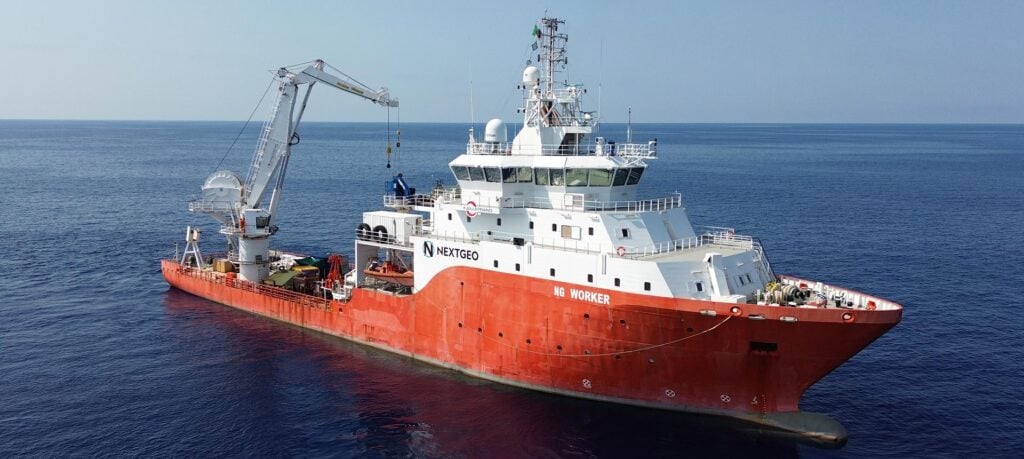
Offshore infrastructure is getting harder to build, not easier. As energy operators push deeper, faster, and under tighter geopolitical and environmental pressure, the companies that can reliably protect subsea assets are becoming just as important as the operators who deploy them. That is why NextGeo trenching Libya matters. It is not just another marine services contract. It is a reminder that the real bottleneck in offshore energy is often not the cable itself, but the trench, the burial depth, and the ability to execute cleanly in a hostile seabed environment.
For Libya, a country with enormous subsea and offshore potential, this kind of project points to a wider shift: the region is steadily trying to turn latent energy ambition into working infrastructure. For NextGeo, it is another proof point that trenching expertise remains a specialized, high-value business in a market where reliability is everything.
- NextGeo trenching Libya shows how subsea cable protection has become mission-critical.
- The project highlights the growing value of offshore installation specialists, not just equipment vendors.
- Trenching is a quiet but essential step in securing energy and telecom infrastructure.
- Libya’s offshore buildout depends on execution quality, not just project announcements.
- This contract reinforces why seabed engineering is becoming a strategic capability.
Why NextGeo trenching Libya matters now
The headline here is simple: NextGeo completed trenching work in Libya. But the larger story is about what that means in the current offshore market. Subsea assets are expensive, vulnerable, and difficult to repair. If a cable or pipeline is not buried correctly, it becomes exposed to anchors, currents, fishing activity, and long-term seabed movement. That can turn a capital project into a maintenance nightmare.
In that context, trenching is not a back-office task. It is one of the core defense layers for offshore infrastructure. The job requires precise positioning, specialized vessels or remotely operated systems, and a keen understanding of seabed conditions. One bad pass can compromise the entire route.
Trenching is one of those invisible engineering disciplines that only gets attention when it fails. The best work is the work nobody notices later.
That is why NextGeo trenching Libya is strategically relevant. It suggests that operators in the region are prioritizing durability, not just deployment speed. In today’s offshore economy, that is a smarter bet than racing to lay assets and fixing them later.
What trenching actually does in subsea projects
For readers outside marine engineering, trenching is the process of creating a controlled groove in the seabed so that a cable or pipeline can be laid and protected. The objective is straightforward: reduce exposure and improve long-term integrity. But the execution is highly technical.
The method used depends on the soil composition, water depth, current intensity, and the asset itself. Clay, sand, rock, and mixed seabeds all behave differently. A trench that works in soft sediment may be ineffective or prohibitively slow in harder ground. That means the contractor must adapt tools and methods continuously.
Common trenching methods
- Jet trenching uses high-pressure water to fluidize sediment and allow burial.
- Mechanical trenching uses cutting or digging tools for harder seabeds.
- Ploughing can bury cable in a single pass where conditions permit.
- ROV-assisted systems provide inspection and intervention support in complex environments.
Each of these approaches carries tradeoffs in speed, cost, and precision. The operator’s job is to balance those variables without compromising protection depth or route stability.
The business case behind subsea burial
There is a reason trenching contractors continue to win work even in a volatile offshore market: protection saves money. A buried cable is less likely to be damaged. A less damaged cable is less likely to go offline. And every avoided outage protects both revenue and reputation.
For energy operators, the math is blunt. Repairing subsea infrastructure can be extraordinarily expensive, especially when weather windows are narrow and mobilization costs are high. The original trenching budget may feel painful at the procurement stage, but it is usually far cheaper than emergency intervention later.
That cost logic is especially important in regions like Libya, where infrastructure development must navigate not only engineering constraints but also broader investment risk. High-quality contractors help de-risk the buildout by reducing the chances of expensive rework.
In offshore projects, the cheapest line item is often the one that prevents the most expensive failure.
NextGeo trenching Libya therefore reads as a confidence signal. It shows that the market still rewards specialist competence, and that execution quality remains a differentiator in a sector where many players sell access, but fewer can guarantee outcomes.
NextGeo’s role in a tightening offshore market
NextGeo is operating in a sector where the competitive advantage is increasingly about specialization. Generic marine services are not enough. Operators want contractors that can handle complex seabed conditions, compress schedules, and maintain quality under pressure. That is exactly where trenching and burial providers stand out.
As offshore networks expand, the industry is seeing a convergence of energy, telecom, and security priorities. Subsea cables are no longer just about transmitting power or data. They are strategic infrastructure. That elevates the importance of burial work, route protection, and environmental assessment.
The companies that can perform all three with discipline are the ones likely to win repeat work. For NextGeo, completing trenching in Libya suggests both technical readiness and commercial positioning. It is one project, yes, but it also slots into a broader narrative: the offshore services market is rewarding firms that can reduce execution risk in fragile environments.
Why specialist contractors keep winning
- They bring repeatable field experience, not just equipment.
- They understand seabed variability and route constraints.
- They can adapt to weather, logistics, and survey data in real time.
- They reduce the likelihood of costly post-installation repairs.
Libya’s offshore ambitions need this kind of execution
Libya’s offshore future depends on more than reserves and headlines. It needs dependable engineering execution. That means survey work, environmental planning, vessel coordination, and the unglamorous but essential process of protecting installed infrastructure.
Projects in markets like Libya often face a more complicated operating environment than similar jobs in mature offshore basins. Logistics can be constrained. Supply chains can be fragile. Program timelines can shift. In that setting, contractors with deep technical discipline are not a luxury. They are a requirement.
This is where NextGeo trenching Libya becomes more than a project update. It becomes evidence that offshore development can move forward when a capable contractor can deliver the difficult middle steps between design and commissioning. Many projects look viable on paper. Fewer survive the reality of seabed conditions and field execution.
If Libya wants to scale offshore capacity, trenching, burial, and route protection need to be treated as strategic infrastructure work, not supporting tasks. That mindset shift is essential if the country wants to attract serious capital and maintain long-term asset performance.
What this means for the wider subsea industry
The bigger takeaway is that subsea infrastructure is entering a more mature, more defensive phase. The industry is less interested in raw buildout and more interested in resilience. That includes deeper burial standards, better route planning, and stronger inspection cycles.
We are also seeing a push toward integrated service models. Operators want fewer handoffs, tighter reporting, and clearer accountability. That benefits contractors who can combine engineering know-how with field execution. Trenching is no longer just a niche. It is part of a broader lifecycle strategy for critical assets.
Looking ahead, several trends could make this space even more important:
- More subsea power corridors will require secure burial and route protection.
- Telecom expansion will continue to depend on resilient cable installation.
- Energy transition projects will push more infrastructure into crowded coastal zones.
- Geopolitical risk will increase the need for durable, low-maintenance assets.
That is why trenching companies are becoming more strategically relevant than they were a decade ago. Their work sits at the intersection of engineering, economics, and resilience.
The bottom line on NextGeo trenching Libya
NextGeo’s Libya project is a useful reminder that the offshore sector runs on invisible expertise. Trenching may not grab headlines the way a new field discovery does, but it is often the difference between infrastructure that lasts and infrastructure that leaks value.
For NextGeo, the job reinforces a core market truth: in subsea work, trust is built through execution. For Libya, it signals progress toward a more robust offshore base. And for the wider industry, it underlines a simple but important lesson: if you want critical infrastructure to survive the sea, you have to bury it right the first time.
NextGeo trenching Libya is more than a contract win. It is a case study in how technical precision quietly shapes the future of offshore energy.
The information provided in this article is for general informational purposes only. While we strive for accuracy, we make no guarantees about the completeness or reliability of the content. Always verify important information through official or multiple sources before making decisions.