Nolan’s Odyssey Bets Big on Translation
Nolan’s Odyssey Bets Big on Translation
Christopher Nolan has turned adaptation into a high-wire act, and Odyssey may be his most audacious gamble yet. The film is not just another prestige swing at a canonical text. It is a test of whether modern blockbuster filmmaking can handle something that Hollywood usually smooths over: language. When translation becomes part of the story rather than a hidden production step, the stakes change. Suddenly, casting, performance, audience expectations, and even the politics of authorship collide in the same frame. That makes this more than a movie-news curiosity. It becomes a signal about where big-budget cinema is headed, and whether studios are finally willing to let complexity survive the trip to the multiplex.
Odysseyputs translation at the center of a major studio conversation.- The project raises fresh questions about authenticity, performance, and global audience access.
- Christopher Nolan is using scale to challenge a long-standing Hollywood habit of flattening language.
- The film could reshape how prestige blockbusters think about source material and subtitles.
Why Odyssey Matters Now
Big-budget cinema has spent decades treating translation as invisible infrastructure. If a film crosses borders, the industry usually assumes someone, somewhere, will make the language problem disappear. But Odyssey suggests a different model: one where linguistic friction is not a bug, but a feature. That matters because audiences are more globally literate than studio executives often admit. They stream subtitled series, follow international stars, and accept multilingual storytelling when it feels deliberate rather than apologetic. Nolan, who has built a career on making complexity feel like an event, is uniquely positioned to bring that sensibility to a mythic narrative already defined by travel, displacement, and translation across time.
There is also a commercial reality here. Prestige films are increasingly expected to do double duty: earn awards credibility and function as global entertainment products. That tension usually produces compromise. The risk with Odyssey is not that it will be hard to understand. The risk is that Hollywood will sand down what makes it interesting in the first place. If Nolan preserves linguistic texture, the film could become a blueprint for how studios handle culturally loaded stories without flattening them into generic English-language export goods.
Translation is not a post-production afterthought anymore. For ambitious filmmakers, it is now part of the storytelling architecture.
The Nolan Effect on Odyssey
Christopher Nolan has a history of making formal constraints feel like artistic advantages. He likes systems, clocks, rules, and structures that force an audience to pay attention. That approach fits Odyssey almost too well. Homer’s epic is built on journeys, interruptions, returns, deception, and the instability of identity. It is already a story about what happens when people move between worlds and lose the comfort of a single fixed language.
Nolan also understands scale as a narrative weapon. He does not merely stage spectacle. He uses scale to make viewers feel the weight of time, distance, and consequence. That is why an adaptation of Odyssey can do more than offer a familiar myth with modern visuals. It can turn translation itself into dramatic tension. Who understands whom? What gets lost when a line moves from one language to another? Who controls the meaning of the story? Those are not niche academic questions. They are the engine of the movie.
What makes this adaptation unusually risky
Hollywood often believes that accessibility equals wisdom. But accessibility can become a trap when it strips away the specific qualities that made a story worth adapting. Odyssey may need to resist that impulse. If the film leans too hard toward simplification, it loses intellectual edge. If it leans too hard into fidelity, it risks alienating mainstream viewers who want momentum, not a lecture.
The real challenge is not whether the audience can follow the plot. It is whether the audience will accept a movie that asks them to listen differently. That is a much bigger ask than it sounds. It means trusting subtitles, foreign accents, multilingual exchanges, and moments where comprehension is incomplete but emotion remains clear. Nolan has the cachet to try this. Whether Hollywood will let him go all the way is another question.
Translation as Creative Strategy
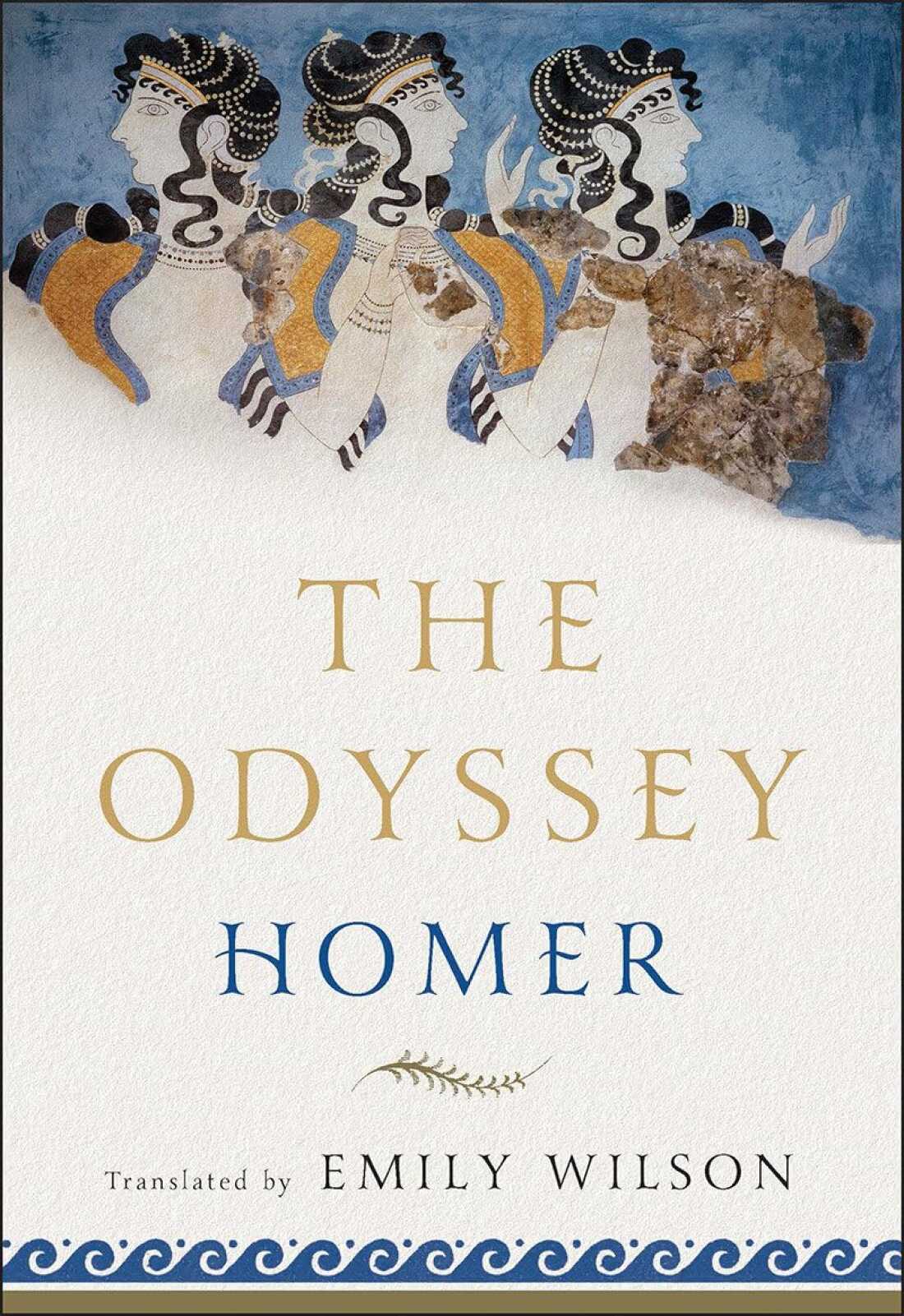
There is a tendency to treat translation as a technical service, the cinematic equivalent of plumbing. But translation is also interpretation, and interpretation is power. Whoever translates controls emphasis, rhythm, tone, and, in subtle ways, ideology. If Odyssey foregrounds that dynamic, it could force viewers to confront how much of any epic depends on mediation. Homer himself is already a mediated figure, preserved through centuries of retelling, editing, and reimagining. Nolan is simply making the mediation visible.
That visibility matters because audiences are increasingly sensitive to authenticity claims. Viewers want historical fidelity until they do not. They want cultural texture until it slows the pace. They want global stories, but only if those stories feel familiar enough to stream on a Friday night. Odyssey sits directly inside that contradiction. If Nolan can make translation feel dramatic rather than academic, he will have found a way to turn a common production challenge into a core selling point.
- Pro tip: When filmmakers use subtitles strategically, they can preserve tone without overexplaining the scene.
- Pro tip: Multilingual dialogue works best when it changes power dynamics, not just realism.
- Pro tip: Letting some meaning remain partial can increase emotional intensity rather than reduce it.
Why this matters beyond one film
If Odyssey succeeds, the ripple effects could reach far beyond Nolan’s filmography. Studios may become more willing to finance movies that reflect linguistic reality instead of pretending the world conveniently speaks one language. That could open the door to more ambitious adaptations, more international casting, and more stories that trust audiences to keep up.
There is also a business incentive hiding inside the artistry. Global audiences are not monolithic, and the fastest-growing premium content often comes from outside Hollywood’s traditional English-only assumptions. A film that treats translation as a strength can tap into that reality while still feeling premium. The future of blockbuster storytelling may not be louder effects or bigger IP alone. It may be smarter handling of cultural specificity.
What To Watch For in Odyssey
The most revealing parts of the film may not be the biggest battle scenes or the most expensive set pieces. They may be the quieter choices: when the film switches languages, when it subtitles instead of simplifying, when it lets a character misunderstand something important, and when it forces the viewer to sit with that uncertainty. Those decisions will tell us whether Nolan is making a faithful adaptation or a more radical claim about how epics should be told in 2026.
If the movie takes translation seriously, it will likely do three things well. First, it will treat language as character, not decoration. Second, it will make comprehension part of the emotional arc. Third, it will resist the lazy studio instinct to explain everything twice. That last one is crucial. Overexplaining kills momentum and insults the audience. Nolan usually knows that. The question is whether the scale of Odyssey will tempt the machinery around him to play it safe anyway.
Great adaptation is not about making old stories easier. It is about making them newly legible without draining their difficulty.
The Bigger Industry Signal
Odyssey arrives at a moment when the film industry is desperate for durable event movies, but also increasingly aware that audiences are fragmented, international, and less patient with formula. That combination creates a narrow lane for prestige blockbusters: they must feel familiar enough to justify the budget, yet distinctive enough to stand out. Translation, oddly enough, may be one of the few creative tools that can do both.
That is why this project is worth watching even if you are not normally interested in literary adaptation chatter. It speaks to a larger shift in how Hollywood defines scale. Scale is no longer just about visual effects or star power. It is about how much complexity a studio believes a mass audience can handle. If Nolan proves that language can be part of the spectacle, not an obstacle to it, Odyssey could become a template for smarter blockbusters.
The industry’s next great breakthrough may not be a new camera system, a new franchise model, or another multiverse. It may be the simple, stubborn idea that audiences can handle a film that refuses to flatten the world into one voice.
Bottom line: Odyssey is more than a marquee adaptation. It is a challenge to Hollywood’s instinct to simplify, and a bet that translation can be cinematic, commercial, and genuinely thrilling at the same time.
The information provided in this article is for general informational purposes only. While we strive for accuracy, we make no guarantees about the completeness or reliability of the content. Always verify important information through official or multiple sources before making decisions.