Norway Pushes Arctic Drilling
Norway Pushes Arctic Drilling
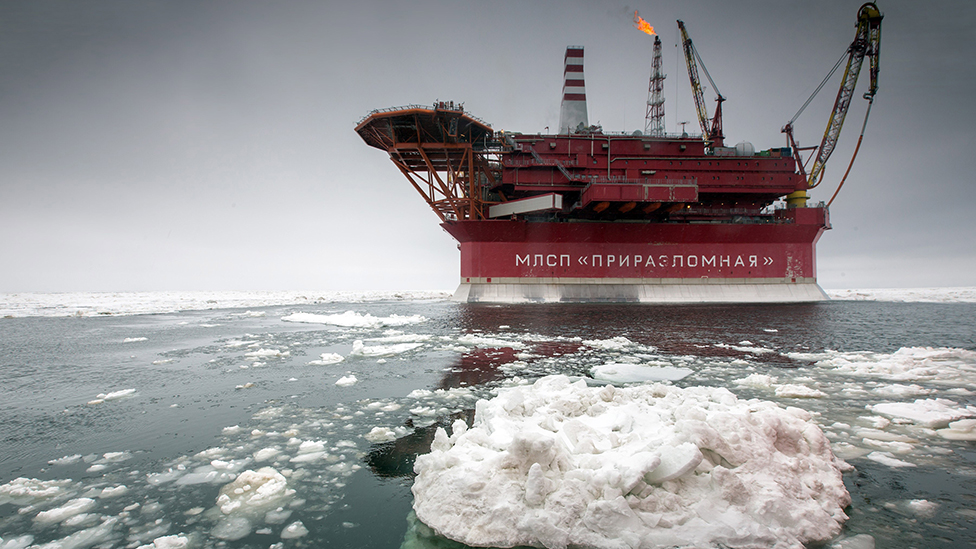
Norway is once again betting that the Arctic can still pay off – even as Europe tries to reconcile energy security with climate commitments. That is a high-stakes move, because the region has become a proxy battle for the future of fossil fuels: keep drilling to stabilize supply, or slow down and accelerate the transition away from oil and gas. For policymakers, the tension is immediate. For energy markets, it is expensive. For climate advocates, it is infuriating. And for Norway, the decision could define whether its offshore sector remains a strategic asset or becomes a stranded bet on a shrinking model. The debate around Arctic drilling is no longer about geology alone. It is about geopolitics, revenue, infrastructure, and how far Europe is willing to tolerate fossil fuel expansion while chasing decarbonization.
- Norway is signaling continued interest in Arctic drilling despite stronger European energy transition pressure.
- The move underscores Europe’s unresolved conflict between energy security and climate policy.
- Arctic projects bring higher costs, harsher operating conditions, and greater environmental risk.
- The decision could shape Norway’s long-term fiscal strength and the region’s energy future.
Why Arctic drilling still matters
Norway is one of Europe’s most important energy suppliers, and its offshore sector remains central to national income, jobs, and industrial capacity. That makes any expansion in the far north more than a technical decision. It is a strategic statement. The Arctic drilling push suggests Oslo is not ready to treat the region as off-limits, even as the continent talks harder about reducing fossil fuel dependence.
There is a reason companies keep circling the Arctic: if the reserves are commercially viable, they can extend the life of a mature petroleum system. But viability is doing a lot of work here. Arctic operations are costly, weather-sensitive, and logistically complex. Every kilometer of pipeline, every support vessel, every maintenance cycle gets more expensive as the operating environment becomes more hostile. That means the economics depend on sustained high prices, predictable policy, and enough investor patience to tolerate long development timelines.
The uncomfortable truth is that Arctic drilling survives when policy uncertainty meets energy anxiety. It is as much a political project as it is an industrial one.
The EU energy dilemma is still unresolved
Europe has spent years trying to reduce its exposure to imported energy shocks, especially after repeated crises exposed how fragile supply chains can be. Norway has benefited from that reality. As the bloc pushes harder toward electrification, renewables, and lower-carbon fuels, it still depends on stable gas and oil flows in the near term. That contradiction sits at the center of the latest debate.
For the EU, the problem is not just where energy comes from, but how quickly alternatives can scale. Grid upgrades lag. Industrial demand remains stubborn. Consumers still want affordable heating and transportation. That leaves governments in a bind: if they move too fast away from fossil fuels, they risk price spikes and political backlash. If they move too slowly, they lock in more emissions and delay the transition.
That is why Norway’s Arctic ambitions matter beyond national borders. They expose a broader European pattern: decarbonization is the destination, but hydrocarbons are still the bridge. And bridges, by design, are not meant to last forever.
The business case for Arctic drilling
The business logic behind Arctic drilling rests on a few familiar assumptions. First, remaining reserves in mature basins are harder to access, which can increase the relative value of frontier exploration. Second, countries with stable institutions and strong offshore expertise can attract capital even in a skeptical market. Third, when global supply gets tight, projects that once seemed marginal can suddenly become strategic.
Still, this is not a cheap bet. Operators must manage ice, darkness, remoteness, and spill-response complexity. Those risks affect insurance, financing, and public perception. They also raise a practical question: if the world is serious about emissions cuts, how long will high-cost oil and gas remain economically rational?
That question matters because capital markets are not as forgiving as government rhetoric. Investors now screen projects through climate risk, regulatory risk, and transition risk. A field that looks attractive on a spreadsheet can become toxic if timelines stretch, permits slow down, or carbon policy tightens. So when Norway signals further Arctic development, it is effectively arguing that the market still values resilience over restraint.
What makes these projects hard to ignore
There are three reasons the Arctic remains compelling despite the risks:
- Resource potential: frontier basins can still hold meaningful reserves.
- Strategic leverage: domestic production reduces reliance on more volatile suppliers.
- Industrial continuity: existing offshore expertise can be reused, preserving jobs and infrastructure.
That combination explains why Arctic development keeps resurfacing even in an era of climate pledges. Energy systems change slowly, and the companies that can operate in the harshest environments often get a longer runway than critics expect.
Climate pressure is not going away
If the economic case is stubborn, the climate case is even more direct. New fossil fuel development in sensitive regions is increasingly hard to square with long-term emissions targets. Arctic ecosystems are fragile, and spill recovery is far more difficult in ice-covered or remote waters than in temperate regions. The reputational stakes are significant too. A major incident in the far north would not just be an operational failure – it would become a symbol of everything critics say is wrong with continued fossil fuel expansion.
There is also a broader policy contradiction. Governments often say they support climate leadership while backing new extraction. That gap has become harder to defend as clean energy technologies get cheaper and more scalable. Solar, wind, battery storage, and electrification are not abstract aspirations anymore. They are industrial realities. The more those technologies mature, the more any fresh push into Arctic drilling looks like a short-term hedge against a long-term correction.
Norway’s choice is not simply about extracting more oil and gas. It is about deciding whether its energy identity is still anchored in extraction or gradually shifting toward managed decline.
Why this matters for markets and policy
Norway’s move sends a signal to three audiences at once. To energy markets, it says supply discipline is not guaranteed, especially if demand stays firm. To European policymakers, it says security concerns can still override climate rhetoric when prices rise or supply tightens. To other producing nations, it says frontier basins are not dead, merely harder to justify.
For policymakers, the key issue is sequencing. A successful transition requires enough reliable energy to keep economies running while cleaner systems scale. But every new fossil project risks becoming an excuse to delay that transition. That is the policy trap. It is also why decisions around Arctic development attract outsized attention: they reveal whether governments are planning for a managed exit from hydrocarbons or quietly extending the status quo.
For businesses, the lesson is equally blunt. Energy strategy now needs to account for scenario volatility. That means companies must stress-test projects against lower demand growth, stricter emissions rules, and faster clean-tech adoption. A project that only works under best-case assumptions is not a strategy. It is a gamble.
What to watch next
The next phase will likely hinge on permits, investment signals, and how aggressively European capitals continue balancing supply security against climate credibility. Watch for three indicators.
- Regulatory signals: any change in licensing rules, environmental reviews, or exploration timelines.
- Investor behavior: whether capital remains available for long-duration Arctic assets.
- EU policy shifts: how quickly the bloc can reduce gas dependency without triggering price shocks.
There is also a reputational test ahead. If Arctic projects proceed, Norway will have to defend them not just as profitable, but as responsible. That will be difficult in a political environment where every new fossil project is scrutinized against climate goals. Still, Norway has built its energy credibility on competence and predictability, and that gives it room to argue that managed production is better than chaotic dependence on less stable suppliers.
The bigger picture
Arctic drilling is becoming a referendum on the pace of transition. Supporters see a pragmatic hedge in an unstable energy world. Critics see a delay tactic dressed up as strategy. Both views contain a kernel of truth. The region still offers value, but the price of extracting it is rising – economically, politically, and environmentally.
That is why the story matters now. Europe cannot fully escape fossil fuels overnight, but neither can it keep pretending that every new barrel or cubic meter is harmless just because it is domestic or reliable. Norway’s Arctic plans force that contradiction into the open. And once it is there, it is much harder to ignore.
The information provided in this article is for general informational purposes only. While we strive for accuracy, we make no guarantees about the completeness or reliability of the content. Always verify important information through official or multiple sources before making decisions.