NYC Office Conversions Signal a New City Playbook
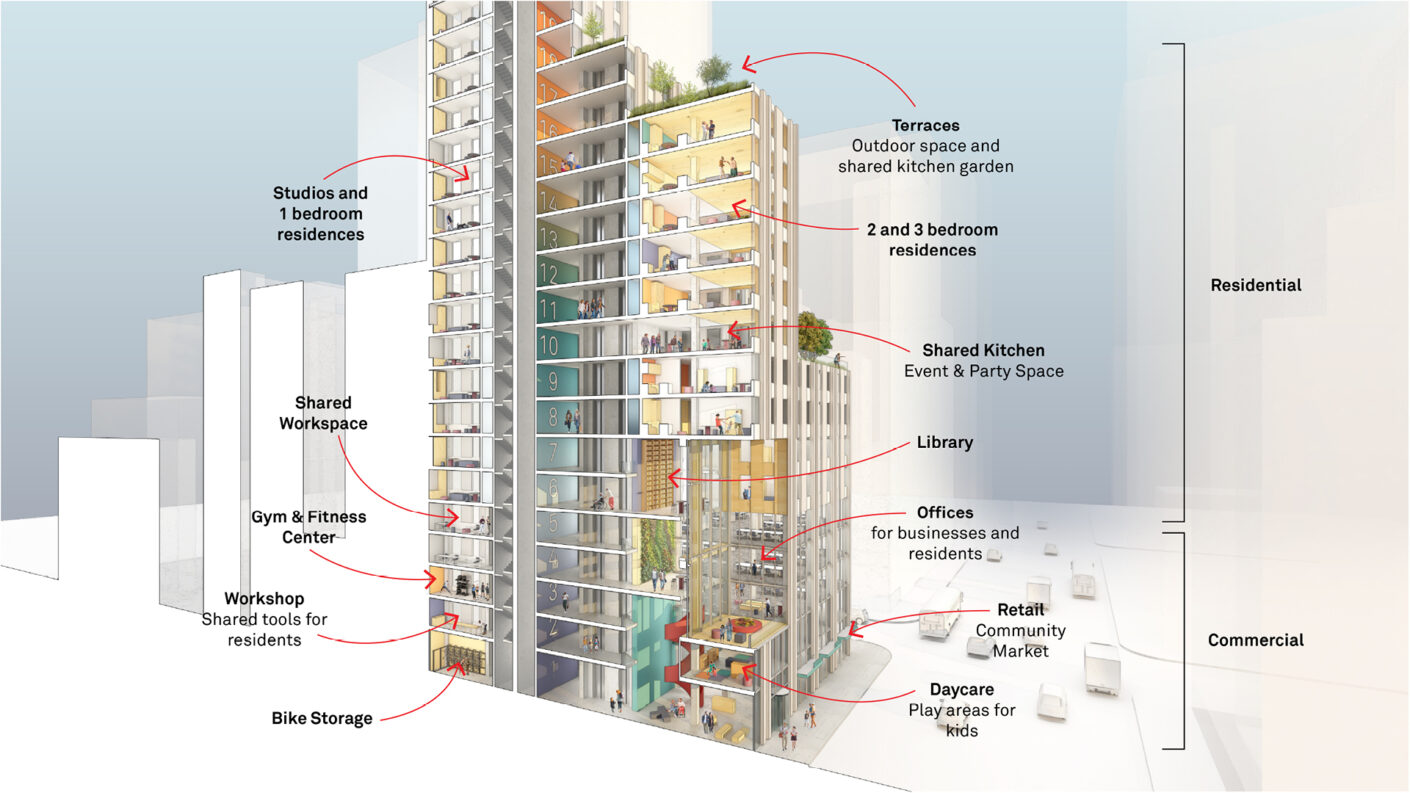
New York City is staring down a brutal question: what happens when the office market no longer supports the towers that define it? The answer is no longer theoretical. As landlords, planners, and policymakers wrestle with stubborn vacancy, rising borrowing costs, and changing work habits, NYC office conversions are emerging as one of the few viable ways to rescue underused buildings and put them back to work. That shift is bigger than real estate. It is about whether the city can convert structural weakness into a new housing pipeline, preserve tax value, and keep entire districts from hollowing out.
The catch is that conversions are not magic. They are expensive, slow, and wildly uneven. Some buildings are perfect candidates. Others are effectively impossible to remake without gutting the economics. That tension is what makes the latest wave of analysis around New York so important: it shows a city that may be moving from denial to triage, and maybe, if it plays this right, to reinvention.
- NYC office conversions are no longer a niche idea – they are a central response to the city’s changing real estate math.
- Not every tower can become housing. Floor plates, window lines, and core layouts determine what is feasible.
- The biggest winners will be buildings that can be converted quickly, financed carefully, and approved without years of delay.
- These projects could help address housing shortages while stabilizing neighborhoods hit by office decline.
- The real test is whether policy can move fast enough to make conversions economically rational.
Why NYC office conversions matter now
The office market has been under pressure for years, but the current moment feels different because the old recovery script is no longer convincing anyone. Hybrid work has permanently trimmed demand in many sectors. Older buildings, especially those lacking modern amenities or energy performance, are competing against newer inventory that can attract tenants with better layouts and lower operating costs. That leaves a growing pile of obsolete space that is expensive to maintain and hard to re-lease.
This is where NYC office conversions start to look less like a curiosity and more like urban infrastructure policy. Converting offices into apartments, mixed-use properties, or other productive uses can help New York recycle stranded assets instead of letting them drag on the city’s finances. The logic is straightforward: if a building cannot compete as office space, perhaps it can compete as housing or as a hybrid building with retail, community space, and residential units.
But the city cannot simply declare victory and start drilling through walls. Conversion is constrained by geometry, fire code, sunlight requirements, elevator cores, plumbing stacks, and financing. That is why the conversation has shifted from broad optimism to more surgical thinking. Which buildings work? Which corridors should be targeted? Which incentives actually close the gap?
The hard economics behind NYC office conversions
Most conversion debates sound deceptively simple until they hit the spreadsheet. Buying an office building at a distressed price may seem like a bargain, but the real cost comes after the acquisition. Reconfiguring floor plans, cutting new shafts, upgrading mechanical systems, and meeting residential standards can turn a cheap asset into a capital-intensive construction project. For many owners, the math only works if they bought at the right basis or can secure meaningful public support.
That is why the current wave of NYC office conversions is not just about architecture. It is about underwriting. Investors need confidence that the finished product will command enough rent or sale value to justify the conversion expense. Lenders need certainty that approvals will not stall for years. And the city needs assurance that the project adds real housing, not just a financial reshuffle dressed up as progress.
“Conversion is attractive only when the building, the market, and the policy line up at the same time. If one of those three breaks, the deal can disappear fast.”
That reality explains why many conversion candidates sit in a narrow band of viability. Buildings with deep floor plates or too few windows may never pencil out. Properties with stronger bones, especially those in transit-rich areas and with manageable structural constraints, have a much better shot. In other words, the winners are not necessarily the most famous towers. They are the most adaptable ones.
What makes a building convertible
At a technical level, developers usually look for a few signs that a property can survive the conversion process:
- Relatively shallow floor plates that allow more apartments to reach natural light.
- Existing window spacing that supports residential unit layouts.
- Flexible structural systems that can accommodate new plumbing and ventilation.
- Reasonable ceiling heights and column spacing.
- Location near transit, services, and schools that make housing viable.
These factors may sound obvious, but they determine whether a project becomes a showcase or a money pit. The city can make policy easier, but it cannot rewrite physics.
What the latest shift says about New York’s future
NYC office conversions are also a political signal. They suggest that city leaders are increasingly willing to accept that some of Manhattan’s office stock will not come back to life in its old form. That is a meaningful break from the old belief that every premium district could simply wait out the downturn. The new approach is more pragmatic: salvage what can be salvaged, redeploy what cannot, and stop pretending vacancy is temporary everywhere.
That matters because office decline has spillover effects. Empty buildings reduce foot traffic, weaken retail corridors, and pressure transit patterns. They also affect the city’s tax base, since underperforming towers can become liabilities rather than assets. Turning even a portion of that space into housing can help stabilize neighborhoods and introduce a different kind of economic activity after dark, on weekends, and during the day when office workers are absent.
Still, there is a risk of overselling conversions as a cure-all. They will not solve New York’s housing shortage on their own. They will not rescue every struggling district. And they will not be cheap enough to replace the need for new construction. But they can become one of the most realistic tools in a city that needs more homes and fewer stranded assets.
Policy is becoming the real bottleneck
The biggest obstacle to scaling NYC office conversions may not be demand. It may be the speed of government. Permitting, zoning, financing incentives, and environmental review can all slow projects to a crawl. When market conditions are shifting quickly, a two-year delay can erase the economics of a deal that looked compelling on paper.
That is why successful conversion policy tends to be narrow and targeted. It rewards buildings that are already close to viable. It reduces friction around zoning and code issues. It gives developers confidence that if they spend money on design and engineering, the rules will not suddenly change underneath them. Without that certainty, the private market will keep waiting.
There is also a broader urban design question. Should the city prioritize pure residential conversions, or should it encourage mixed-use outcomes that preserve some commercial activity? The best answer may vary block by block. Some corridors need apartment supply above all else. Others may benefit from preserving ground-floor commerce and community-oriented uses while reducing excess office bulk above.
Pro tips for understanding conversion feasibility
If you are tracking this trend as an investor, policymaker, or market observer, a few signals matter more than the headlines:
- Track the building’s basis: If the owner paid too much, conversion economics get harder fast.
- Watch vacancy duration: Long-term vacancy usually means rent recovery is unlikely without a major rework.
- Evaluate physical constraints: Floor depth, light access, and core placement can make or break the plan.
- Read the policy fine print: Tax incentives and zoning relief often determine whether the deal closes.
- Look beyond Manhattan prestige: Some of the best opportunities may be in less obvious submarkets with better layouts and lower acquisition costs.
Why NYC office conversions could reshape the city’s balance sheet
Here is the part that should get the attention of anyone who cares about New York’s long-term competitiveness: conversions are not just a real estate story. They are a fiscal one. If the city can replace chronic vacancy with productive residential use, it can preserve some degree of tax value, support local businesses, and reduce the risk of entire blocks becoming dead zones. That is especially important in a city where so much public revenue depends on the health of private property.
There is also a symbolic dimension. New York has always reinvented itself by repurposing old structures for new economic realities. Warehouses became lofts. Factories became studios. Industrial piers became public space. NYC office conversions may be the latest version of that tradition, but this time the stakes are unusually high because the market mismatch is so visible and the housing shortage is so severe.
The smartest version of this strategy will not chase every tower. It will identify the assets that can be converted quickly, keep the process transparent, and align incentives with actual housing outcomes. If the city can do that, office conversions could become more than a stopgap. They could become a durable part of New York’s next development model.
The bottom line on NYC office conversions
New York is learning, the hard way, that not every iconic building deserves to remain what it was built to be. Sometimes resilience means changing form. NYC office conversions are a test of whether the city can accept that reality without losing momentum, value, or ambition. The opportunity is real, but so are the constraints. Success will belong to the projects that are physically viable, financially disciplined, and politically unblocked. Everything else is wishful thinking with a hard hat on.
For now, the story is less about a single building or one dramatic rescue plan than a broader shift in urban strategy. The city is moving from preservation of legacy office space toward selective transformation. That is a harder path, but probably the right one.
The information provided in this article is for general informational purposes only. While we strive for accuracy, we make no guarantees about the completeness or reliability of the content. Always verify important information through official or multiple sources before making decisions.