OpenAI pushes ChatGPT deeper into shopping
OpenAI pushes ChatGPT deeper into shopping
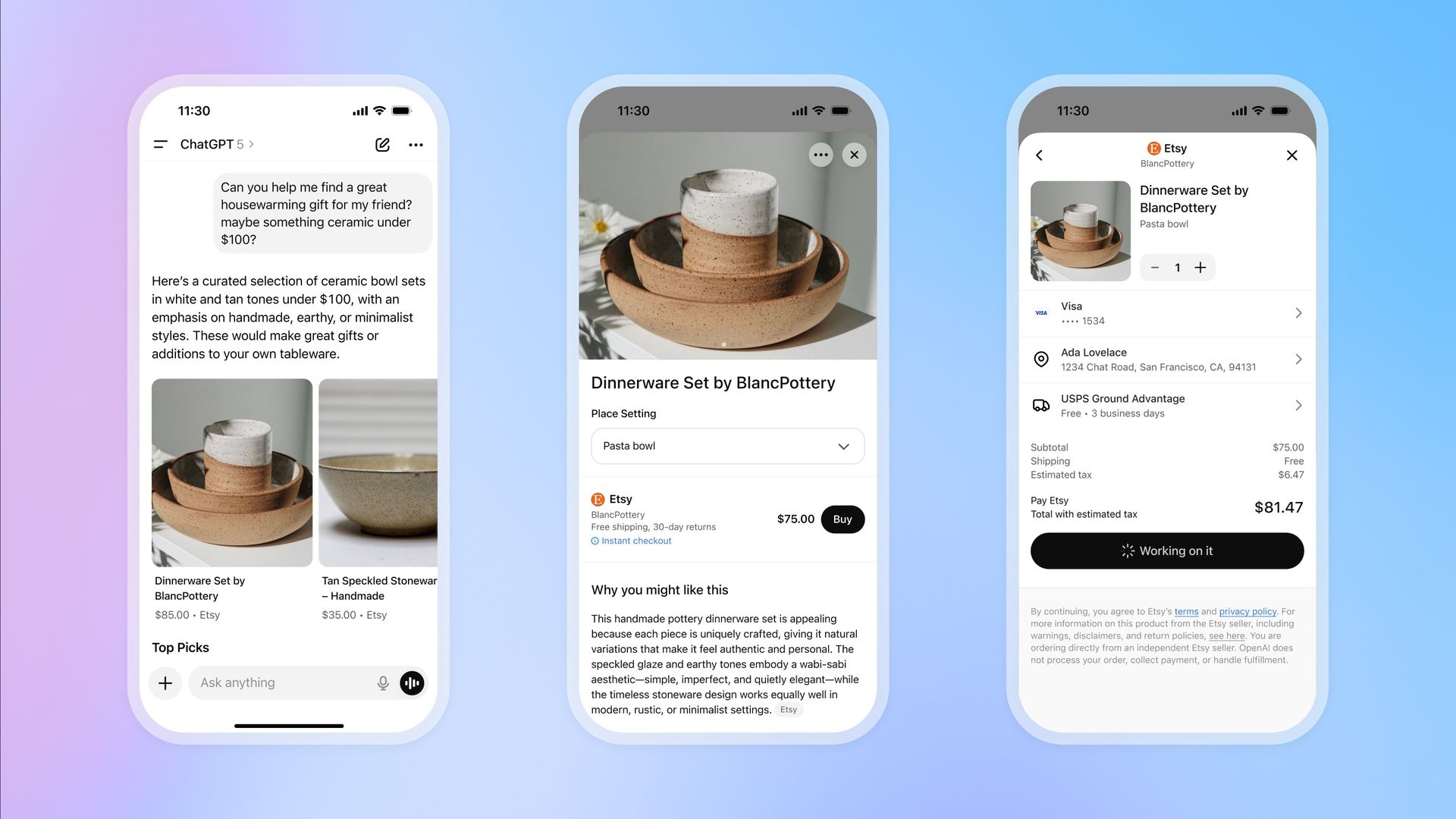
ChatGPT is no longer just answering questions. It is moving closer to the checkout button, and that shift could redraw how people discover products, compare options, and trust recommendations. If AI becomes the first place shoppers ask what to buy, the winners and losers in retail may change faster than most brands are prepared for. For users, that means a smoother path from curiosity to purchase. For merchants, it means a new gatekeeper sitting between the storefront and the customer. And for OpenAI, it is another step toward turning ChatGPT into a platform that does more than chat. The real question is not whether AI can help people shop. It is whether shoppers will let it become their new front door.
- ChatGPT is evolving from assistant to shopping surface, not just a conversational tool.
- Product discovery may shift from search engines and marketplaces to AI-led recommendations.
- Brands will need to optimize for AI visibility, not only traditional SEO.
- The biggest prize is trust: whoever earns it can shape buying decisions at scale.
Why ChatGPT shopping matters now
The push into shopping is strategically obvious and commercially loaded. Search has always been the starting point for intent, but it is also noisy, ad-heavy, and often exhausting. A conversational interface can collapse that friction. Instead of opening ten tabs, users can ask for a laptop under a certain price, a pair of running shoes for a specific foot type, or a gift based on a vague relationship status and budget. That is powerful because it shifts shopping from retrieval to guidance.
For OpenAI, the move strengthens retention. The more useful ChatGPT becomes in daily decision-making, the harder it is to replace. Shopping is especially valuable because it happens often, involves money, and creates repeat behavior. If the assistant remembers preferences, budgets, and past choices, it can become a persistent layer of consumer intent.
There is also a much larger implication: AI shopping changes the economics of discovery. Brands have spent years optimizing for search rankings, social visibility, and marketplace placement. A conversational agent introduces a new intermediary that can decide what gets surfaced first, what gets summarized, and what gets ignored.
“When AI becomes the first filter for product choice, it stops being a helper and starts acting like infrastructure.”
The new gatekeeper in the buying journey
Retail has always had gatekeepers. First it was the department store buyer, then the search engine, then the marketplace algorithm. ChatGPT shopping adds another layer, but one that feels more personal because it speaks in natural language. That makes the recommendation feel less like an ad and more like advice.
This is precisely why the stakes are high. Advice is trusted differently than placement. If users believe the assistant is neutral, even partially, the recommendations can carry outsized influence. But if the experience becomes too commercial, trust can evaporate quickly. That tension will define the next phase of AI commerce.
What users gain
The upside is clear. Shoppers get faster comparisons, better filtering, and less decision fatigue. A good assistant can translate messy needs into practical options. It can surface tradeoffs, explain specs in plain English, and tailor suggestions to context instead of keyword match.
That matters most for categories where choice overload is brutal: electronics, home goods, beauty, travel gear, and gifts. In those lanes, AI could save time and reduce buyer remorse.
What brands risk
Brands may discover that traditional marketing leverage weakens when the assistant becomes the mediator. A polished landing page matters less if the AI summary compresses a product into three bullet points. A flashy brand voice matters less if the assistant prioritizes utility, price, and fit.
The challenge is not just visibility. It is interpretability. Products that are easy for humans to understand may still be hard for AI systems to rank confidently if the metadata is messy, the reviews are contradictory, or the benefits are vague.
How ChatGPT shopping could reshape retail
Retail is already under pressure from rising acquisition costs and fragmented attention. If AI takes a larger share of discovery, the pressure intensifies. Merchants will need to think about how product information is structured for machine consumption, not just human browsing. That means cleaner product data, clearer specifications, and more honest differentiation.
We are also likely to see a shift in the economics of referral traffic. If a conversational assistant keeps users inside its own interface longer, fewer shoppers will bounce out to web pages. That could reduce traffic to publishers, affiliates, and some retailers while concentrating influence inside the assistant layer.
For consumers, the convenience is real. For the industry, the bargaining power shifts. The platform that controls the recommendation layer can decide which products are featured, which are hidden behind uncertainty, and which are framed as the best match.
Why data quality becomes everything
AI shopping works best when product data is structured, complete, and current. Missing dimensions, vague descriptions, stale pricing, and inconsistent variant data all reduce recommendation quality. If a retailer wants to win in a ChatGPT-mediated commerce world, it needs to treat data hygiene as a core growth strategy.
That means standardizing attributes, keeping inventory status accurate, and making sure product names do not hide the real value proposition. It also means thinking beyond keywords. A model needs signals about use case, compatibility, materials, sizing, and price tiers to make useful suggestions.
The trust problem OpenAI cannot ignore
Shopping is one of the fastest ways to test trust. People will forgive a wrong joke. They will not forgive a bad purchase recommendation as easily, especially if money is on the line. That is why the product experience has to be transparent about uncertainty, tradeoffs, and limitations.
If ChatGPT starts surfacing products, it will need to avoid the trap of sounding too certain. Strong recommendations are useful. False confidence is not. The best shopping assistant will explain why something fits, what it compromises on, and when a cheaper or better alternative might make more sense.
“The future of AI commerce will be won by systems that can explain their choices, not just make them.”
That is a higher bar than traditional recommendation engines. It asks the model to be both persuasive and accountable. The companies that understand this will have a better shot at earning repeat usage.
Why this matters for the next phase of AI
The move into shopping is about more than commerce. It is a proof point for whether AI assistants can graduate from novelty to utility. If users rely on ChatGPT for purchase decisions, it validates a larger thesis: that conversational interfaces can sit at the center of everyday digital behavior.
That has implications far beyond retail. The same trust, summarization, and decision-support patterns could extend into travel, finance, education, and local services. Shopping is the test case because it is immediate, measurable, and commercially attractive. If OpenAI gets this right, it strengthens the argument that the assistant is becoming a general-purpose operating layer for consumer intent.
There is also a competitive angle. Every major platform is chasing the same endgame: keep the user inside its ecosystem for as long as possible. OpenAI is not just competing with search. It is competing with marketplaces, comparison sites, affiliate publishers, and brand websites. The company that controls the conversational layer may control the starting point of commerce itself.
How businesses should prepare
Companies should not wait to see whether AI shopping becomes mainstream. The shift is already underway, and preparation is relatively straightforward if you know where to start.
- Audit product data – Make sure titles, descriptions, attributes, and variants are clean and consistent.
- Clarify differentiation – Spell out what makes a product better, cheaper, faster, or more durable.
- Invest in trust signals – Strong reviews, accurate specs, and transparent policies matter more when AI summarizes you.
- Track conversational discovery – Watch how customers phrase needs, not just which keywords they type.
- Prepare for platform dependency – If AI becomes a new acquisition channel, diversify beyond it early.
One practical way to think about this is to treat product pages like source code for AI discovery. The clearer the inputs, the better the output. A messy catalog will not just hurt SEO. It may make a product effectively invisible to the next generation of shopping interfaces.
The bigger strategic bet
OpenAI is making a familiar Silicon Valley move: expand from utility into transaction. That is how platforms deepen engagement, build monetization potential, and make themselves harder to displace. The risk is that commerce changes the tone of the assistant. The opportunity is that it makes the assistant indispensable.
Whether ChatGPT shopping becomes a breakthrough or a gimmick will depend on execution. If the recommendations are genuinely useful, the experience may feel like a revelation. If it becomes cluttered, biased, or overly commercial, users will revert to search and marketplaces. The bar is high because shopping is personal. People do not just want answers. They want confidence.
That is the real story here. OpenAI is not merely adding a feature. It is testing whether an AI assistant can move from conversation to commerce without losing the trust that makes conversation work in the first place.
The information provided in this article is for general informational purposes only. While we strive for accuracy, we make no guarantees about the completeness or reliability of the content. Always verify important information through official or multiple sources before making decisions.