Patricio Guzmán Redefined Political Cinema
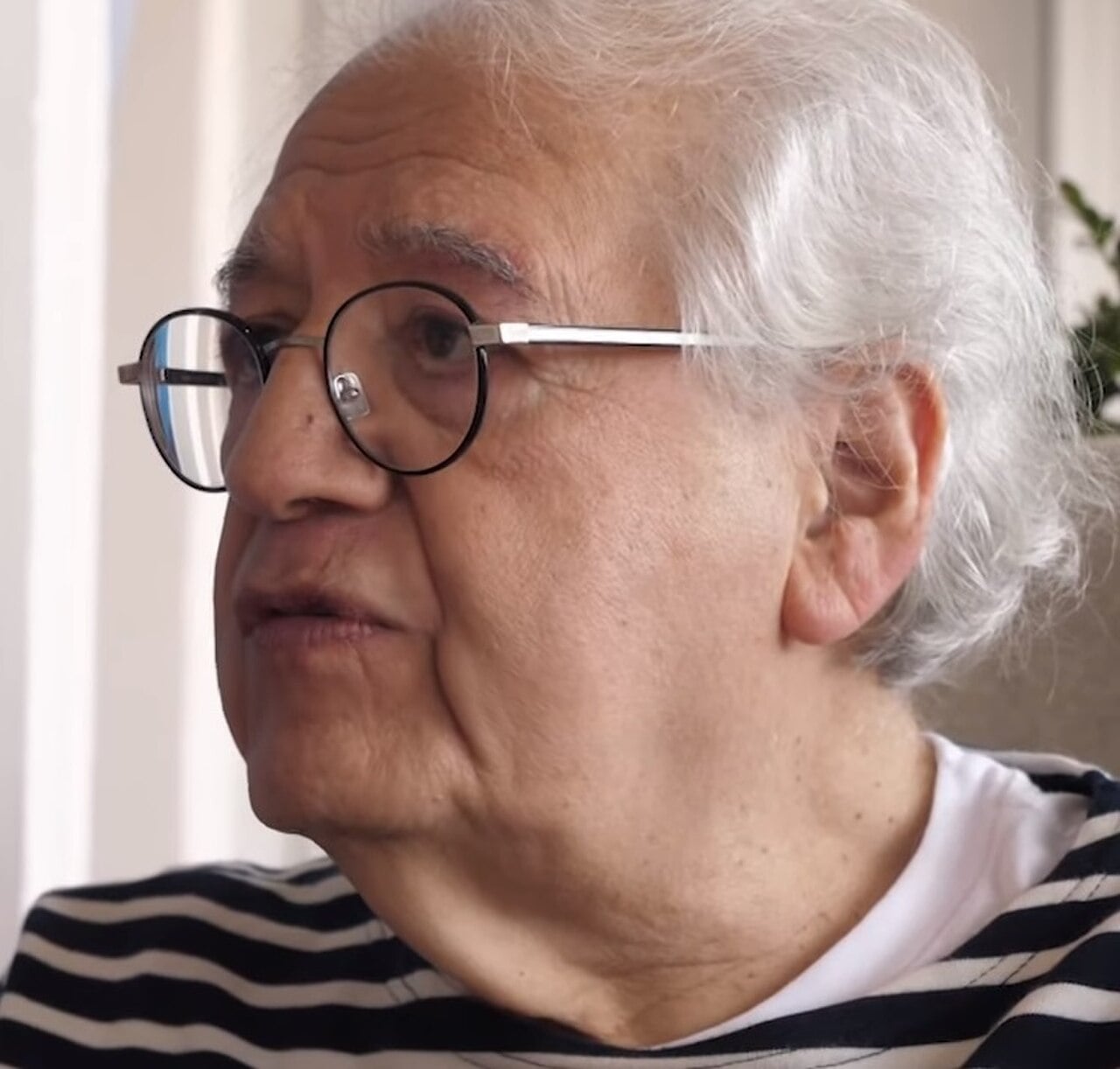
Patricio Guzmán made documentaries as if memory itself were a contested battlefield. With Patricio Guzmán now gone at 85, cinema loses one of its most rigorous witnesses to state violence, exile, and the long afterlife of political trauma. For anyone who cares about film, democracy, or the fragile record of truth, his death is not just an industry loss. It is a reminder that images can outlive regimes, indict silence, and give future generations a way to understand what power tries to erase.
- Patricio Guzmán was best known for The Battle of Chile, a landmark documentary trilogy on the fall of Salvador Allende.
- His work fused political urgency with poetic reflection, reshaping what documentary cinema could do.
- Exile became a central theme across his career, from Chilean dictatorship to memory and national identity.
- His legacy matters now because documentary truth is under fresh pressure from propaganda, revisionism, and digital distortion.
Patricio Guzmán Built a Cinema of Witness
Guzmán’s defining achievement was not simply that he filmed history. It was that he understood history as something unstable, vulnerable, and constantly threatened by those who benefit from forgetting. Born in Chile, he came of age during a period when Latin America was being pulled between revolutionary hope, military repression, Cold War interference, and democratic rupture.
That tension detonated in his most famous work, The Battle of Chile, a three-part documentary filmed during the final years of Salvador Allende’s socialist government and the 1973 military coup led by Augusto Pinochet. Shot under extreme pressure, the project remains one of the most consequential political documentaries ever made.
The power of Guzmán’s cinema is that it never treats the past as closed. His films ask what a country becomes when its official story is built on denial.
Technically, the achievement was staggering. Crews worked with limited resources, volatile conditions, and the constant risk that filming itself could become evidence against them. In today’s language, we might talk about field production, archival footage, observational documentary, and political montage. But those tidy terms barely capture the danger of pointing a camera at a society cracking open in real time.
Why Patricio Guzmán Still Matters
Guzmán’s death arrives at a moment when documentary film is both more accessible and more precarious than ever. Smartphones have turned everyone into a potential witness. Streaming platforms have globalized nonfiction storytelling. Yet the flood of images has not automatically produced clarity. If anything, the modern viewer is drowning in context-free clips, algorithmic outrage, and synthetic media.
That is why Guzmán’s method feels newly urgent. He did not believe that footage alone was enough. Evidence needed structure. Memory needed form. Pain needed patience. His films remind modern creators that documentation is not the same as understanding.
Pro Tip for filmmakers and journalists: Guzmán’s career is a masterclass in treating source material with moral seriousness. Capture the event, but also ask who controls the narrative afterward. The second battle is often fought in the archive.
A Different Kind of Political Film
Many political films age badly because they are trapped in the slogans of their moment. Guzmán’s work endured because it operated on multiple levels. Yes, it was specific: Chile, Allende, Pinochet, the disappeared, exile, grief. But it was also universal: how nations remember, how families inherit trauma, how ordinary people live beneath systems designed to make them afraid.
His later films deepened that approach. Works such as Nostalgia for the Light, The Pearl Button, and The Cordillera of Dreams moved beyond conventional political reportage into something stranger and more meditative. Astronomy, water, mountains, bones, deserts, and landscape became part of his vocabulary. The result was cinema that felt analytical and lyrical at once.
That evolution mattered. Guzmán proved that a political documentary did not have to choose between argument and beauty. It could be forensic without becoming cold. It could be poetic without becoming vague.
The Battle of Chile and the Risk of Recording Power
The Battle of Chile remains the central pillar of Guzmán’s reputation because it captured a democracy being dismantled from the inside and outside. The trilogy follows escalating social conflict, the mobilization of workers and opposition groups, the pressures facing Allende’s government, and the military coup that changed Chile for generations.
The film’s importance is not merely historical. It is also methodological. Guzmán and his collaborators showed how documentary could function as a democratic instrument. The camera became a witness, but also a counterforce to disappearance. When institutions fail, footage can become a civic memory bank.
That idea has only grown more relevant. Around the world, authoritarian movements often begin by attacking shared reality. They discredit journalists, intimidate artists, distort history, and flood the public sphere with competing fictions. Guzmán’s work stands as a rebuke to that strategy.
Authoritarianism depends on exhaustion. Guzmán’s films insist on attention.
The Ethics Behind the Lens
Guzmán’s cinema also raises questions that every documentary maker should confront. What does it mean to film suffering? When does witness become exploitation? How should a filmmaker balance urgency with accuracy? His answer was not detachment. It was responsibility.
He was never a neutral machine recording data. His films had a point of view. But they were not careless propaganda. They earned their authority through accumulation: testimony, landscape, silence, records, faces, and time. In an era obsessed with instant takes, that slowness feels almost radical.
For editors, producers, and students, the lesson is practical. A documentary’s credibility is built through verification, sequence, context, and editorial restraint. Emotional force matters, but it cannot substitute for trust.
Patricio Guzmán and the Politics of Exile
After the coup, Guzmán’s life and career were shaped by exile. That displacement did not weaken his connection to Chile. It intensified it. Distance became a lens. From abroad, he returned again and again to the country’s wounds, refusing to let dictatorship become a closed chapter or a sanitized footnote.
Exile in Guzmán’s work is not just geography. It is psychological and national. A person can be exiled from home, but a country can also be exiled from its own memory. His films ask what happens when truth is pushed underground, when victims are unnamed, and when younger generations inherit silence instead of answers.
This is where Guzmán’s work moves beyond Chilean history and into the bloodstream of global culture. Spain, Argentina, South Africa, Cambodia, Bosnia, and many other societies have faced similar questions about memory, accountability, and reconciliation. Guzmán’s films belong to that larger conversation about how nations metabolize violence.
Why Younger Audiences Should Watch Him Now
For younger viewers raised on short-form video, Guzmán can feel demanding at first. His films are patient. They require attention. They do not flatten history into content. But that is precisely the point.
The current media ecosystem rewards speed, outrage, and disposability. Guzmán rewards sustained looking. He asks viewers to sit with contradictions, to recognize the human cost of ideology, and to understand that democracy is not an aesthetic. It is a lived structure that can collapse.
- Watch for form: Notice how he connects personal memory to national history.
- Watch for silence: Absence often carries as much meaning as testimony.
- Watch for landscape: Geography in Guzmán’s films is never just scenery.
- Watch for time: His editing treats history as layered, not linear.
The Future of Documentary After Patricio Guzmán
Guzmán’s death closes a major chapter, but it also clarifies the challenge ahead. Documentary filmmakers now operate in a world of AI-generated media, deepfakes, platform incentives, shrinking attention spans, and political polarization. The tools are more powerful than ever. The trust environment is worse.
That makes Guzmán’s legacy less like a monument and more like a set of instructions. Be precise. Be brave. Respect the archive. Question power. Give memory a form that can survive intimidation. Do not confuse access with truth.
His influence can be seen in contemporary nonfiction work that blends memoir, investigation, and historical reckoning. But few have matched his combination of moral clarity and cinematic imagination. He did not simply report on Chile. He built a body of work about what it means to remember when forgetting is convenient.
A Final Frame for Patricio Guzmán
Patricio Guzmán leaves behind films that are not passive records but active arguments for memory. His death at 85 will rightly prompt tributes to The Battle of Chile, but his broader achievement is even larger. He expanded the grammar of political cinema and proved that documentary could be both evidence and elegy.
The industry will remember him as a master filmmaker. Historians will remember him as a witness. Viewers should remember him as something rarer: an artist who understood that truth is not self-preserving. It has to be filmed, protected, edited, shown, and shown again.
That is the lasting force of Patricio Guzmán. He did not let power have the final cut.
The information provided in this article is for general informational purposes only. While we strive for accuracy, we make no guarantees about the completeness or reliability of the content. Always verify important information through official or multiple sources before making decisions.


