Pope Leo Challenges Trump Over Iran
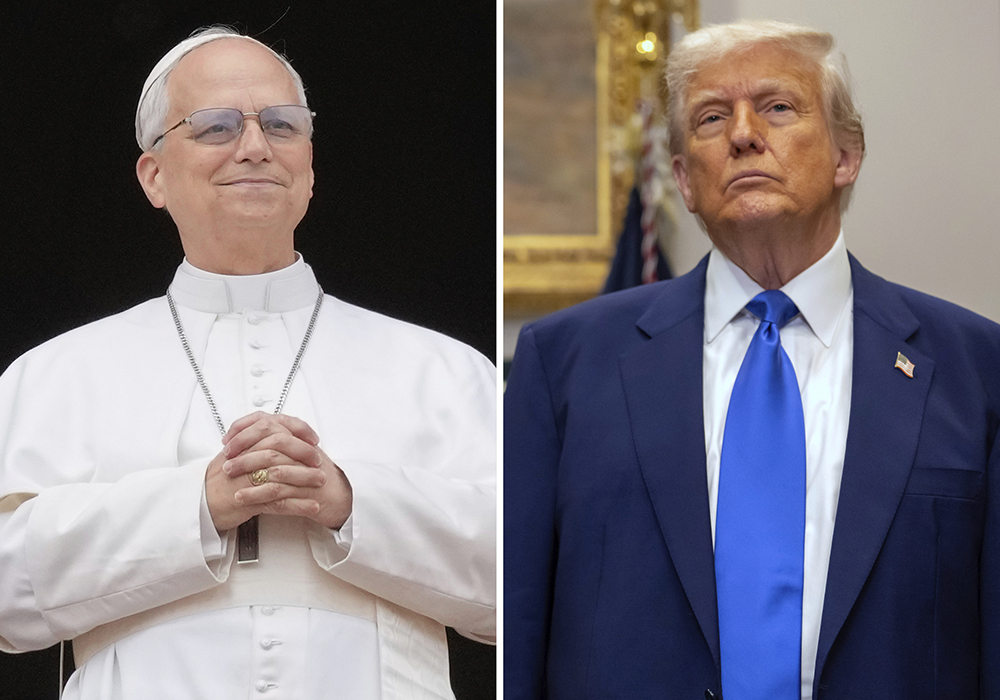
Pope Leo and Donald Trump are not supposed to occupy the same moral arena, yet that is exactly where the conversation now lands. The first American pope is becoming a live test case for whether a religious leader shaped by U.S. culture can challenge the political machine that produced it. The answer matters far beyond Catholic circles. With the prospect of war with Iran, the language of national priority, and JD Vance’s theology of duty in the mix, Pope Leo is showing that papal influence is not antique pageantry. It is active political force. And unlike a campaign, the Vatican does not need to win the next news cycle to change the terms of the debate. That makes his every move more than commentary; it becomes a referendum on whether conscience can still interrupt power.
- Core conflict: Pope Leo is pushing back on a politics that treats force, borders, and loyalty as the only urgent languages.
- Strategic angle: The Vatican can shape debate by reframing war, duty, and dignity before they harden into slogans.
- Why Iran matters: Conflict with Iran is the kind of escalation that exposes the difference between deterrence and destruction.
- Biggest takeaway: Leo’s American background makes his criticism sharper because he understands the culture he is challenging.
Pope Leo and Donald Trump redraw the moral map
The immediate story is not a personality clash. It is a jurisdictional one. Trump represents a politics of borders, force, and transactional loyalty. Leo represents a global institution that still insists the moral order cannot be reduced to a poll result. That tension is old, but the American angle makes it sharper. A pope with a U.S. background understands the media ecosystem, the partisan reflexes, and the temptation to turn every theological dispute into a culture-war prop.
That is why this moment feels different from the usual Vatican commentary. Leo is not speaking from a distant European perch. He is intervening in the same political language Americans use every day. When he pushes back, he is not only arguing doctrine. He is exposing the gap between what a nation celebrates and what a church demands.
The first American pope changes the stakes
For decades, U.S. Catholics have lived with a split identity. They are part of a church that teaches continuity, hierarchy, and patience, while also participating in an American civic culture that rewards speed, identity, and spectacle. A pope from Chicago cannot pretend not to know that. He understands how quickly a moral statement becomes a partisan weapon, and that gives him a kind of credibility foreign leaders usually do not have in Washington.
That credibility cuts both ways. Because Leo knows the American code, he can be more precise about its blind spots. He can speak to Catholic voters who have grown comfortable treating party loyalty as a substitute for conscience. He can also remind political leaders that a church with 1.4 billion believers does not have to sound timid just because it lacks an army.
Why the Iran question matters
Iran is not just another foreign policy flashpoint. It is the kind of issue that can expose the difference between deterrence and destruction. Popes tend to be skeptical of wars that are sold as clean, limited, or morally easy. That skepticism is not pacifist naivete. It is historical memory. The Vatican has watched enough conflicts begin with confident language and end with civilians paying the highest price.
On Iran, Leo’s concern is likely to land as a warning about escalation, not as a legal brief. That is the Vatican’s real power: it can force leaders to justify force as more than strategy. If the strongest argument for war is that it looks strong, the pope can say that is not an argument at all.
The Vatican rarely beats a president in raw political muscle. Its advantage is slower and harder to fake: it can make a nation explain why power should be used at all.
Pope Leo and Donald Trump clash over the language of duty
JD Vance matters here because he represents a different kind of argument, one that tries to merge Christian language with political ranking. The discussion around ordo amoris pushed a familiar question into public view: do obligations to family, nation, and stranger come in a tidy hierarchy, or does Christian ethics complicate that picture? The answer is not only academic. It shapes how politicians talk about migrants, war, aid, and the moral reach of government.
Pope Leo does not need to attack Vance personally to challenge the logic beneath that worldview. He can simply remind believers that Catholic teaching has never been reducible to tribal preference. Love of neighbor has always stretched outward, even when that makes politics inconvenient. That is why this debate keeps resonating. It is not really about one speech or one social media post. It is about who gets to define Christian realism in public life.
The history angle is doing real work
History matters because both camps are trying to claim it. Popes have long warned against reducing the common good to national pride. American conservatives, meanwhile, often argue that moral order requires clear borders and hard priorities. Those are not identical positions, but they can sound similar to a hurried audience. The pope’s job is to slow the room down and force distinction.
That historical pressure is what makes the current moment bigger than a standard papal statement. The church has seen empires, revolutions, and ideological crusades come and go. It has also seen what happens when religious language gets conscripted into state power. Leo’s pushback on Trump-era politics, on war, and on Vance-style hierarchy is best understood as a warning against moral simplification.
And there is another layer: the Catholic Church is not trying to become a progressive think tank or a conservative resistance movement. It is trying to preserve a claim that truth should not bend entirely to faction. That claim is easier to admire than to practice, especially in an election-saturated culture. Still, it is the claim that gives the pope relevance when everyone else is shouting.
Why this matters beyond Catholic politics
The temptation is to treat this as an inside-baseball fight between church elites and American conservatives. That misses the bigger picture. When a pope speaks forcefully about war, nationalism, and the hierarchy of obligations, he is shaping the moral vocabulary available to millions of people who do not follow theology closely but still absorb its language through family, media, and politics.
There is also a strategic lesson here for any institution trying to stay relevant in a fragmented media age. Quiet neutrality no longer guarantees influence. Clear moral framing does. Leo appears to understand that a pope can remain nonpartisan without being bland. He can challenge political habits without endorsing a candidate. He can make a point about human dignity without becoming a cable-news mascot. That balance is difficult, but it is where credibility lives.
The real audience is American Catholics
American Catholics are not a monolith. Some prioritize abortion, some prioritize immigration, some prioritize war and peace, and many simply want a church that still sounds like a moral institution rather than a lifestyle brand. When Leo speaks plainly about power and duty, he is not asking voters to abandon politics. He is asking them to stop treating party language as a complete moral system. That message can unsettle both conservative and liberal Catholics because it refuses the comfort of easy labeling.
For bishops and lay leaders, the challenge is translation. If they cannot turn that tension into formation, education, and discipline, the field will stay dominated by partisan shorthand. If they can, Leo’s interventions may help revive an older Catholic habit: judging politics by moral consequences, not team colors.
What a stronger papal voice could change
If the papacy keeps pressing into U.S. debates, future presidents may have to answer not just diplomats but pastors. That does not mean the Vatican will dictate policy. It means political leaders will face a more disciplined moral counterweight whenever they reach for war, nationalism, or easy theological cover. That is a tougher environment for slogans, but a healthier one for public life.
- War rhetoric: Leo could keep challenging language that normalizes escalation against Iran or other adversaries.
- Political identity: Catholics may increasingly separate church teaching from party loyalty.
- Public theology: Debates around
ordo amorismay keep surfacing in immigration and foreign policy fights. - Vatican strategy: The pope may build a longer message about peace rather than only reacting to flashpoints.
The most important thing to understand is that Pope Leo is not trying to out-Tweet Donald Trump. He is doing something more durable. He is trying to redefine what moral seriousness sounds like when power is loud and impatient. That may not produce instant wins, but it can reshape the frame that future presidents, bishops, and voters inherit. In a year when war feels frighteningly plausible and political language keeps collapsing into slogans, that kind of intervention is not symbolic. It is consequential.
The information provided in this article is for general informational purposes only. While we strive for accuracy, we make no guarantees about the completeness or reliability of the content. Always verify important information through official or multiple sources before making decisions.


