Quake Jolt Tests Taiwan’s Chip Backbone
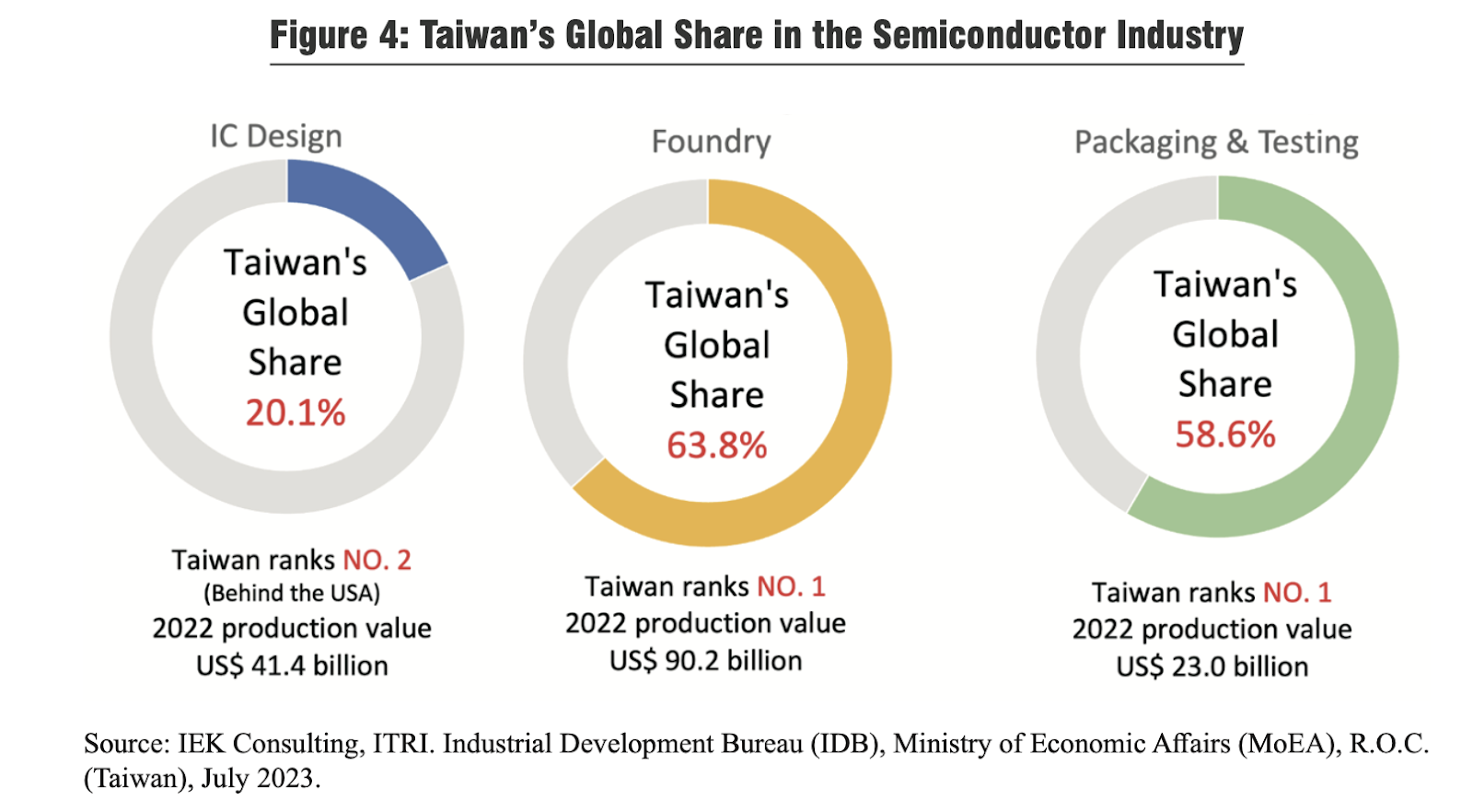
A predawn quake slammed Taiwan’s east coast and instantly sent tremors through the Taiwan semiconductor supply chain, the quiet engine behind every modern phone, car, and data center. Sirens sounded across Hualien, but the real alarm came from fab floors where even a minor wobble can turn a batch of 3nm wafers into scrap. This is not just a local disaster story. It is a live stress test for how much fragility the global chip economy can tolerate after years of shortages, and whether emergency playbooks built for storms or blackouts can withstand a tectonic shock. If you care about how quickly your next GPU order ships, how stable AI workloads remain, or whether car makers dodge another production halt, this jolt is your warning shot.
- Safety shutdowns at leading fabs force a pause in the Taiwan semiconductor supply chain, risking delayed device launches.
- Post-quake inspections reveal how much
3nmcapacity and advancedEUVtooling can survive seismic stress. - Investors and governments will push harder for diversified fabs as quake risks join geopolitics on the risk ledger.
- Short-term price bumps could follow if scrap rates spike or if requalification cycles slow critical chip ramps.
Taiwan semiconductor supply chain under stress
Taiwan built its chip empire on precision and uptime. The latest quake forced major players to power down tools, move staff to safe zones, and run rapid checks on EUV scanners, lithography tracks, and chemical mechanical polishing equipment. These pauses are measured in hours, but the consequences ripple for weeks because every halted batch resets a carefully tuned cadence. When a 5nm or 3nm line blinks off, it is not as simple as flipping it back on. Chambers must be recalibrated, particles purged, and process windows revalidated.
Scrap risk is the silent cost. Even a subtle misalignment can ruin tens of millions of dollars worth of wafers. Fabs carry insurance, yet the lost time is irreplaceable. Lead times for ASML parts and vacuum seals stretch tight, so any damaged module can cascade into a longer outage. Meanwhile, downstream OEMs feel the friction: console builders, laptop vendors, and automotive Tier 1s who already locked in forecasts now wonder if their Q3 allocations slide.
Earthquakes expose how many just-in-time chip strategies still assume a physics-free world.
Investors will watch whether the industry learned from the 2021 supply crunch. Back then, demand misreads and pandemic logistics crushed buffer stock. Today, inventories are healthier, but advanced nodes have little slack. A small capacity hiccup at 3nm could squeeze high-end phones and data center accelerators just as AI deployments climb.
Why this quake hits harder than past shocks
Veterans remember the 1999 Chi-Chi quake and the 2011 Japan tsunami. Each event forced fabs to embed seismic dampers, redundant power, and smarter evacuation drills. Yet the stakes have grown. The share of global advanced logic coming from Taiwan has only increased, and the complexity of multi-pattern nodes makes recovery slower. A N3E recipe demands more steps, more tools, and more precision than older nodes, so every restart is a gauntlet.
The closer chips get to physics limits, the less room there is for error – or downtime.
Global reliance is the multiplier. A decade ago, a hiccup at a 40nm line was painful but survivable. Today, if a leading-edge fab slips, there is no like-for-like spare capacity in Oregon, Dresden, or Pyeongtaek that can instantly absorb the load. That lopsided dependence turns a local quake into a market-moving event. It also arms policymakers with new talking points for reshoring subsidies and for accelerated CHIPS Act disbursements.
Factories, wafers, and water: the weak links
Advanced fabs are more than clean rooms. They are ecosystems of utilities, suppliers, and transit links. During a quake, three weak links emerge. First, ultrapure water plants: vibration can contaminate output, forcing fabs to flush systems before restarting. Second, gas and chemical lines: leaks are rare but catastrophic, so sensors trip shutdowns that take time to clear. Third, logistics: if nearby highways or ports suffer, moving wafers or replacement parts becomes slower.
Even if core tools survive, auxiliary systems can throttle throughput. A shortage of photoresist or an inspection delay on metrology equipment can hold back entire lots. That is why modern fabs maintain micro-warehouses of critical consumables and keep a shadow roster of technicians on call. The quake tests whether those buffers were sized for a moderate tremor or for a worst-case scenario.
Resilience lives in the boring details: spare filters, calibrated sensors, and practiced restart scripts.
Pro tip for suppliers: be transparent. Tier 2 and Tier 3 vendors often hide disruptions until customers feel the pinch. A clean status dashboard with clear estimated times to recovery earns trust and helps partners reroute demand before panic kicks in.
Winners and losers across production lines
Short-term, memory players may feel less pain than logic giants. Many DRAM lines sit outside the quake zone, and some NAND capacity is diversified into Korea and the US. By contrast, high-volume SoC and GPU programs rely heavily on Taiwanese foundry slots. If requalification stretches, handset makers might prioritize flagships over mid-range SKUs, while cloud operators delay lower-margin accelerator orders to keep premium AI cards flowing.
Equipment makers could see a temporary spike in service revenue as fab operators call in inspections, swap out any misaligned stages, and recalibrate overlay systems. But the real winner may be any geography pitching itself as a safe second source. Expect fresh lobbying from Arizona to Dresden to win more advanced node investments.
Every quake is a case study for politicians arguing that chips are as strategic as oil.
The losers? Smaller design houses that lack clout to renegotiate slots. When schedules tighten, the biggest customers get first dibs, and boutique silicon startups can find their tape-outs delayed.
Why the Taiwan semiconductor supply chain matters now
This quake lands while AI demand is exploding, auto makers are electrifying their fleets, and industrial players are digitizing everything. The Taiwan semiconductor supply chain sits at the intersection of those trends. Its performance dictates whether server buildouts keep pace with model training schedules, whether EV rollouts stay on track, and whether defense contractors hit delivery milestones.
AI buyers are particularly exposed. Training clusters rely on tightly coupled HBM stacks and bleeding-edge CoWoS packaging. If substrate supply or packaging lines in Taiwan hit snags, the bottleneck shifts from chipmaking to assembly, slowing the rollout of next-generation accelerators. Given that many cloud giants run procurement like code – with just-in-time scripts for hardware deliveries – any drift can scramble deployment playbooks.
The quake is a reminder that digital abundance still depends on analog physics and planetary stability.
Meanwhile, automotive OEMs will watch for any hint of microcontroller or power management delays. Even if the pain is concentrated at the high end, history shows that shortages at one node often spill into older lines as buyers double-order to hedge.
Resilience playbooks: what needs to change
The industry has talked about diversification for years. Now it needs execution. Three moves stand out. First, accelerate multi-site qualifications for critical SKUs so production can swing between fabs with minimal downtime. That means spending the money to validate tools, recipes, and quality control across sites well before a crisis. Second, invest in live digital twins of fab floors so engineers can simulate restart sequences after an event and avoid guesswork. Third, expand regional safety stock for high-value substrates and reticles to cushion short shocks.
Governments should not overreact, but they must act. A steady pipeline of incentives can help, but the goal should be diversity, not duplication. Forcing every country to chase 2nm glory is wasteful. Supporting packaging hubs, specialized materials plants, and resilient port infrastructure could yield better returns.
Resilience is less about building copycat fabs and more about building smart bridges between them.
For buyers, this is the moment to audit dependencies. Know exactly which nodes, tools, and packaging lines your products lean on, and build contingency plans. Those who did that homework after the pandemic will navigate this quake more calmly.
Verdict: the critical rebuild ahead
The immediate news may end with reassuring headlines: workers safe, tools intact, lines restarting. The deeper story is that the Taiwan semiconductor supply chain has once again shown both its efficiency and its vulnerability. It can bounce back from a quake faster than a casual observer might expect, yet the world remains exposed to a single geography for its most advanced compute engines.
This is an opinionated moment. We can celebrate Taiwan’s engineering prowess while demanding a saner global balance. The next time the ground moves, the industry should not hold its breath. It should keep shipping. That means treating seismic risk as seriously as cyber risk: running drills, hardening infrastructure, and funding redundancy not because it is fashionable, but because it is the only way to keep innovation on schedule when the planet reminds us who is in charge.
The information provided in this article is for general informational purposes only. While we strive for accuracy, we make no guarantees about the completeness or reliability of the content. Always verify important information through official or multiple sources before making decisions.