Raphael Warnock Reframes the Democratic Fight
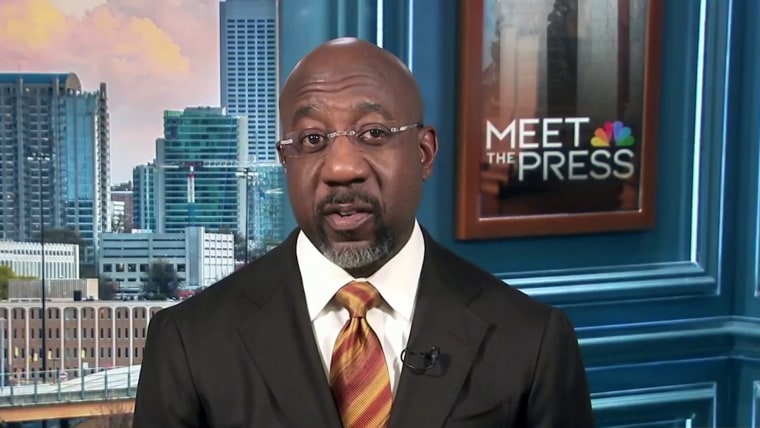
Raphael Warnock Reframes the Democratic Fight
American politics is running on distrust, exhaustion, and a constant fight over who gets to define morality in public life. That is why the latest Raphael Warnock interview lands with unusual force. Warnock is not just another senator trying to survive a brutal news cycle. He is a pastor, a national Democratic figure, and a politician operating at the fault line between faith, race, class, and power. When he talks, he is speaking to multiple audiences at once: Black voters, religious moderates, progressives, skeptical independents, and a Democratic Party still searching for a cleaner, sharper message. What makes this moment matter is not simply what Warnock says, but how he says it: with moral confidence, strategic restraint, and an understanding that politics now rewards clarity more than noise.
- Raphael Warnock is positioning himself as a rare Democratic voice who can merge faith, economics, and electoral pragmatism.
- The interview underscores how Democrats are trying to reclaim moral language without sounding performative.
- Warnock’s appeal rests on discipline: less spectacle, more message, and a focus on material concerns.
- His political model matters beyond Georgia because it offers a roadmap for reaching fractured voter coalitions.
- The bigger question is whether the Democratic Party can scale his approach nationally.
Why the Raphael Warnock interview matters now
Warnock occupies a lane that few national politicians can credibly claim. He speaks with the cadence of a preacher, but he does not sound trapped in nostalgia. He talks about democracy, poverty, voting rights, and dignity in ways that are both deeply rooted and strategically modern. That combination matters because the Democratic coalition remains broad but fragile. It includes voters who want sweeping structural change and others who mainly want stability, competence, and a sense that someone still understands everyday pressure.
The political environment has made authenticity a premium product. Voters can usually detect overproduced talking points instantly. Warnock’s advantage is that his public identity does not feel assembled by consultants. His biography, his ministry, and his politics are interconnected. That gives him room to make arguments about fairness and justice without sounding like he borrowed his values from a campaign memo.
The core of Warnock’s political strength is simple: he turns moral language into a governing argument, not just a branding exercise.
How Warnock blends faith and power without collapsing into culture-war cliché
One of the most striking elements of any serious Raphael Warnock interview is the way he handles religion in politics. For years, Republicans often dominated public conversations about faith by framing themselves as the sole custodians of religious conviction. Democrats, by contrast, frequently treated faith language like a communications hazard: useful in small doses, risky in public, and often secondary to policy framing.
Warnock flips that formula. He does not use faith as a shield. He uses it as a vocabulary for justice, economic concern, and democratic inclusion. That distinction is important. He is not merely signaling church attendance. He is making a broader claim that public policy is inseparable from moral consequence.
Faith as political language
Warnock’s religious identity gives him permission to discuss poverty, healthcare, wages, and voting rights as ethical issues rather than just partisan disputes. In a media climate that often rewards outrage over substance, that is a meaningful intervention. It broadens the frame. A debate about healthcare is no longer just about budget lines or ideological labels. It becomes a debate about whether a society recognizes the dignity of vulnerable people.
Why this approach travels beyond Georgia
Georgia made Warnock a national figure, but the template is larger than one state. Democrats have long struggled to speak fluently to religious voters who may align with them on economics but feel estranged by the party’s tone or cultural posture. Warnock shows that a Democrat can talk unapologetically about faith without abandoning pluralism or policy depth.
Pro Tip: For party strategists, the lesson is not to imitate Warnock’s voice. It is to understand the architecture of his message: personal credibility, moral coherence, and policy grounded in lived consequence.
Economic anxiety is still the real battlefield
For all the focus on personality and symbolism, the interview’s underlying force comes from material politics. Voters may consume campaigns through social media clips and culture-war flareups, but they still judge leaders by more basic questions: Can I afford housing? Is healthcare crushing my budget? Does this economy work for people like me? Warnock’s political durability depends in part on his ability to connect those pressures to a broader story about fairness and exclusion.
That is where many national Democrats still get tangled. They often describe policy in ways that are technically sound but emotionally flat. Warnock’s style is more effective because it links economic hardship to moral injury. He makes inequality sound like a lived democratic failure, not just a spreadsheet problem.
The advantage of plainspoken economics
There is a strategic edge in saying difficult things simply. Warnock’s messaging tends to avoid the kind of elite shorthand that alienates swing audiences. He is capable of complexity, but he does not confuse complexity with persuasion. In practical terms, that means discussing wages, healthcare access, and tax fairness in direct language rather than hiding behind abstractions like stakeholder optimization or policy jargon that never escapes Washington.
What voters hear
When politicians talk about inequality, voters often ask whether the speaker actually understands the cost of groceries, rent, child care, and debt. Warnock’s rhetorical style helps close that trust gap. He sounds less like a white paper and more like a public servant trying to make sense of pressure people already feel.
Politics is often won by the candidate who can translate structural problems into human terms. Warnock does that better than many of his peers.
Raphael Warnock and the Democratic messaging problem
Every election cycle eventually circles back to the same question: why does a party with popular policy positions so often struggle to package them persuasively? The Raphael Warnock interview offers part of an answer by implication. Voters do not just want positions. They want narrative coherence. They want to know what a politician believes, who that politician fights for, and how those beliefs show up under pressure.
Warnock’s public image works because it feels internally consistent. His background as a pastor at a historically significant church, his rhetoric around dignity and democracy, and his political priorities reinforce one another. That coherence is increasingly rare in a system where candidates are pushed to become content machines first and public thinkers second.
Discipline over virality
Plenty of politicians chase the clip. Warnock appears more interested in argument than algorithm. That does not make him old-fashioned. It makes him strategic. Viral moments can amplify a campaign, but they rarely substitute for trust. Warnock’s restraint gives him credibility at a time when performative outrage has become the default operating system of politics.
The limits of his model
Still, there is a hard truth here. Not every Democrat can replicate Warnock’s appeal. His biography is unusually powerful, and his speaking style is rooted in traditions that cannot be copied through media training. The risk for the party is misunderstanding the lesson. The lesson is not: find more candidates who sound like Warnock. The lesson is: build candidates whose public message aligns cleanly with who they are and what they do.
What this signals about the next phase of Democratic politics
Warnock’s prominence points to a broader strategic shift. Democrats increasingly need validators who can bridge constituencies that do not always trust one another. Activists, suburban moderates, Black churchgoers, younger voters, and policy-focused liberals often share broad goals but differ on tone, urgency, and language. Warnock can speak across those divides more effectively than most.
That matters because coalition politics is now more psychologically demanding. Voters are less patient, media cycles are faster, and opponents are more willing to weaponize identity and grievance. A figure like Warnock becomes valuable not just because he can win a race, but because he can help explain what the party thinks it is defending.
The national implications
If Democrats are serious about rebuilding a durable majority, they need messengers who can connect institutional defense with personal stakes. Saying democracy is on the ballot is not enough. Voters need to understand how attacks on democracy affect wages, schools, healthcare, and civil rights. Warnock’s style suggests one way forward: make democratic values tangible.
Why the opposition will take him seriously
Political opponents tend to fear candidates who are difficult to caricature. Warnock is harder to reduce than many national Democrats because he can answer attacks from multiple angles: moral, economic, constitutional, and personal. That versatility makes him a more resilient political communicator than candidates who rely on one issue silo or one audience segment.
The bigger takeaway from the Raphael Warnock interview
The real significance of this moment is not whether Warnock becomes a larger national power center, though that remains possible. It is that he represents a more durable theory of political communication. In an era flooded with noise, the candidates who break through are often the ones who sound like they stand for something larger than themselves. Warnock’s language of dignity, fairness, and democratic responsibility is not new, but it feels newly urgent because so much of national politics has become transactional, cynical, and fragmented.
His challenge, and the party’s challenge, is execution. Moral clarity can inspire voters, but it must also be tied to visible results. If Democrats want to benefit from the kind of voice Warnock offers, they will need to pair that voice with policy wins people can feel in their daily lives. Message without delivery fades quickly. Delivery without message is often invisible.
Why This Matters: Warnock offers a case study in how a modern politician can be principled without sounding naive, religious without sounding exclusionary, and strategic without sounding synthetic. That is not just good communication. It may be one of the few viable formulas left for building trust at scale.
For now, the Raphael Warnock interview reads as more than a media appearance. It is a snapshot of a Democratic figure trying to redefine strength in politics: less chest-thumping, more conviction; less culture-war theater, more moral and economic argument; less branding, more meaning. In a political system addicted to spectacle, that stands out. And if the party is paying attention, it may also point toward its next credible path forward.
The information provided in this article is for general informational purposes only. While we strive for accuracy, we make no guarantees about the completeness or reliability of the content. Always verify important information through official or multiple sources before making decisions.