Red Sea Blockade Redraws Trade
Red Sea Blockade Redraws Trade
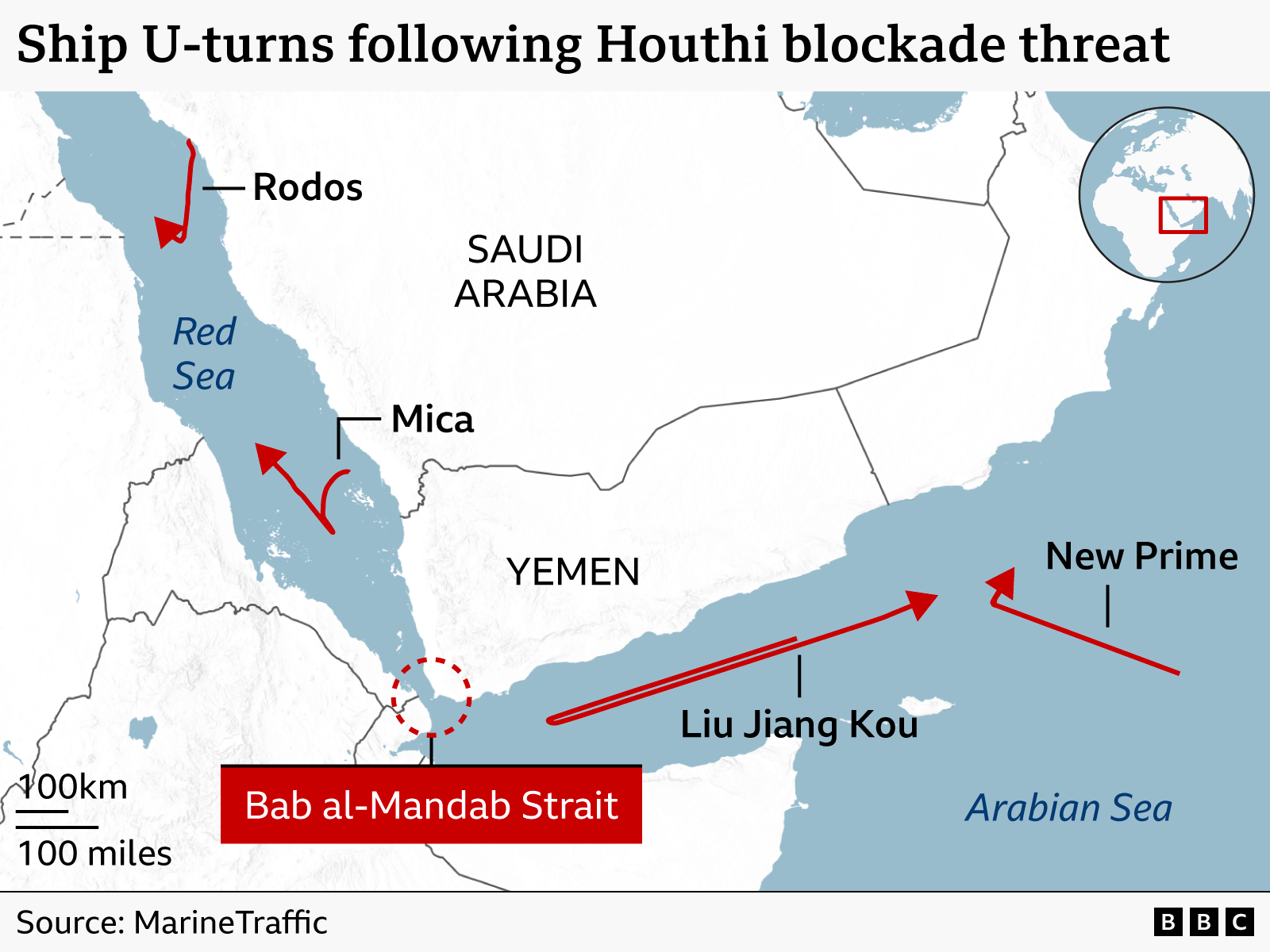
The Red Sea blockade is no longer a distant shipping problem tucked inside maritime headlines. It is a live stress test for the global economy, and companies that assumed ocean freight was boring, stable, and cheap are being forced to pay up. As vessels divert around Africa to avoid the Bab el-Mandeb strait, delivery times stretch, insurance premiums rise, and every sector from retail to energy feels the ripple effects. The disruption is especially painful because it hits a route that carries a massive share of container traffic, fuel, and industrial goods between Asia, Europe, and the United States. For executives, the message is brutal: resilience is now a line item, not a slogan. The Red Sea blockade is rewriting how supply chains are priced, planned, and defended.
- Shipping reroutes are adding time, cost, and uncertainty across global trade.
- Energy markets are exposed because the Red Sea is a critical corridor for oil and fuel shipments.
- Companies with thin inventory buffers are taking the hardest hit.
- Risk management is shifting from efficiency-first logistics to resilience-first planning.
- The longer the disruption lasts, the more likely permanent trade pattern changes become.
Why the Red Sea blockade matters now
The core issue is simple: a chokepoint does not need to close completely to cause economic damage. Even partial disruption in the Red Sea forces shipping firms to make expensive choices. They can wait, reroute, or absorb the risk. Most are choosing the long way around Africa, which can add days or even weeks to voyages. That means more fuel burned, more ships tied up, and more pressure on port schedules across the chain.
For importers, the impact arrives in a familiar but frustrating way – late stock, higher freight charges, and more volatility in planning. For exporters, the problem is just as bad. A delayed return leg means containers are not where they should be, which creates a bottleneck that compounds over time. The result is a supply chain that is less efficient and more expensive at every step.
The Red Sea blockade and the cost of rerouting
Ocean shipping has always relied on tight timing. The modern container system is built around predictable loops, just-in-time inventory, and high asset utilization. The Red Sea blockade breaks that model by forcing a detour that looks small on a map but massive in operational terms.
Longer voyages create immediate strain
When vessels avoid the Suez route and sail around the Cape of Good Hope, the extra distance hits operators on multiple fronts. Fuel costs climb. Crews stay at sea longer. Schedule reliability slips. Ports downstream face uneven arrivals, which can create congestion one week and idle capacity the next. None of this is elegant. It is a cascading set of compromises.
Pro tip: companies should model shipping risk not just by route distance, but by total time exposure, including congestion, transshipment delays, and port dwell time. That is where the real cost lives.
Insurance and security premiums are rising
When a route becomes dangerous, the market reacts fast. War-risk premiums increase, carriers layer on surcharges, and shippers pass those costs downstream. The exact number depends on vessel type, cargo, and timing, but the broader pattern is clear: the market is pricing geopolitical instability into freight. That creates a feedback loop. The more volatile the corridor, the more expensive it becomes to use, and the less attractive it is for routine trade.
Shipping markets hate uncertainty more than they hate delay. A few extra days can be managed. Unclear risk is what changes behavior.
Red Sea blockade pressure hits energy and manufacturing
The biggest mistake companies can make is treating this as a shipping story only. It is also an energy story, a manufacturing story, and a consumer pricing story. Oil, refined fuels, chemicals, and industrial components all depend on predictable maritime flows. When those flows are interrupted, the consequences spread far beyond ports.
Energy markets feel the shock first
The Red Sea is a strategic corridor for energy shipments moving between major production and consumption centers. Disruption can tighten tanker availability and complicate delivery timing just as markets are already sensitive to geopolitical risk. Even when physical supply is not immediately cut off, the logistical premium gets baked into prices. That makes volatility itself a cost driver.
For energy traders and refiners, the practical challenge is not just finding cargo. It is calibrating inventory, hedging transport exposure, and protecting margins when routing decisions change on short notice. That is why the Red Sea blockade matters to more than freight brokers. It affects balance sheets.
Manufacturers lose the buffer they thought they had
Factories built around lean inventory are especially vulnerable. A delayed shipment of electronics components, auto parts, or packaging materials can halt production lines in ways that look minor on paper but major in practice. The cost of a missing part is not the item itself. It is the idle labor, missed deadlines, and contractual penalties that follow.
Large firms can sometimes absorb this by shifting suppliers or using more expensive air freight. Smaller firms often cannot. That creates a widening gap between companies with robust logistics teams and those still relying on single-route assumptions.
How logistics teams should respond
The smartest response is not panic. It is redesign. Companies need to stop assuming that the cheapest route is the best route. Instead, they should optimize for total landed cost, including volatility, delay risk, and customer service impact.
- Map every shipment path against geopolitical exposure.
- Build alternate routing options before you need them.
- Increase safety stock for critical components, not everything.
- Negotiate flexible contracts with carriers and 3PL partners.
- Use scenario planning to test what happens if delays last months, not weeks.
A more mature logistics strategy also means more frequent communication with suppliers and customers. The old habit of waiting until a shipment is late before saying anything is now a credibility problem. Transparency buys time, and time buys options.
What smart shippers are doing differently
Some firms are diversifying away from single chokepoints entirely. Others are splitting cargo across routes so that one disruption cannot crater an entire order cycle. A few are revisiting nearshoring plans that once seemed too expensive. Those moves are not glamorous, but they are increasingly rational.
Technology is also becoming essential. Predictive tracking, real-time carrier data, and control-tower dashboards can help companies spot bottlenecks before they turn into factory shutdowns. Still, software is not a magic shield. It only helps if leaders are willing to act on the data quickly.
Efficiency-only supply chains were built for calm seas. The new environment rewards companies that can tolerate friction without breaking.
The Red Sea blockade and the next phase of global trade
The longer this disruption persists, the more likely it is to reshape trade behavior permanently. Carriers do not make route decisions in a vacuum. If a detour proves safer and more predictable over time, some of the trade can become structurally reoriented. That does not mean the Suez route disappears. It means the system becomes more fragmented, more cautious, and more expensive.
That fragmentation has consequences. A higher cost base tends to be passed on to consumers, even if slowly. It can also accelerate regional sourcing, encourage companies to hold more inventory, and reduce the just-in-time model that has dominated for decades. The market may not abandon efficiency, but it is rediscovering the value of slack.
Why this matters for consumers
Consumers usually see these shifts late and indirectly. They notice higher prices, sporadic stock gaps, or slower delivery windows. But the true cost is broader. When transportation becomes riskier, firms spend more to guarantee reliability. That cost is embedded in everything from groceries to appliances to fuel.
The important point is that this is not a temporary inconvenience like a storm or a brief port strike. A sustained Red Sea blockade changes how companies think about geography itself. Routes that once looked efficient now look fragile. That change in perception can outlast the crisis.
What to watch next
Three signals will tell you whether this becomes a passing shock or a structural shift. First, look at how long carriers keep diverting ships. Second, watch whether insurance markets normalize or keep pricing risk aggressively. Third, monitor inventory behavior from major retailers and manufacturers. If firms start rebuilding stock buffers, that is a sign they expect instability to continue.
The strategic lesson is plain: global trade is not only about moving goods. It is about managing exposure. The Red Sea blockade has exposed a hard truth that many executives preferred to ignore. Modern supply chains are fast, but not always strong. And when a maritime chokepoint snaps, the costs travel much farther than the coastline.
For business leaders, the time to plan is now. For everyone else, expect the consequences to arrive quietly at first, then all at once.
The information provided in this article is for general informational purposes only. While we strive for accuracy, we make no guarantees about the completeness or reliability of the content. Always verify important information through official or multiple sources before making decisions.


