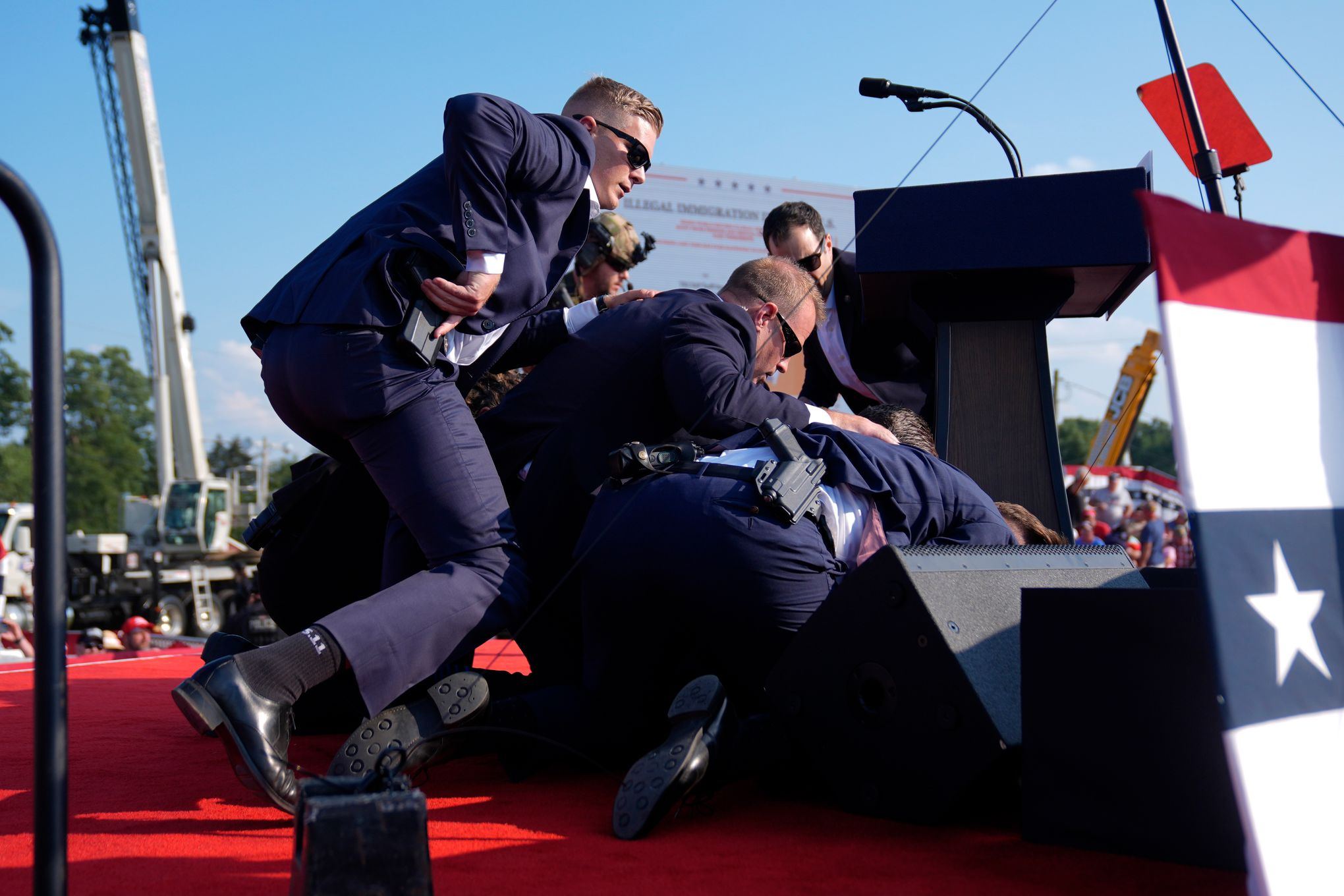
Republicans Push Back on Iran and College Closures

Republicans disapprove of Iran war talk for a reason: once a foreign policy argument turns into a live-fire political test, it stops being abstract and starts costing votes, money, and credibility. The latest episode of The Headlines captures that tension by pairing two signals that look separate but are really connected – GOP unease about an Iran conflict and the mounting pressure around college closures. Together, they show a party and a country wrestling with institutions that no longer command automatic trust. That is not just a Washington story. It is a warning shot for voters, donors, university leaders, and anyone trying to read the next phase of American politics. The surprising part is not that these fights exist. It is that they now feel like the same fight.
- TL;DR: Republican skepticism about an Iran war reflects deeper fatigue with open-ended conflict.
- TL;DR: College closures are becoming a proxy for a broader trust crisis in higher education.
- TL;DR: Both stories are really about legitimacy, cost, and who gets to define responsibility.
- TL;DR: The political winners will be the leaders who can explain restraint without sounding weak.
Why Republicans disapprove of Iran war
What looks like a foreign policy dispute is really a test of party discipline. Republicans have spent years building a coalition that mixes hawks, isolationists, budget cutters, and voters who distrust foreign entanglements. An Iran war forces all of those instincts into the same room. Some Republicans hear deterrence and strength. Others hear another open-ended conflict, another unpredictable price tag, and another chance for the executive branch to overreach. That tension matters because the GOP has become more comfortable arguing about culture than about grand strategy. When the subject is war, the party cannot hide behind slogans for long.
The post-Iraq memory still shapes the room
The Iraq War did not just change Democratic politics. It taught many Republicans that even a party built on military confidence can sour on foreign adventures once the costs become visible. Voters who are tired of inflation, debt, and institutional drift are unlikely to reward a war that feels optional. If leaders sound too eager, they risk looking disconnected from the mood of the electorate. If they sound too cautious, they risk losing the old hawkish wing. That is the trap.
The real constraint on Republican foreign policy is not ideology alone. It is memory. The party remembers what overconfidence costs.
Escalation is no longer politically automatic
For decades, a hard line on Iran could be sold as simple national security. That formula is weaker now. Voters are more likely to ask what the end game looks like, who pays for it, and whether the answer creates more instability than it solves. In practice, that means Republican leaders must thread an impossible needle: sound tough enough to deter adversaries, but skeptical enough to avoid sounding like they are sleepwalking toward another conflict. The fact that this balancing act is even necessary says a lot about the current political climate.
There is also a deeper strategic reason the message is shifting. The modern GOP does not only speak to defense hawks in the national security world. It also speaks to working voters who feel squeezed by housing, healthcare, and the cost of living. When those voters hear war talk, they do not hear abstract doctrine. They hear distraction. They hear spending. They hear risk. That makes Republican disapproval of Iran war plans more than a headline. It becomes a survival mechanism.
How Republicans disapprove of Iran war shapes campus politics
College closures seem like a separate story until you look at the underlying logic. Universities are facing enrollment cliffs, rising operating costs, and a public that increasingly asks whether a degree is worth the price. Republicans have turned that unease into a political weapon. They frame closures as proof that higher education became too expensive, too ideological, or too disconnected from local economies. Whether that diagnosis is fair is less important than the fact that it resonates. Once a school closes, a community loses jobs, identity, and a pipeline for social mobility. That turns a budget line into a political crisis.
Closures are more than balance sheet events
In practice, college closures are often the end of a long chain: shrinking enrollment, debt service, deferred maintenance, weak donor support, and a national decline in confidence. Yet public debate rarely stays that granular. It becomes a morality play about wasted money and broken institutions. Republicans can use that narrative to argue that higher education needs stricter accountability. But if the tone turns punitive, it may deepen the very distrust that is accelerating closures in the first place.
That is the hidden danger in the current debate. The public wants proof that colleges are worth the investment, but it also wants institutions that can adapt without collapsing. A school that closes after years of warning signs does not just fail financially. It fails symbolically. It tells students, families, and local employers that the system could not keep pace with reality. That is why closures generate so much anger even when the arithmetic is obvious.
The campus fight is really about legitimacy
The same voters who worry about another overseas conflict also worry about paying for institutions that do not seem to deliver. That is why these two stories belong together. One is about whether the nation should intervene abroad. The other is about whether Americans still believe institutions at home can justify their cost. In both cases, the question is the same: who gets to claim credibility when public patience is thin?
When a university closes, the argument is no longer only about tuition. It is about whether the institution failed to earn its place.
That broader legitimacy crisis is why college closures have become such fertile political terrain. They allow critics to point at the collapse of a campus and ask whether the model itself is broken. They also force defenders to explain whether higher education has become too expensive, too slow to change, or too insulated from the realities students face after graduation. No side gets to stay comfortable for long.
What the headlines have in common
- Institutional fatigue: Voters are tired of being told to trust systems they no longer feel are working.
- Cost sensitivity: Whether it is war spending or college debt, people want a clear return on risk.
- Identity politics: Both debates have become proxies for cultural belonging and status anxiety.
- Leadership test: Elected officials must now explain restraint, not just assert strength.
That overlap is why this episode lands harder than a standard news roundup. It is not simply pairing two unrelated stories. It is mapping a larger mood: skepticism toward experts, pressure on institutions, and a demand for leaders who can say no without sounding weak. That is a difficult political order to navigate, especially for Republicans who want to look tough on security while sounding responsible on spending and governance.
There is also a media lesson here. Audiences are increasingly attuned to storylines that reveal the same public anxiety across different institutions. War policy, higher education, local budgets, and voter trust are no longer separate lanes. They are all connected by a single question: what exactly is the public being asked to believe, and why should it believe it?
Pro Tips for reading the signal
If you want to know whether these trends are temporary or structural, watch three things.
- Language shift: Notice when Republican lawmakers move from saying a war is unacceptable to saying it is strategically unnecessary. That change reveals where the party is settling.
- Funding choices: Follow how state leaders treat public colleges, community colleges, and closures. Budget decisions show whether accountability talk is backed by investment.
- Local backlash: Communities hit by school shutdowns or war-related anxiety often react faster than national strategists. That reaction is where the next political narrative forms.
Those signals matter because they often arrive before polling catches up. Editorially, that is the part worth watching: not the loudest statement, but the quiet adjustments that show leaders are recalibrating behind the scenes. The people making the most durable decisions are usually the ones who can translate anxiety into a workable plan before the argument hardens into dogma.
The strategic read for policymakers
The smartest politicians will resist the temptation to treat these as either-or debates. On foreign policy, they should explain the real costs of escalation before the crisis gets louder. On college closures, they should stop pretending that accountability and support are opposites. Communities need transparency, but they also need transition plans, transfer pathways, and realistic funding models. A closure without a rescue plan is not discipline. It is abandonment.
- For lawmakers: Replace symbolic toughness with specific criteria for military action.
- For governors: Tie college oversight to student outcomes and local workforce needs.
- For university leaders: Treat every closure as a communication failure as much as a financial one.
That is where the next political advantage lives. Not in the loudest denunciation, but in the clearest explanation of tradeoffs. Voters can tolerate hard choices. They are far less forgiving of leaders who seem to improvise them.
Why this matters
Political movements often expose themselves when they are forced to choose between their strongest instincts and their most practical ones. For Republicans, an Iran war tests the party’s appetite for military power. College closures test its willingness to turn criticism of institutions into constructive policy. If the party only knows how to oppose, it may win a news cycle and lose the long game. If it only knows how to govern by complaint, it risks looking like a permanent protest movement.
The deeper lesson is about public trust. Americans are not just judging whether leaders are right. They are judging whether those leaders still understand the cost of being wrong. That is why the stakes feel high even when the headlines are fragmented. Every war debate has a budget argument behind it. Every college closure has a trust argument behind it. Those arguments are increasingly the same story.
The next political advantage will belong to the side that can pair restraint with credibility.
Bottom line
The episode works because it connects two anxieties that are usually treated separately. Republican disapproval of an Iran war signals a party struggling to balance strength with caution. College closures signal a country struggling to decide which institutions still deserve support. Put together, they describe a political era in which confidence is scarce and legitimacy is expensive. That is the real headline.
The information provided in this article is for general informational purposes only. While we strive for accuracy, we make no guarantees about the completeness or reliability of the content. Always verify important information through official or multiple sources before making decisions.