Russia Victory Day Parade Signals Power
Russia Victory Day Parade Signals Power
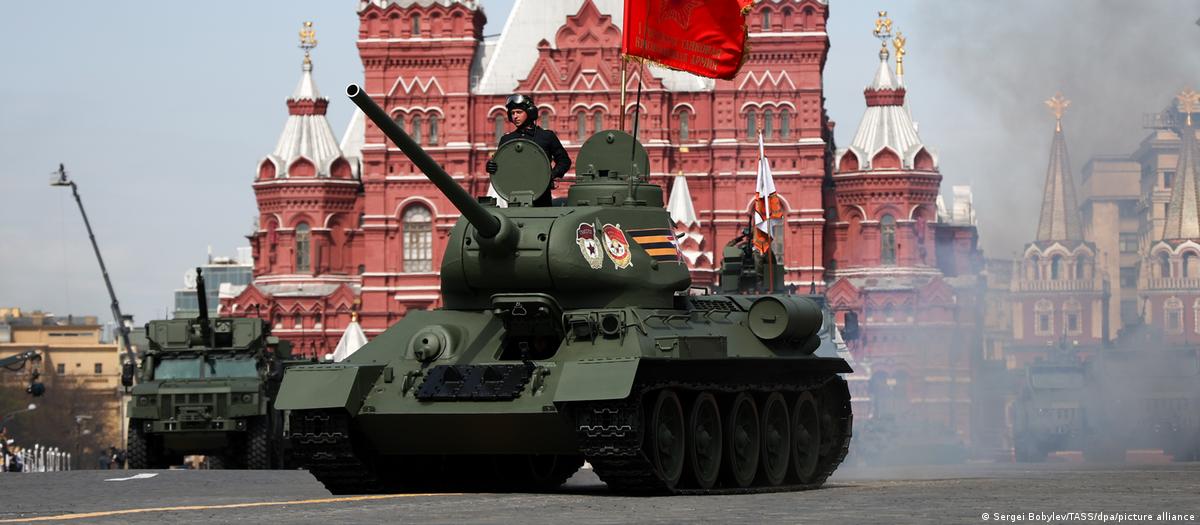
The Russia Victory Day parade is never just a parade. It is a stage-managed show of force, a political ritual, and a message aimed in several directions at once: domestic audiences, foreign capitals, military elites, and a public exhausted by war. When tanks roll through Red Square and leaders stand shoulder to shoulder beneath a haze of patriotism, the point is not only to celebrate the Soviet victory in World War II. The point is to project continuity, control, and endurance at a moment when Russia still needs to prove all three.
That is why this year’s spectacle matters beyond choreography. The Russia Victory Day parade has become a barometer of the Kremlin’s confidence: what hardware appears, who attends, what rhetoric dominates, and how tightly the event is linked to the current war effort. Every visual detail is part of the signal.
- The Russia Victory Day parade is as much political theater as military ceremony.
- Attendance, weapons displays, and speeches reveal how Moscow wants the war to be perceived.
- The event blends history, nationalism, and strategic messaging for audiences at home and abroad.
- What is shown – or omitted – can be as important as what rolls across Red Square.
Why the Russia Victory Day parade still matters
Victory Day remains one of the most emotionally powerful dates on Russia’s political calendar. It draws legitimacy from the memory of the Soviet Union’s staggering sacrifice in defeating Nazi Germany. That historical reservoir gives the Kremlin something few modern governments possess at scale: a unifying national myth with deep moral authority.
But myths are not static. Over time, the state has turned Victory Day into a contemporary instrument. The parade now functions as a live broadcast of national identity, where official memory is fused with present-day policy. The underlying argument is simple: Russia prevailed before, Russia is strong now, and Russia will endure current confrontation because history is on its side.
That is the central trick of the event: it converts remembrance into governance and symbolism into strategic communication.
For the Kremlin, that matters especially during wartime. A parade can reassure supporters, discipline ambiguity inside the elite, and counter the perception that battlefield realities have weakened the state. It can also attempt to normalize sacrifice by framing current costs as part of a larger civilizational struggle.
What the spectacle is really designed to do
Reinforce domestic control
Large state ceremonies work best when they feel inevitable. The visual grammar of the parade – synchronized troops, restored uniforms, anthem-soaked pageantry, carefully selected guests – is built to communicate order. Order matters because prolonged conflict strains public patience, economic resilience, and trust in leadership.
By presenting a polished image of strength, the state offers a kind of political reassurance: institutions remain intact, command remains centralized, and the national mission remains coherent. Even if reality is more complicated, the image has value. Perception is part of power.
Frame the war through historical memory
The Kremlin has repeatedly relied on World War II symbolism to justify current policy. This is politically efficient because the memory of the so-called Great Patriotic War occupies a near-sacred place in Russian public life. When modern conflict is rhetorically linked to that past, criticism becomes harder to voice without appearing disloyal to history itself.
That framing is potent, but it is also revealing. A government confident in the self-evident merits of its present strategy would not need to borrow so heavily from the moral clarity of a previous era. The stronger the historical packaging, the more important the packaging probably is.
Send a message abroad
Foreign leaders, diplomats, defense planners, and markets all read the parade as a signal. Which international guests appear beside Russian officials? Which military units are highlighted? Are strategic systems prominently displayed? Is the speech defensive, triumphant, or escalatory? None of this is accidental.
State ceremonies let Moscow project resilience without directly changing conditions on the battlefield. The event cannot manufacture military success, but it can attempt to shape international interpretation of Russia’s staying power. That matters in any conflict where time, alliances, and psychological pressure are strategic variables.
Read the parade like an analyst, not a spectator
Pageantry can flatten nuance, so it helps to break the event into components. The most useful way to interpret the Russia Victory Day parade is to look at it as a set of signals rather than a single statement.
1. The guest list
Who attends tells you a lot about Russia’s diplomatic posture. High-profile appearances can be used to suggest that Moscow is not isolated, even when its ties to the West remain deeply strained. If visiting leaders are present, the parade becomes a visual rebuttal to narratives of diplomatic containment.
Absences matter too. A thinner or more carefully curated guest lineup can imply caution, limited enthusiasm from partners, or a desire to avoid overpromising geopolitical support.
2. The hardware on display
Military equipment is the parade’s most obvious language. Tanks, missile systems, air defense platforms, and ceremonial flyovers are intended to project capability. But analysts should pay attention to the mix, not just the size. If legacy systems dominate, it may suggest strain in force generation or a preference for symbolic continuity over demonstrating cutting-edge readiness.
Likewise, when advanced systems are highlighted, the signal is often less about immediate battlefield utility and more about strategic deterrence. The Kremlin wants viewers to understand that even amid attrition, Russia remains a military power with depth.
Pro tip: a parade is not an inventory report. It is a curated interface. What appears has been selected to tell a story.
3. The speech
Official language often reveals where the leadership feels pressure. If the address leans heavily on sacrifice, historical grievance, external enemies, or civilizational struggle, that suggests the state is still working to sustain emotional mobilization. If the tone is calmer and more administrative, it can indicate confidence in the durability of the current narrative.
Pay special attention to repeated words and framing. Terms that function like political variables – security, sovereignty, memory, unity, betrayal, resilience – usually point to the message architecture the Kremlin wants citizens and foreign governments to absorb.
4. The omissions
Sometimes the most important signal is what is missing. A reduced display, a narrower speech, or a change in emphasis may reflect operational constraints, security concerns, or sensitivities around losses and resources. In authoritarian systems, omissions are rarely random. They are usually the cleanest clues available.
The politics behind the memory
The Kremlin’s use of Victory Day raises a harder question: what happens when national mourning and national myth become inseparable from current state policy? Over time, the line between honoring past sacrifice and instrumentalizing it can blur.
That blurring has consequences. It narrows space for debate by wrapping contested decisions in sacred memory. It also turns a collective trauma into a renewable political resource, available whenever the state needs to consolidate legitimacy or elevate loyalty over scrutiny.
There is no doubt that Victory Day carries genuine emotional weight for millions of Russians. That sincerity is precisely why the event is so powerful. But genuine memory and political utility can coexist uneasily. The parade thrives in that tension.
Why the Russia Victory Day parade matters beyond Moscow
It is tempting to dismiss military pageantry as theatrical excess. That would be a mistake. The Russia Victory Day parade matters because it sits at the intersection of war communication, domestic politics, and international signaling. It offers insight into how the Kremlin wants the conflict understood and how it wants Russia itself imagined.
For Europe, the parade is a reminder that historical narrative remains central to Moscow’s strategic posture. For governments weighing sanctions, military aid, deterrence, and diplomacy, symbolism is not a side show. Symbolism helps shape escalation thresholds, alliance cohesion, and public expectations.
For businesses and markets, the event can also act as a sentiment indicator. Speeches and staging may not change policy overnight, but they can reinforce assumptions about duration, confrontation, and geopolitical risk. When state ceremony emphasizes endurance and struggle, investors hear a message about time horizons.
The bigger takeaway
The Russia Victory Day parade is best understood as a control panel for narrative power. It merges memory, military imagery, and leadership projection into one heavily edited national performance. That does not mean every signal is reliable, and it certainly does not mean spectacle equals strength. But it does mean the event deserves serious attention.
The smartest reading is neither cynical dismissal nor credulous awe. It is disciplined interpretation. Watch the symbols, compare them with material realities, and notice the gap between projection and proof. That gap is often where the real story lives.
Bottom line: the Russia Victory Day parade is not only about commemorating the past. It is about governing the present and shaping the future through image, ritual, and selective displays of power.
And that is why every march, every guest, every speech line, and every piece of armor on Red Square still matters.
The information provided in this article is for general informational purposes only. While we strive for accuracy, we make no guarantees about the completeness or reliability of the content. Always verify important information through official or multiple sources before making decisions.


