Semi Crash Exposes Real Risks on Prineville Grade
Semi Crash Exposes Real Risks on Prineville Grade
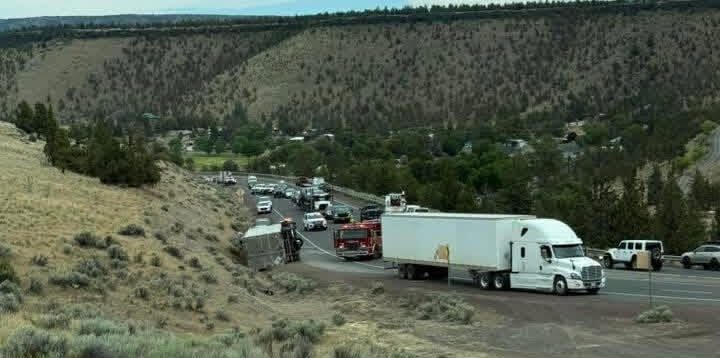
A semi rollover on Prineville Grade is more than a local traffic headache. It is a blunt reminder that steep rural corridors still carry outsized risk for commercial drivers, first responders, and everyone sharing the road. When a heavy truck loses stability on a grade like this, the consequences ripple fast: blocked lanes, delayed deliveries, hazardous cleanup, and a rescue scene that can stretch limited resources thin.
What makes this incident matter is not just the crash itself, but what it reveals about freight movement on demanding terrain. Long downgrades punish brakes. Tight curves test load balance. Weather can turn a manageable descent into a near-impossible one. For communities that depend on these roads, the question is not whether another wreck could happen. It is how many warning signs get ignored before the next one does.
- The semi rollover on Prineville Grade highlights the danger of steep rural freight routes.
- Heavy trucks face amplified risks from braking stress, load shift, and driver error on grades.
- Local road closures can quickly become economic and emergency response problems.
- Better signage, enforcement, and driver preparation can reduce repeat incidents.
- This crash is a case study in why infrastructure and freight safety planning still lag behind reality.
Why the semi rollover on Prineville Grade matters
A rollover involving a commercial truck is never just a single-vehicle event. A semi carries momentum that can turn a routine mistake into a full roadway disruption. On a steep route like Prineville Grade, the margin for error narrows dramatically. A driver descending with too much speed, a shifting load, or a braking system under strain can quickly lose control.
That is why this kind of crash deserves more than a passing headline. Rural routes often connect farms, mills, freight depots, and regional highways, which means they function like economic arteries. When a semi blocks a key grade, the impact can reach well beyond the crash site. Emergency vehicles may face slower access. Other drivers may be forced onto longer detours. Businesses waiting on shipments can absorb real delays.
Key insight: Rural freight routes are often treated as low-profile roads, but they carry high-consequence traffic. When a semi rolls over there, the system around it feels the shock.
What likely goes wrong on steep grades
Without speculating on the exact cause of this crash, it helps to understand the mechanics that make grades dangerous. A truck on a steep descent must manage speed, braking heat, and load stability at the same time. If any one of those factors slips, the whole rig can become unstable.
Brake stress and downhill momentum
Heavy trucks do not stop like passenger cars. They rely on carefully managed braking over long distances, especially on downgrades. If a driver rides the brakes too long, they can overheat. If they do not brake enough, speed builds rapidly. Either scenario can lead to a dangerous loss of control.
Drivers are trained to use lower gears and controlled braking techniques, but real-world conditions can still overwhelm even experienced operators. A grade that looks routine in a personal vehicle can be punishing in a loaded semi.
Load shift and rollover physics
Rollover risk spikes when cargo is not distributed evenly or when a truck takes a curve too fast. A high center of gravity, especially in trailers with uneven loads, can cause the trailer to lean past its stability threshold. Once that tipping point is reached, the driver may have almost no recovery window.
This is why freight safety is not only about driver skill. It is also about dispatch planning, cargo loading, trailer maintenance, and route selection. A bad decision upstream can become a wreck downstream.
Road design and visibility
Rural grades often lack the forgiving geometry found on major highways. Narrow shoulders, limited runoff space, and fewer barriers can make even a minor error more severe. Add low visibility, weather, or traffic congestion, and the road itself becomes part of the hazard.
When people talk about transportation safety, they often focus on driver behavior. That matters. But infrastructure can either cushion mistakes or magnify them. On Prineville Grade, the margin appears unforgiving.
Why this keeps happening on freight corridors
Truck crashes on difficult terrain are not random. They reflect a larger tension in modern freight systems: we keep asking roads designed for lighter, slower traffic to absorb heavier, more frequent commercial use. That mismatch is everywhere, especially in growing regions where industrial traffic intersects with local travel patterns.
There is also the pressure of just-in-time logistics. Drivers are under deadline pressure, fleets are trying to maximize efficiency, and route planners are optimizing for distance and time rather than the human reality of steep grades and weather swings. The result is a system that can push trucks into environments where one small mistake becomes a public safety incident.
That is the uncomfortable truth: many of these rollovers are preventable at the systems level, even if they look like isolated driver errors in the moment.
What local communities feel after a crash
For residents near a rollover scene, the disruption starts immediately. Road access may be restricted while responders assess fuel leaks, cargo hazards, and vehicle recovery needs. If the semi is carrying anything hazardous or spill-prone, cleanup can expand the incident far beyond a tow and traffic control operation.
There is also the slower, less visible cost. People commuting to work may lose time. School buses may be rerouted. Delivery schedules can slide. Small towns often have fewer alternate routes, so one blocked grade can create a chain reaction that touches daily routines across the region.
Emergency response is another pressure point. Rural departments and highway teams often have to work with longer travel distances and fewer nearby backup resources. A semi rollover can tie up specialized equipment that is not sitting around every corner. That makes prevention far cheaper than reaction, every time.
What drivers and fleets can do better
The best response to a crash like this is not to shrug and call it bad luck. Fleets and drivers can take concrete steps to lower the odds of a repeat incident on steep rural roads.
- Route plan with terrain in mind: do not treat all roads as equal. Grades, curves, and weather should affect dispatch decisions.
- Pre-trip brake checks: verify braking performance before entering steep descents.
- Load balance audits: confirm cargo is distributed to minimize sway and rollover risk.
- Speed discipline: descend at a speed that leaves room to react, not one that saves seconds.
- Driver coaching: reinforce mountain and grade-driving techniques, especially for newer operators.
For individual drivers, the safest move is often the least dramatic one: slow down earlier than feels necessary, use engine braking correctly, and never assume a familiar grade is harmless just because it went fine last week. Familiarity is one of the biggest traps in trucking safety.
Pro tip: If a route has a reputation among drivers, believe the reputation. Local knowledge is often the earliest warning system available.
What this means for road safety policy
Incidents like the semi rollover on Prineville Grade should push policymakers to think beyond reactive policing. Warning signs matter. So do lower advisory speeds, better runaway truck design where appropriate, and stronger maintenance standards for freight vehicles operating on challenging grades.
But the bigger opportunity is data-driven prevention. Agencies can study where heavy-truck rollovers cluster, which conditions are present, and how often drivers are using the route under adverse weather or time pressure. That kind of analysis can guide targeted improvements without waiting for another crash.
Investments in road safety rarely get the attention they deserve because success is invisible. A well-designed grade does not make headlines. But every avoided rollover is a disruption that never happens, a tow that never arrives, and a family that never gets a knock at the door.
The bigger lesson from Prineville Grade
This crash is a local story with a national pattern behind it. Rural infrastructure, freight demand, and driver pressure are colliding in ways that the transportation system still struggles to manage. A semi rollover is dramatic, but the underlying problem is quieter and more dangerous: too many roads are absorbing too much risk with too little margin.
That is why the semi rollover on Prineville Grade deserves attention beyond the immediate scene. It is a warning about planning, enforcement, training, and the limits of infrastructure built for a different era of traffic. The next step is not just clearing the wreck. It is asking what would have kept it from happening in the first place.
Until those questions get serious answers, steep grades will remain what they have always been: places where gravity, speed, and human judgment can collide with expensive consequences.
The information provided in this article is for general informational purposes only. While we strive for accuracy, we make no guarantees about the completeness or reliability of the content. Always verify important information through official or multiple sources before making decisions.