Sheinbaum Reshapes Mexico Power
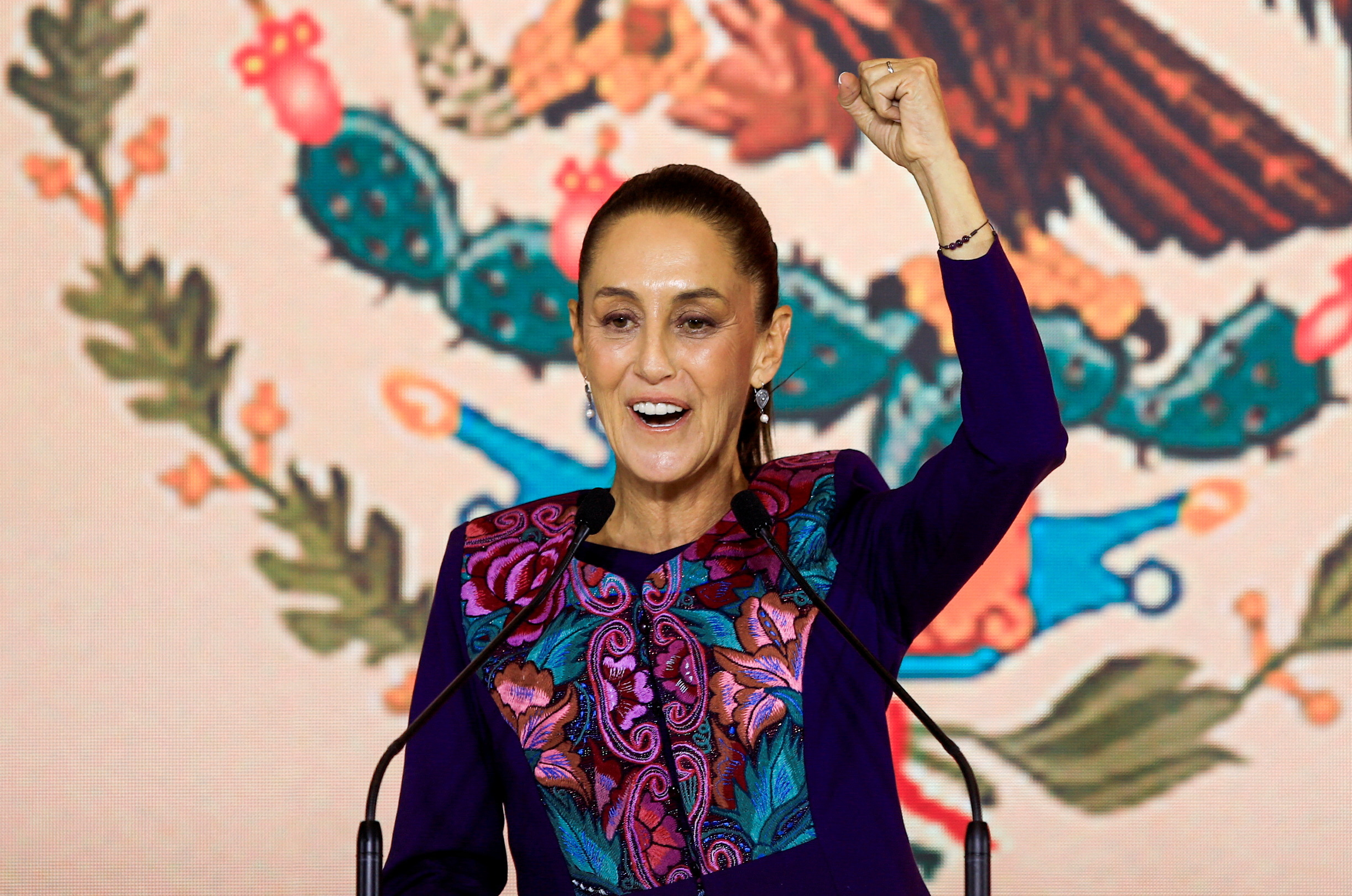
Mexico rarely moves in small increments, and Claudia Sheinbaum’s rise has made that even clearer. The country is entering a phase where political legitimacy, institutional power, security policy, and economic confidence are colliding at full speed. For voters, the question is simple but urgent: can a new administration convert electoral strength into durable results? For markets, civil society, and regional observers, the stakes are even higher. A strong mandate can unlock reform, but it can also concentrate power in ways that test democratic guardrails. That is why the Sheinbaum Mexico political shift matters far beyond a single headline. It is a stress test for how the country governs itself after years of polarization, violence, and deep public frustration with the pace of change.
- Claudia Sheinbaum enters a pivotal moment with the potential to redefine Mexico’s political and policy direction.
- The Sheinbaum Mexico political shift is about more than leadership style: it touches institutions, security, business confidence, and democratic balance.
- Her biggest challenge is execution – turning broad political support into measurable outcomes without overcentralizing power.
- Investors and citizens will watch the same signals: stability, rule of law, public spending discipline, and security performance.
Why the Sheinbaum Mexico political shift feels bigger than a transition
Every incoming leader promises continuity in some areas and change in others. But Mexico’s current handoff feels unusually loaded because it comes after an era defined by ideological intensity, institutional confrontation, and a governing project built around direct political connection with the public. Sheinbaum is not arriving as an outsider trying to break the system open. She is stepping in as the political heir to an existing movement, while also facing pressure to prove she is more than a caretaker.
That tension matters. If she leans too heavily on inherited political formulas, she risks being seen as an extension rather than a leader. If she moves too aggressively to establish independence, she could unsettle the coalition that brought her to power. This is the central paradox of the moment: political continuity may be her greatest asset and her biggest constraint.
A decisive mandate can stabilize a government early, but it also raises expectations fast. In Mexico, expectations around security, growth, and public services do not stay patient for long.
What Sheinbaum inherits
Any serious reading of this moment has to start with the landscape she inherits. Mexico is not dealing with a single crisis. It is managing overlapping structural pressures that touch nearly every ministry and every region.
Security remains the hardest test
No administration in Mexico gets to avoid the security file. Violence, organized crime, extortion, and local-state fragility continue to shape daily life and public trust. Campaign rhetoric can frame security in broad moral terms, but governing requires granular coordination between federal, state, and municipal authorities. That means intelligence, policing capacity, judicial follow-through, and sustained local presence.
The political danger is obvious: security deterioration can overshadow gains everywhere else. A government can expand social programs, hold the fiscal line, and project discipline – but if citizens still feel unsafe, legitimacy erodes quickly.
Economic credibility is non-negotiable
Mexico occupies a uniquely strategic position in North America. It benefits from manufacturing depth, supply chain relevance, and geopolitical proximity to the United States. But those advantages are not self-executing. Investors reward predictability, not just potential.
That means Sheinbaum’s team will be judged on a familiar but unforgiving checklist: fiscal discipline, regulatory clarity, infrastructure execution, energy policy coherence, and respect for contracts. Even where the administration seeks a stronger state role, it will need to communicate a clear operating environment.
Institutional trust is fragile
One of the defining debates in Mexico has been whether institutional reform is strengthening democracy or weakening independent checks. This is where the Sheinbaum Mexico political shift becomes especially consequential. Citizens may support decisive government, but long-term credibility depends on whether courts, regulators, electoral bodies, and oversight institutions retain public confidence.
A government that concentrates authority too visibly can win tactical battles while losing strategic legitimacy. And in modern politics, legitimacy is not just a domestic issue. It shapes investor perception, diplomatic confidence, and social cohesion.
How Sheinbaum could govern differently
Sheinbaum’s opportunity is not simply to preserve a political project. It is to upgrade it. Her public image has often leaned more technocratic and data-oriented than purely populist. If that instinct carries into government, Mexico could see a style that is less improvisational and more systems-driven.
A technocratic edge could become her signature
There is a reason many observers focus on whether she governs through planning, metrics, and implementation discipline. Modern presidencies are rarely judged by ideology alone. They are judged by whether policy survives contact with reality.
That opens a lane for Sheinbaum to distinguish herself through:
- Sharper policy sequencing – prioritizing reforms that can be executed without creating unnecessary institutional shock.
- Data-driven security management – using measurable operational benchmarks instead of broad messaging alone.
- Infrastructure realism – emphasizing delivery timelines, maintenance, and budget sustainability.
- Administrative coordination – reducing the gap between federal ambition and local implementation.
If she succeeds there, the administration may feel less like a continuation of political momentum and more like a shift toward managerial control.
But governing by metrics has limits
Technocratic branding can help with elite confidence, yet it does not automatically solve political friction. Mexico’s national challenges are not spreadsheet problems alone. They involve informal power structures, regional inequality, cartel influence, and bureaucratic capacity gaps that resist clean modeling.
That is why any promise of efficient governance needs to be balanced with political realism. A dashboard can track homicide rates or investment flows, but it cannot instantly rebuild trust in a town where the state has long felt absent.
The smartest governments know the difference between having data and having control. Mexico’s next phase will test whether technical competence can survive entrenched political realities.
The business and market angle no one can ignore
For executives, manufacturers, and global investors, Mexico remains too important to watch casually. Nearshoring, trade integration, labor scale, and geographic advantage keep the country at the center of strategic planning. But opportunity alone does not close boardroom debates. Stability does.
That puts Sheinbaum in a delicate but potentially powerful position. If she can combine political continuity with regulatory reassurance, Mexico could deepen its appeal as a production and logistics hub. If she sends mixed signals on energy, judicial independence, or contract certainty, that advantage could be diluted.
The smartest read is not binary optimism or binary fear. It is conditional confidence. Markets can work with ideological governments. They struggle more with uncertainty, internal contradiction, and policy volatility.
Signals that will matter early
- Cabinet credibility – personnel choices often reveal more than campaign language.
- Budget discipline – spending priorities show whether political ambition is grounded in fiscal realism.
- Security coordination – business confidence rises when operational governance looks coherent.
- Institutional tone – respect for independent bodies influences long-term risk perception.
These are not abstract metrics. They form the operating environment businesses use to make decisions on hiring, factory expansion, logistics planning, and capital deployment.
Why the Sheinbaum Mexico political shift matters for democracy
The deeper issue here is not whether one leader wins a political mandate. It is what happens when a dominant movement seeks to convert electoral support into broader institutional reach. Democracies are strongest when winning coalitions can govern effectively and tolerate scrutiny. Mexico’s next phase will be judged on whether those two conditions can coexist.
Supporters will argue that a strong government is necessary to break policy paralysis and push through overdue reforms. Critics will warn that institutional weakening rarely announces itself dramatically – it often happens through incremental normalization. Both concerns are valid, which is exactly why this period deserves close attention.
If Sheinbaum can demonstrate that reform does not require democratic erosion, she will do more than stabilize her administration. She will define a model of power that resonates well beyond Mexico.
What citizens should watch next
Political narratives often become too personality-driven. The better approach is to watch outputs, not slogans. Citizens trying to understand the trajectory of the new administration should focus on a few practical indicators.
- Security trends at the local level – national messaging matters less than whether daily life becomes safer.
- Public service reliability – transportation, healthcare access, and infrastructure are concrete tests of competence.
- Institutional conflict – recurring clashes with oversight bodies can signal deeper governance stress.
- Economic resilience – jobs, inflation pressure, and investment momentum will shape public patience.
Pro tip: ignore political theater unless it changes governing capacity. The most important shifts are usually visible in budgets, staffing, enforcement patterns, and implementation speed.
The real challenge is turning mandate into machinery
Winning an election is proof of political strength. Running a state is proof of something harder: administrative endurance. That is the threshold Sheinbaum now faces. Mexico’s problems are large enough to reward boldness, but complex enough to punish overreach. The next chapter will not be decided by branding, applause, or inherited loyalty. It will be decided by whether the government can build machinery that works under pressure.
That is why the Sheinbaum Mexico political shift deserves close, unsentimental attention. It could produce a more disciplined governing model, a more centralized one, or a volatile mix of both. For Mexico, this is not just a leadership change. It is a test of whether political momentum can become institutional performance without hollowing out the checks that make performance sustainable.
If Sheinbaum gets that balance right, she will not simply extend an era. She will define the next one.
The information provided in this article is for general informational purposes only. While we strive for accuracy, we make no guarantees about the completeness or reliability of the content. Always verify important information through official or multiple sources before making decisions.