South Korea Rocket Failure Exposes a Space Race Problem
South Korea Rocket Failure Exposes a Space Race Problem
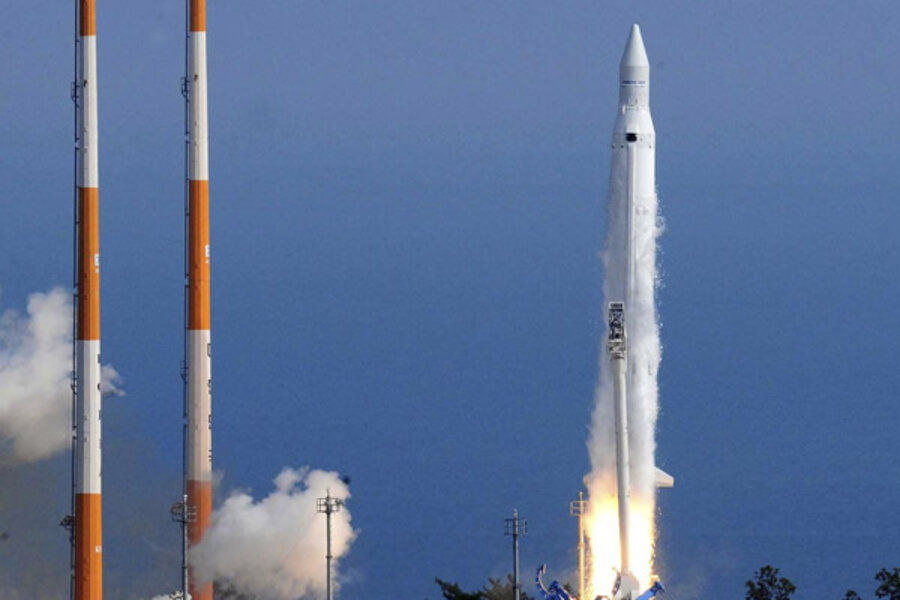
Space ambition looks glamorous right up until a launch goes wrong. South Korea is learning that lesson in public, at a moment when national space programs are no longer just about prestige – they are about security, supply chains, communications, and who gets a seat at the next industrial revolution. The latest South Korea rocket failure is more than a single bad day on a launch pad or in the sky. It is a stress test for a country trying to prove it can build reliable access to orbit in an increasingly crowded and unforgiving market. For governments chasing sovereign launch capability, the message is uncomfortable but clear: getting to orbit is still brutally hard, and one setback can ripple across politics, budgets, and long-term strategy.
- The South Korea rocket failure highlights how difficult it is to build dependable domestic launch capability.
- Space launches now carry strategic weight far beyond science, including defense, telecoms, and industrial policy.
- Repeated reliability matters more than a single successful demonstration flight.
- The setback could reshape timelines, public confidence, and private-sector momentum in South Korea’s space sector.
Why the South Korea rocket failure matters beyond one mission
Rocket failures are not rare in aerospace history, but they are never routine. Every launch vehicle is a stacked tower of precision engineering, tight tolerances, extreme heat, violent vibration, and software that has to make the right decisions in fractions of a second. When a mission fails, what breaks is not only hardware. Confidence breaks too.
The South Korea rocket failure lands at a sensitive time. More countries want independent launch systems because relying entirely on foreign rockets creates strategic vulnerability. A nation without its own path to orbit is exposed to export controls, diplomatic friction, launch backlogs, and pricing power from overseas providers. That is why domestic rocket programs are often defended even when they are expensive and politically risky.
Access to space has become infrastructure. It supports weather monitoring, navigation resilience, Earth observation, national security payloads, and commercial satellite deployment. A failed launch can delay all of that at once.
The deeper issue with sovereign launch programs
The central promise behind a national rocket program is simple: control your own destiny. The reality is far messier. Building a launch capability requires mastery across propulsion, materials science, guidance systems, stage separation, range safety, manufacturing quality, and testing culture. Missing any one of those can sink a mission.
Reliability is the real product
In spaceflight, headlines often focus on the first successful launch, but that is not what customers buy. They buy reliability. A rocket that flies once is a proof point. A rocket that flies repeatedly without major incident becomes a platform. That distinction matters because satellite operators, insurers, and government agencies plan around confidence, not hope.
This is where the South Korea rocket failure becomes strategically important. If a nation wants to compete or even just remain autonomous in launch services, it has to prove not only that its rocket can reach orbit, but that it can do so on schedule and with predictable performance.
Test culture beats symbolism
There is always political pressure to celebrate milestones, especially in national space programs. But rockets do not care about symbolism. They reward test discipline. Mature launch organizations build systems that assume things will go wrong and create layers of verification to catch problems before ignition.
That means exhaustive component qualification, simulation, static fire campaigns, fault-tree analysis, and brutal post-flight reviews. In practical terms, teams often work through data traces that look like telemetry.log, engine performance curves, thermal anomalies, sensor drift, and timing mismatches in stage events. The glamorous part is the launch video. The important part is the boring engineering after the cameras leave.
The hard truth of spaceflight is that national pride can fund a rocket, but only process discipline can make it reliable.
How the South Korea rocket failure could affect the wider market
South Korea is not building in isolation. It is entering a launch market that is already more competitive and less forgiving than many governments expected. Commercial providers have raised the bar on cadence, cost, and recoverability. Meanwhile, state-backed programs are under pressure to justify why they should exist if global launch options already exist.
That does not make domestic programs irrelevant. It makes them answer a tougher question: what is their strategic advantage?
Commercial pressure is relentless
Private launch firms have conditioned customers to expect faster iteration and clearer pricing logic. Governments, by contrast, often have slower procurement cycles and layered oversight. A setback like the South Korea rocket failure can widen that gap if it triggers caution, redesign delays, or budget scrutiny.
Commercial satellite operators typically want three things:
- Launch dates they can trust
- Insurance conditions they can survive
- Vehicles with repeatable flight records
Until a national launcher can offer those with consistency, it remains strategically useful but commercially limited.
Regional competition is getting sharper
Asia’s space sector is evolving quickly. Launch capability is no longer a symbolic club. It is becoming part of regional influence. Countries that can place payloads in orbit under their own control gain leverage in research, defense planning, and high-value manufacturing. They can also shape local startup ecosystems around satellite services, analytics, and downstream applications.
That is why the South Korea rocket failure matters outside South Korea. Rival governments and industry players are watching to see whether this is a temporary engineering setback or a sign that timelines have been too optimistic.
What likely happens next after the South Korea rocket failure
Space programs rarely die from a single launch failure. More often, they enter a familiar cycle: investigation, redesign, verification, political reassurance, and a carefully managed return to flight. The key variable is how transparent and technically rigorous that process becomes.
The investigation phase is everything
The next step is usually a fault review that isolates the root cause. That could involve propulsion instability, software sequencing, structural stress, valve behavior, sensor faults, or stage separation timing. The public may hear a simplified explanation, but internally the analysis tends to get granular fast.
Engineers typically work through a chain that looks something like this:
- Review mission telemetry and anomaly timestamps
- Compare actual vehicle behavior against expected flight envelopes
- Isolate whether the issue was hardware, software, environment, or procedure
- Validate corrective actions through ground testing
- Clear the vehicle for a return-to-flight campaign
If that work is rushed, the same failure mode can come back. If it is done thoroughly, the program often becomes stronger.
Public trust and political patience will be tested
National space programs live at the intersection of engineering and politics. Taxpayer-funded launch efforts need public legitimacy, and that legitimacy weakens when missions fail visibly. Leaders then face a classic dilemma: stay patient and fund the long game, or react to headlines and demand accelerated fixes.
The worst response to a rocket failure is performative urgency. Space systems do not improve because officials want a faster press conference. They improve when teams are allowed to diagnose the problem completely, update procedures, and test the changes until the evidence is convincing.
A failed launch is costly, but a rushed relaunch after a shallow investigation can be catastrophic for a program’s credibility.
Why this matters for technology strategy
The South Korea rocket failure is ultimately a technology strategy story, not just an aerospace story. Governments everywhere are trying to build resilience in critical systems: chips, batteries, AI infrastructure, telecom networks, and space access. In each case, the same principle applies: domestic capacity is expensive up front, but dependency can be even more expensive later.
Space is particularly brutal because the barriers to entry are so high. You cannot patch a rocket in orbit the way you update an app with v2.0.1. You do not get unlimited retries. Every launch is a compressed exam in systems engineering, and the result is painfully public.
For South Korea, the broader strategic question is not whether setbacks will happen. They will. The real question is whether the country can build the institutional muscle to absorb failure, learn quickly, and keep investing with discipline. That is what mature space powers do best.
The long game after the South Korea rocket failure
There is a temptation to read every launch setback as a verdict. It rarely is. More often, it is a checkpoint. Some of the most successful space programs in history were built through visible failures, expensive delays, and hard-earned engineering lessons. What separated the winners was not perfection. It was persistence paired with technical honesty.
South Korea still has strong reasons to pursue launch autonomy. The country has advanced manufacturing depth, a sophisticated technology base, and clear strategic incentives. But the South Korea rocket failure is a reminder that ambition alone does not close the gap between prototype and dependable infrastructure.
The next few moves will matter more than the setback itself. If investigators identify the fault cleanly, communicate with discipline, and treat reliability as the product, this failure may become a necessary turning point rather than a defining collapse. If not, it risks becoming the kind of delay that drains political capital and hands momentum to foreign launch providers.
That is the modern space race in one uncomfortable sentence: it is not enough to launch once. You have to make orbit feel boring.
The information provided in this article is for general informational purposes only. While we strive for accuracy, we make no guarantees about the completeness or reliability of the content. Always verify important information through official or multiple sources before making decisions.