Spain and Argentina Set Up World Cup Collision
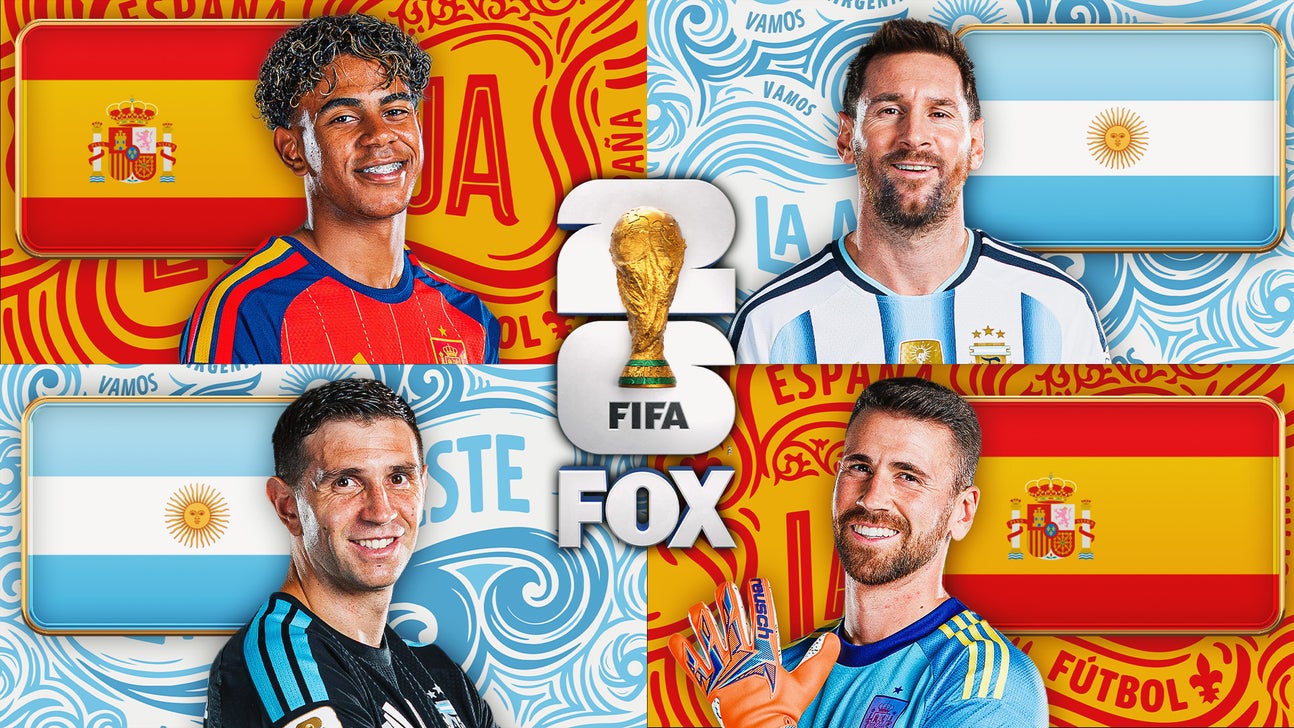
Spain and Argentina Set Up World Cup Collision
The road to a FIFA World Cup final is usually paved with tactics, depth charts, and nerves. This one feels bigger. Spain and Argentina are not just moving toward a possible championship showdown – they are carrying the weight of eras. On one side, Argentina still has the gravitational pull of Lionel Messi, even as the clock keeps ticking. On the other, Spain has Lamine Yamal, a teenager already being discussed like a franchise-defining force. Add the sport’s global politics, a media machine hungry for symbolism, and the possibility of a final that looks as much like a cultural event as a match, and you get something rare: a World Cup narrative that is already larger than the bracket. The real question is no longer whether the matchup would be compelling. It is whether football can contain it.
- A Spain vs Argentina final would be a generational football event with global commercial and cultural impact.
- Messi versus Yamal frames the match as a passing-of-the-torch storyline, even if the football itself is more complex.
- The World Cup remains a geopolitical stage where sports, branding, and state power intersect.
- Tactical depth, squad balance, and pressure management may matter more than star power alone.
- Any final of this scale would reshape the tournament’s legacy, regardless of the winner.
The World Cup final everyone will pretend not to be thinking about
A Spain-Argentina final has become one of those football hypotheticals that stops being hypothetical the moment the draw, the form table, and the stars line up. The attraction is obvious. Argentina brings history, volatility, and Messi’s unfinished mythology. Spain brings structure, technical control, and a new face of generational promise in Yamal. If that sounds like a script written for maximum drama, that is because it is. But the reason this matchup resonates goes beyond nostalgia or celebrity. It is a collision between two football identities: Argentina’s emotionally charged, detail-agnostic ruthlessness and Spain’s possession-driven system that tends to punish chaos by starving it of oxygen.
That tension is what makes a possible Spain vs Argentina World Cup final so potent. Fans are not just watching for goals. They are watching for narrative confirmation: Is Messi’s era really ending? Is Yamal already too good, too young, too central to ignore? And perhaps more importantly, can a tournament still produce a final that feels genuinely historic rather than merely packaged as historic?
Why the Spain vs Argentina World Cup final matters
World Cups are rarely only about football. They are about legitimacy. They are about soft power, national identity, broadcast economics, and the endless search for a moment that can travel from one hemisphere to another and still land with force. A final between Spain and Argentina would not just deliver ratings. It would deliver meaning for sponsors, broadcasters, and governing bodies that increasingly depend on elite player narratives to amplify the event itself.
For Argentina, the stakes are emotional and existential. Messi has already conquered the sport, but international football always leaves room for one more chapter. For Spain, the stakes are architectural. A final of this scale would signal that the post-golden-generation rebuild has matured faster than expected, with Yamal serving as the most visible proof that the next era is not hypothetical.
Expert take: Big finals are no longer just decided by squads. They are shaped by storylines that drive attention, and attention now shapes how football is consumed, monetized, and remembered.
Messi, Yamal, and the passing of the torch that football cannot resist
The temptation to frame this as Messi versus Yamal is almost irresistible. It is clean, it is cinematic, and it gives media teams a ready-made headline. But the deeper truth is more interesting. Messi does not need to be directly opposed by Yamal for the match to function as a symbolic handoff. He simply needs to occupy the field while Yamal occupies the future.
That is what makes the pairing so powerful. Messi is the final boss of a football generation that grew up on the promise of perfection and spent years arguing over whether he had truly completed the game. Yamal, by contrast, is the system’s fresh output: fearless, technical, and too young to have inherited football’s usual emotional baggage. He is not a replacement for Messi. He is what comes after the need for a replacement becomes unavoidable.
The danger, of course, is over-selling the symbolism and under-selling the football. Finals like this can collapse under their own mythology if one team tries to play the narrative instead of the match. The better question is whether Spain can use its structure to control Argentina’s transitions, and whether Argentina can drag the game into the kind of messy, high-leverage chaos it tends to handle well.
The tactical chess match beneath the spectacle
Strip away the headlines and the game becomes a question of spacing, pressing triggers, and decision-making in the final third. Spain’s strength usually lies in its ability to compress the pitch, circulate the ball with purpose, and force opponents into reactive football. Argentina, especially in knockout settings, often excels at the opposite: reading the emotional temperature of a match and punishing the first tactical mistake that matters.
Spain’s edge
Spain’s path to control depends on three things: clean buildup, midfield superiority, and wide players who can break a low block without leaving the team exposed. If Spain can pin Argentina deep and recycle possession without becoming sterile, it can reduce the match to territory and patience. That is often where disciplined teams thrive in finals.
Argentina’s edge
Argentina does not need to win the possession battle. It needs to win the moments battle. One transition, one set piece, one lapse in shape, and the emotional equilibrium of the match changes. That is the genius of tournament football: the team that looks less polished over 90 minutes can still be the one that survives better under pressure.
That is why any prediction about a World Cup final between these two should come with a warning label. The likely winner is not necessarily the better team across a season. It is the team that handles emotional volatility better over one night.
The business of a final this big
Every elite football moment now doubles as an economic event. A Spain-Argentina final would create massive commercial lift across broadcast rights, betting markets, merchandising, and social video ecosystems. The match would dominate the internet long before kickoff, and that is not an accident. Modern football is increasingly optimized for shareability, with star players acting as distribution engines for the tournament itself.
That matters because FIFA, sponsors, and broadcasters all benefit from a final that crosses demographics. Messi draws older fans and legacy viewers. Yamal draws younger audiences who want the next thing before the old thing is fully gone. Spain and Argentina together create a global content package that is easy to market and difficult to ignore.
There is also a harder, less glamorous truth: football’s biggest events are now measured in audience retention as much as sporting quality. A final with this kind of star power can become a once-in-a-generation commercial asset, especially if it produces a dramatic, close contest rather than a blowout.
Politics never stays off the pitch for long
Major international football events are never purely about the teams. They are also about the institutions around them, the countries they represent, and the symbolic weight attached to hosting and spectacle. When political figures, diplomatic optics, or public controversies hover near a World Cup, they do more than create noise. They change how the event is interpreted.
That is one reason a Spain-Argentina final would matter beyond sport. It would unfold in a media environment where every gesture is over-read and every image is recycled as proof of something larger. Football has always been political, but the modern version is more explicit about it. The pitch is still the center. The camera never lets it stay that way for long.
Bottom line: The biggest games today are not only contests between national teams. They are contests over meaning, influence, and who gets to define the next football era.
What would decide the match
If this final happens, the decisive factors will likely be more mundane than the hype suggests. Tournament finals usually reward teams that stay compact, manage momentum, and refuse to panic when the rhythm breaks. That means the following will matter more than any single superstar moment:
- Midfield control: Whoever wins second balls and keeps transitions clean gains a major edge.
- Game-state discipline: Falling behind early would dramatically favor the team with better emotional control.
- Set pieces: Finals are often decided by one dead-ball sequence, not 20 minutes of dominance.
- Bench impact: Fresh legs and tactical flexibility can swing a match that starts to lock up.
- Composure under pressure: The player who keeps making simple choices may matter more than the one chasing brilliance.
That last point is the real sleeper. Finals reward clarity. The team that can stay boring longer often gets to be heroic later.
What this means for the future of international football
A Spain-Argentina final would tell us that international football still has the power to produce events that feel larger than club competition, even in an era dominated by year-round player branding and constant media saturation. It would also underscore a simple reality: global football is increasingly built on intergenerational storytelling. The sport sells continuity, but it thrives on replacement. Messi to Yamal is the most obvious version of that transition, even if the actual handoff is messier and slower than the marketing suggests.
For Spain, such a final would validate its pipeline. For Argentina, it would confirm that legacy can still punch above structure when the stakes are highest. For the sport, it would be a reminder that the World Cup still matters because it can turn a tournament bracket into a cultural memory.
And that is the real lure here. Not just the possibility of a great match, but the possibility of a match that changes how we talk about football after it ends.
The verdict
A Spain vs Argentina World Cup final would not merely be a headline. It would be a referendum on eras, styles, and the way modern football turns players into symbols before the final whistle even blows. Messi would bring the gravity of history. Yamal would bring the pressure of tomorrow. The teams would bring enough tactical friction to make it more than a showpiece. That combination is rare, and rare is what the World Cup is supposed to deliver.
If this final happens, the sport will get what it always promises and so rarely fully provides: a night that feels impossible to reduce. And that, more than any slogan or broadcast package, is why the football world will be watching.
The information provided in this article is for general informational purposes only. While we strive for accuracy, we make no guarantees about the completeness or reliability of the content. Always verify important information through official or multiple sources before making decisions.


