Starbucks Korea Raid Exposes a Campaign That Turned a Café Into a Battlefield
Starbucks Korea Raid Exposes a Campaign That Turned a Café Into a Battlefield
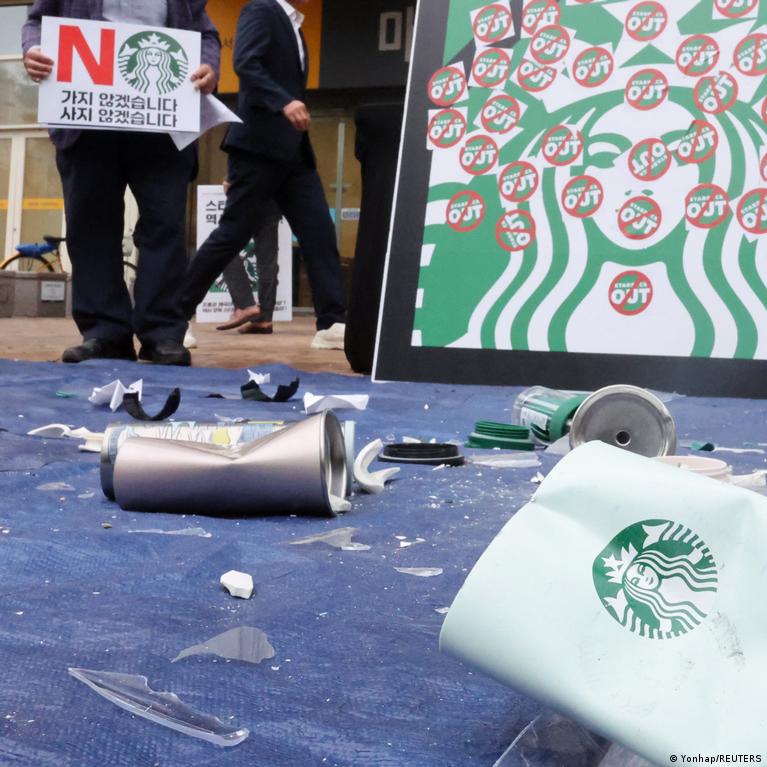
The Starbucks Korea raid is not just another shocking protest image. It is a blunt reminder that brands can become unwilling stages for political memory, and that modern activism now lives at the intersection of spectacle, symbolism, and public backlash. When police moved in after a campaign tied to Gwangju Massacre remembrance, the story stopped being about a coffee chain and started becoming about the pressure points in South Korea’s civic culture. That matters far beyond one store. It raises hard questions about whether high-visibility protest still changes minds, or whether it simply escalates the conflict while dragging private companies into state trauma they did not create. For global brands, the lesson is uncomfortable: neutrality is often an illusion, and local history can overwhelm global branding in seconds.
- The Starbucks Korea raid shows how protest tactics can rapidly shift from symbolic to disruptive.
- The campaign was tied to the Gwangju Massacre, a historically loaded subject in South Korea.
- Global brands are increasingly collateral damage in domestic political disputes.
- The real battle is over memory, legitimacy, and public attention, not coffee.
Why the Starbucks Korea raid matters
The Starbucks Korea raid landed because it sits at the collision point of three forces: corporate visibility, political symbolism, and historical grievance. Starbucks is not merely a café chain in this context. It is a public-facing, internationally recognized brand that can be turned into a platform, a target, or a megaphone depending on who controls the narrative. The result is a story with far more reach than the physical location itself.
For readers outside South Korea, the key thing to understand is that Gwangju is not a generic protest reference. It is a sacred political memory for many Koreans, bound to state violence, democratic struggle, and the ongoing fight over how history should be remembered. When activists choose that terrain, they are not just demonstrating. They are invoking national identity, moral authority, and unresolved wounds.
When a protest uses a multinational brand as its stage, the company becomes the set dressing for a much bigger argument about legitimacy and memory.
What happened and why the response escalated
At the center of the Starbucks Korea raid is a campaign that appears to have moved from commemoration into confrontation. The exact tactics matter less than the strategic logic behind them: use a highly visible consumer space to force attention onto an issue many people would otherwise scroll past. That is a classic pressure tactic. It can work. It can also backfire spectacularly.
Police involvement signals that the campaign crossed a threshold from expression into public order concerns. That is often where these stories change tone. What begins as a political statement quickly becomes a question of access, safety, and whether a business has been made into an unwilling participant in a broader conflict.
For Starbucks, the optics are brutal. The company is not the origin of the grievance, but in a moment like this it absorbs the reputational fallout anyway. That is the modern brand paradox: being everywhere means being vulnerable everywhere.
Starbucks Korea raid and the power of symbolic targets
Why target a Starbucks at all? Because symbolic targets compress attention. People know the logo. They know the brand. They know the setting. That familiarity creates instant visibility, which is gold for activists trying to break through media fatigue. The problem is that symbolism cuts both ways. The more recognizable the target, the easier it is for critics to dismiss the protest as theater.
Symbolic disruption works until it doesn’t
Activists have long understood that ordinary spaces can become powerful stages. Sit-ins, occupations, banner drops, and vigils all depend on transforming a familiar environment into an argument. But the Starbucks Korea raid underscores a hard truth: symbolic disruption only has value if the audience sees the protest as morally coherent. If the public concludes the target is arbitrary, the message collapses into noise.
That is especially true for multinational chains. They sit in a strange category: local enough to be present in the street, global enough to represent faceless capitalism. That makes them attractive targets even when they have no direct role in the underlying dispute.
The Gwangju Massacre still shapes public life
Any serious reading of the Starbucks Korea raid has to start with Gwangju itself. The massacre is one of the defining traumas of modern South Korean history, and it continues to influence activism, politics, and the public vocabulary of resistance. It is not just a historical event. It is a living reference point.
That legacy makes campaigns connected to Gwangju unusually potent and unusually volatile. When a protest invokes that memory, the public response is often emotionally charged and politically polarized. Supporters see moral urgency. Critics see instrumentalization of tragedy. Both reactions can be true at once.
This is where the story becomes bigger than a corporate incident. It exposes how societies negotiate memory under pressure. Who gets to speak for the dead? Who gets to define legitimate remembrance? And when does honoring history become a tactic for present-day confrontation?
In South Korea, historical memory is not ceremonial. It is an active political force that can reorder the meaning of a protest in real time.
What this means for global brands in Korea
For brands operating in South Korea, the Starbucks Korea raid should trigger a strategic rethink. A store is no longer just a point of sale. It is a civic surface where consumer culture, local politics, and social movements can collide without warning.
That has practical consequences:
- Location strategy matters: High-traffic urban sites offer visibility but also higher protest exposure.
- Local context is non-negotiable: Global brand playbooks fail when they ignore historical sensitivities.
- Rapid response must be humane: Security, PR, and operations need coordinated escalation plans.
- Neutrality messaging has limits: Saying a brand is apolitical does not stop people from politicizing it.
Companies often assume that if they avoid taking sides, they can avoid becoming sides. That is wishful thinking. In contested environments, presence itself can be interpreted as a political act. Starbucks knows this globally. South Korea is just the latest proof.
Why the Starbucks Korea raid is a media strategy story too
The media mechanics here are impossible to ignore. A raid, a global brand, and a historically charged campaign create the kind of package that spreads fast. Visual, dramatic, and easy to frame. That is exactly why activists use these tactics. The challenge is that media amplification is not the same as persuasion.
Modern protest campaigns increasingly compete in an attention economy that rewards shock but punishes complexity. The Starbucks Korea raid fits the pattern. It is instantly legible as conflict, but the deeper issue – how South Korea remembers violence and who controls that memory – is much harder to package.
That tension creates a familiar danger: the protest may trend while the cause gets flattened. The public remembers the spectacle, not the substance. The brand becomes the headline. The history becomes a footnote.
What communicators should learn
If you work in crisis communications, this is a case study in asymmetric risk. The brand did not have to cause the controversy to be caught inside it. That means response plans need to account for situations where the company is a venue, not a villain.
A better response framework would include:
- Fast internal escalation when a store becomes a political flashpoint.
- Clear guidance for employees caught between demonstrators and police.
- Localized statements that acknowledge community sensitivity without overclaiming responsibility.
- Legal and security review before the situation spreads to other sites.
The worst move is generic corporate speak. In a moment like this, canned language reads as evasive and can make the backlash worse.
The bigger future implication for protest and commerce
The Starbucks Korea raid points to a future where the line between public square and private business keeps eroding. As consumer spaces become more central to daily life, they also become more attractive as protest terrain. That does not mean every chain should expect a raid. It does mean corporate leaders need to think about social legitimacy as part of operational risk.
There is also a broader democratic question here. If every emotionally loaded issue is routed through brand disruption, public discourse can become less precise and more performative. That does not invalidate protest. It just means the tactics themselves shape the politics that follow.
South Korea, with its intense civic memory and highly visible urban consumer culture, is especially fertile ground for this kind of conflict. What happens there is likely to echo elsewhere: in Tokyo, London, New York, and anywhere else where a global brand can be converted into a symbol in seconds.
Bottom line
The Starbucks Korea raid is a story about far more than police entering a café. It is about how history still governs the present, how activists weaponize visibility, and how global brands keep getting pulled into local conflicts they never designed for. The campaign tied to Gwangju Massacre remembrance may have forced attention, but it also showed the limits of symbolic disruption in a media environment that prizes spectacle over nuance.
For companies, the message is stark: if your brand lives in public, politics can reach it. For activists, the warning is equally sharp: visibility is not victory unless the audience understands the cause, not just the commotion.
The information provided in this article is for general informational purposes only. While we strive for accuracy, we make no guarantees about the completeness or reliability of the content. Always verify important information through official or multiple sources before making decisions.


