Starmer Resets UK Europe Strategy
Starmer Resets UK Europe Strategy
Britain’s post-Brexit argument has entered a new phase, and the old slogans are no longer enough. Businesses want fewer trade frictions, security officials want tighter coordination, and voters are showing little appetite for replaying the referendum forever. That is why the UK Europe strategy now matters far beyond Westminster theater. Prime Minister Keir Starmer is betting that pragmatism can do what ideology could not: lower the political temperature while unlocking real economic and diplomatic gains. The challenge is obvious. Any move toward Brussels risks being branded a betrayal by critics, while any move that is too modest risks disappointing industries desperate for relief. This is not a dramatic re-entry into the European Union. It is something more calculated – and potentially more consequential for how modern Britain defines its interests.
- Keir Starmer is pursuing a pragmatic UK Europe strategy focused on trade, defense, and stability rather than rejoining the EU.
- The political goal is to reduce Brexit friction without reopening the most toxic referendum-era battles.
- Business, border policy, and security cooperation are likely to be the first testing grounds for any reset.
- The success of this strategy depends on whether practical wins outweigh accusations of backsliding.
Why the UK Europe strategy is changing now
The timing is not accidental. Britain is dealing with weak growth, stubborn productivity problems, stretched public finances, and a more volatile security environment across Europe. A hard-edged separation from the EU may have satisfied parts of the political class, but it also left behind layers of administrative drag. For exporters, that has often meant more forms, more checks, and more uncertainty. For policymakers, it has meant discovering that sovereignty can be politically satisfying while still being economically expensive.
Starmer’s approach reflects a colder reading of the national interest. Instead of revisiting the binary question of leave or remain, he is focusing on operational gaps: where can the UK cooperate more closely with Europe without crossing his own red lines on the single market, customs union, and freedom of movement? That framing is central to the current UK Europe strategy. It is designed to sound boring by historical standards. That is exactly the point.
The real shift is not ideological enthusiasm for Brussels. It is the acceptance that permanent friction with your largest neighboring market is a strategic self-own.
What Starmer is actually trying to do
Starmer’s reset is best understood as a portfolio of targeted fixes rather than a grand constitutional rewrite. That matters because it lowers expectations while increasing the odds of deliverable outcomes. A maximalist agenda would quickly run into domestic political resistance and EU skepticism. A narrower one has room to succeed.
Trade friction is the most immediate pressure point
For manufacturers, food producers, logistics firms, and smaller exporters, Brexit turned many once-routine transactions into compliance exercises. Even when tariffs are absent, non-tariff barriers can bite harder. Rules of origin, veterinary checks, customs declarations, and regulatory divergence all create costs that scale badly for smaller firms. Large multinationals can build teams around complexity. Mid-sized businesses often cannot.
If the government can negotiate smoother arrangements in areas like food standards, product checks, or customs cooperation, it could produce benefits that are politically marketable because they feel practical rather than ideological. That is the sweet spot of the current UK Europe strategy.
Security may be the least controversial area for closer ties
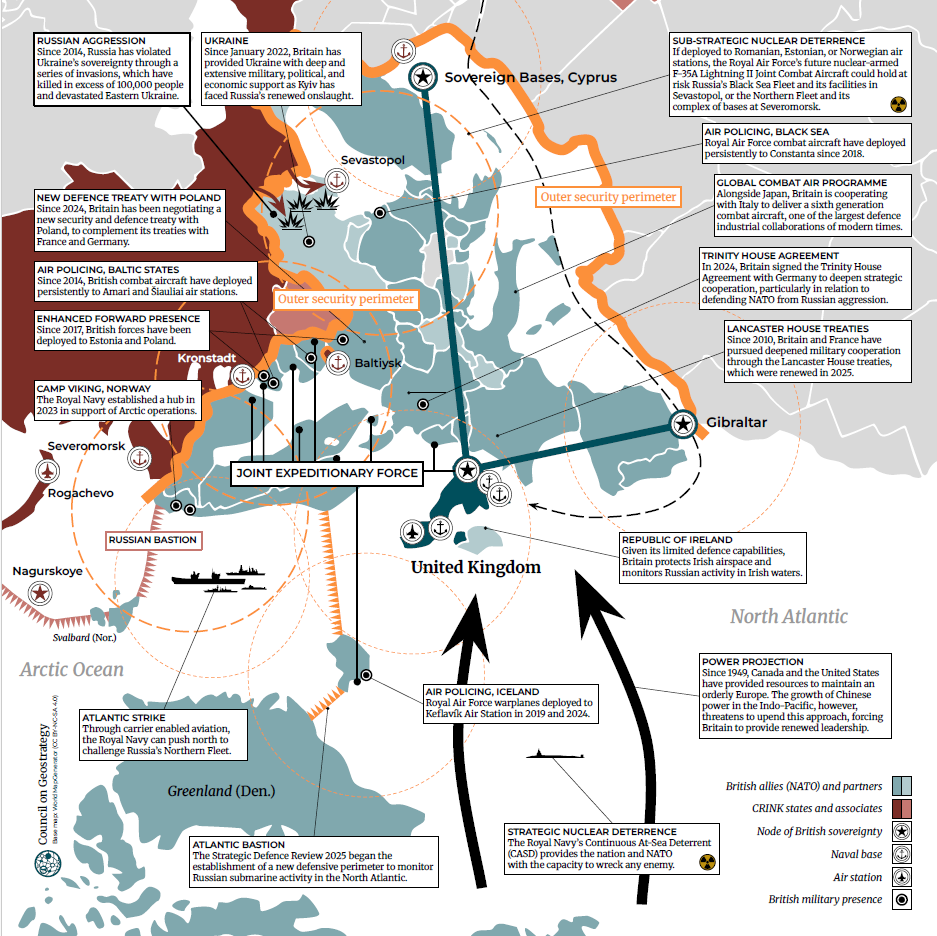
Europe’s security map has changed dramatically. Russia’s war in Ukraine has sharpened the case for more coordination on defense, intelligence, sanctions, procurement, and border management. The UK remains a major military and intelligence power, and Europe has every incentive to keep London close even outside EU structures.
This makes defense and security one of the most realistic areas for visible progress. Cooperation here can be presented not as a concession, but as common sense. It also aligns with the broader geopolitical trend: democratic allies are rediscovering the value of strategic coordination after years of fragmentation.
Mobility and youth schemes are politically sensitive
Some of the most emotionally charged post-Brexit debates involve people, not products. Youth mobility, student exchanges, touring artists, and labor access all expose the contradiction at the center of Brexit politics: many voters like control in theory, but many sectors need flexibility in practice.
Starmer will likely tread carefully here. Anything that resembles a return to free movement would trigger immediate backlash. But narrowly tailored schemes, especially for students or temporary work, could become part of a broader effort to ease obvious pain points.
The political gamble behind the reset
What makes this moment interesting is that Starmer is not just negotiating with Europe. He is negotiating with the British memory of Brexit. The referendum was not merely a policy event. It became a tribal identity marker. That means even modest technical fixes can be inflated into existential battles.
The government’s bet is that the electorate has moved on enough to reward competence over purity. There is evidence for that. Many voters are exhausted by years of symbolic warfare and more interested in whether the economy works, public services function, and the country looks stable. But there is also risk. Opponents will frame any closer engagement as democratic reversal by stealth.
Starmer’s challenge is brutally simple: make cooperation look like management, not surrender.
That messaging discipline will matter almost as much as the substance. If Downing Street can present each step as a fix to a specific problem – say, export delays, defense coordination, or research access – it becomes harder for critics to turn the whole agenda into a culture-war rerun.
Why Brussels may respond differently this time
The EU is not waiting around to rescue Britain from itself, but it does have incentives to improve the relationship. The UK remains a major economy, a military heavyweight, and a critical neighbor in energy, migration, and security. A more predictable British government is easier to work with than one that treats every negotiation as a domestic loyalty test.
That said, Brussels will be wary of granting easy wins without clear commitments. The EU has spent years defending the logic of its own system: if a country leaves, it cannot retain all the benefits of membership without the obligations. So any movement will likely be structured, conditional, and carefully bounded.
This is why expectations should be realistic. The likely outcome is not some sweeping reset button that makes Brexit disappear. It is a gradual reduction of friction in specific sectors. That may sound modest, but for companies and institutions dealing with those frictions daily, modest can be meaningful.
What business should watch in the UK Europe strategy
If you strip away the politics, the core question for business is straightforward: where does policy reduce cost, delay, or uncertainty? That is where this reset will be judged most harshly.
- Border processes: Any simplification in customs, checks, or certification could have outsized impact for exporters.
- Standards alignment: Even partial alignment in selected sectors may reduce compliance burdens.
- Services access: Financial, legal, and professional services will watch for any regulatory cooperation that improves market access.
- Research and talent: Universities, labs, and high-skill employers care deeply about mobility pathways and collaborative frameworks.
- Security-linked industries: Defense, cyber, and advanced manufacturing could benefit from closer institutional coordination.
There is also a subtler business issue here: confidence. Companies make investment decisions partly on tax, labor, and demand, but also on political predictability. A calmer, more functional UK-EU relationship can improve sentiment even before every formal barrier is removed.
Why this matters beyond Britain
The implications of the UK Europe strategy are bigger than one government’s messaging plan. Across the democratic world, countries are grappling with the aftermath of populist rupture. The central question is whether governments can move from high-emotion political mandates to low-drama institutional repair without triggering permanent backlash.
Britain is a particularly visible test case because Brexit was sold as a clean break but delivered a messier reality. If Starmer can stabilize the relationship with Europe through incremental, results-driven policy, he may offer a model for how post-populist governance works: not by humiliating the past, but by managing its consequences better.
There is also a strategic dimension. Europe is navigating war, economic competition, industrial policy, migration pressure, and technological realignment. In that environment, fragmentation is expensive. Britain may be outside the EU, but it is not outside Europe’s problem set.
The limits of the reset
It is worth keeping a skeptic’s eye on the whole project. Pragmatism is appealing, but it can become a branding exercise if it is not backed by hard policy trade-offs. Closer cooperation usually requires concessions, whether in regulation, oversight, budget contributions, or legal compatibility. Politicians often prefer to talk as if technical gains can be harvested without political cost. That is rarely true.
There is also the problem of time. Negotiating even targeted arrangements can be slow. Domestic expectations can outrun diplomatic reality. And if economic conditions worsen, the government may find that incremental improvements are drowned out by broader dissatisfaction.
Still, the alternative is not cost-free. Refusing to revisit obvious dysfunctions simply because they are politically inconvenient is its own form of ideology. That is the strongest case for Starmer’s approach: not that it is bold, but that it is adult.
What comes next
The next phase will be defined by deliverables. Watch for language around veterinary agreements, research links, defense compacts, border streamlining, and youth mobility frameworks. Each of those areas offers a chance for concrete progress, but each also contains political tripwires.
A useful way to read the government’s agenda is almost like a staged deployment:
phase_1 = stabilize_tonephase_2 = target_low_conflict_sectorsphase_3 = convert_technical_wins_into_political_trust
If that sequence works, the UK Europe strategy could evolve from cautious reset to durable statecraft. If it fails, Britain risks staying trapped between a Brexit settlement that does not function smoothly and a political class too nervous to improve it.
The irony is that this may be the most post-Brexit moment yet. Not because Britain is relitigating whether to leave, but because it is finally confronting the more difficult question: how do you make the aftermath governable? Starmer’s answer is unspectacular by design. But in a country exhausted by spectacle, that may be exactly where the power lies.
The information provided in this article is for general informational purposes only. While we strive for accuracy, we make no guarantees about the completeness or reliability of the content. Always verify important information through official or multiple sources before making decisions.