Summer Box Office Rebounds
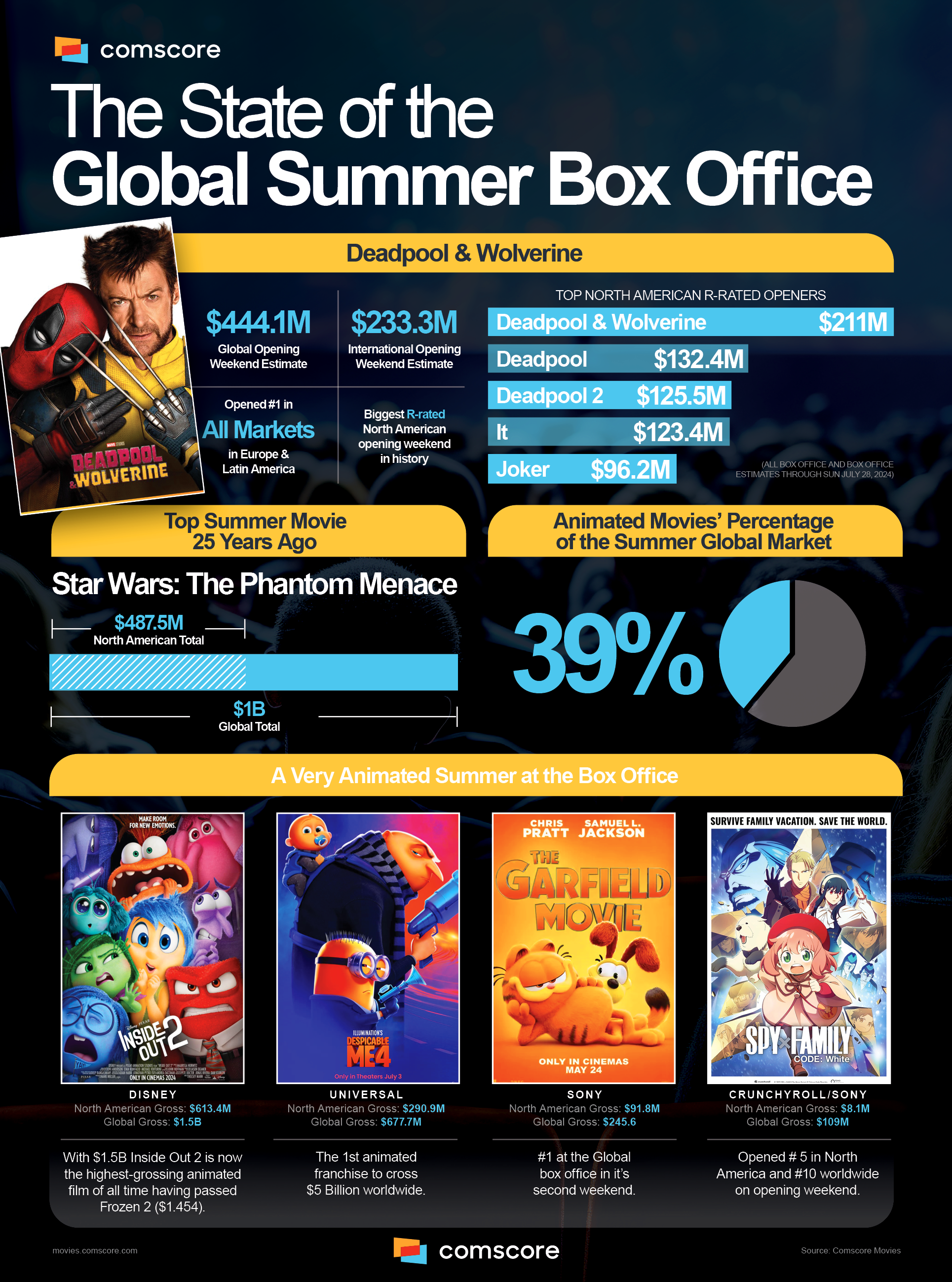
Summer Box Office Rebounds
The summer box office is doing more than padding studio ledgers. It is forcing Hollywood to confront a question it has been dodging for years: are theatrical audiences actually back, or are they just showing up when the product is impossible to ignore? After a volatile stretch defined by strikes, streaming fatigue, franchise overload, and a widening gap between hits and everything else, a stronger-than-expected summer matters because it restores something the industry has lacked: proof. Proof that big-screen spectacle can still move people. Proof that release timing still matters. And proof that theatrical success is not dead, just brutally selective. The catch is that one healthy season does not erase structural problems. It only makes them harder to ignore.
- The summer box office rebound suggests theatrical demand is still alive when studios deliver must-see releases.
- Franchises remain powerful, but audience loyalty is now tied to quality, timing, and event status.
- Streaming has changed viewing habits, but it has not eliminated the appetite for communal moviegoing.
- Studios still need a healthier middle class of films, not just mega-hits and write-offs.
- The real test is whether Hollywood can sustain momentum beyond one strong season.
Why the summer box office rebound matters
Hollywood has spent the last few years trying to convince investors, exhibitors, and viewers that the theatrical model is still a viable engine, not a nostalgic side hustle. A strong summer box office does not solve everything, but it does shift the conversation from survival to strategy. That is a meaningful change. For studios, it means marketing muscle still pays off when paired with the right title. For theaters, it means premium screens, concession sales, and weekend traffic can still justify the economics of the big-screen experience. For audiences, it confirms that moviegoing remains culturally relevant when the film feels like an event rather than just another content tile.
The deeper signal is that moviegoers are becoming more selective, not less engaged. They are not automatically rejecting theaters; they are rejecting mediocrity, confusion, and release schedules that feel disposable. That creates both risk and opportunity. Theaters are more dependent on fewer titles, which makes the system fragile. But when a film lands, the upside is still huge.
What changed this summer
The most important shift was not simply that people returned. It is that they returned for a clearer reason. Theatrical hits increasingly look like experiences with a strong identity: a familiar franchise with cultural heat, a high-concept crowd-pleaser, or a film that feels engineered for conversation. Studios have learned, again, that awareness alone is not enough. A title must cut through noise, justify the ticket price, and offer a reason to go now instead of waiting for a streamable debut.
That dynamic has made the summer box office less predictable and more winner-take-most. The middle tier has been squeezed. Movies that might once have coasted to respectable totals now need sharper positioning, better opening-weekend urgency, and stronger word of mouth. The upside is that the biggest hits can still overperform. The downside is that the industry’s margin for error keeps shrinking.
Audiences have not abandoned theaters. They have simply become harder to impress, which is a much more expensive problem for studios.
Theatrical demand is still real, but it is conditional
One of the biggest myths to emerge from the streaming era is that convenience alone would permanently displace cinema. That has not happened. What has happened is more nuanced: viewers now reserve the theater for films that feel like social events, technical showcases, or emotionally charged communal experiences. If a movie can be delayed by a few weeks without consequence, many people will wait. If it feels like the kind of thing everyone will discuss by Sunday night, they will show up.
This is why the summer box office still matters so much. Summer remains the industry’s proving ground because it concentrates attention, competition, and spectacle. It is where studios test whether their slate has enough heat to drive consistent attendance. And it is where theaters most need product that can justify full auditoriums, IMAX upcharges, and repeat visits. The lesson for the industry is blunt: theatrical demand survives, but only under the right conditions.
What studios should learn from the summer box office
1. Event status is the new marketing moat
Studios can no longer assume that a big-budget film will behave like a cultural magnet on reputation alone. Event status has to be built intentionally through trailers, talent access, social momentum, and release timing. That means fewer generic campaigns and more precise positioning.
2. Franchises need freshness, not just familiarity
Audiences still respond to recognizable IP, but brand recognition is no longer a free pass. Viewers want the comfort of a known universe without the feeling that they have seen the same film six times already. The best-performing summer films tend to offer either a new twist on a familiar property or a genuinely fresh hook wrapped in blockbuster packaging.
3. Release calendars still shape outcomes
Studios that spread their tentpoles too thin can create internal competition and dilute audience attention. Smart scheduling remains one of the most underrated tools in Hollywood. A crowded weekend can help if the market is hot, but it can also bury a film that needed room to breathe.
Why the middle is still broken
Even a healthy summer box office cannot hide a brutal truth: the mid-budget movie remains under siege. That matters because the industry does not survive on tentpoles alone. Studios need a pipeline that develops talent, tests ideas, and builds audiences for the next generation of hits. If everything must be a franchise launch or a mega-event, the creative ecosystem gets thinner and more risk-averse.
This is where the rebound should make executives uneasy, not complacent. Strong box office totals can encourage more of the same: bigger budgets, louder marketing, and safer bets on known IP. But the healthier long-term move would be to use the momentum to rebuild variety. That means smarter greenlighting, more disciplined budgets, and a willingness to let original films have a chance to become events in their own right.
Streaming did not win the war the way people expected
For years, the narrative was simple: streaming would crush theatrical release windows and rewire audience behavior forever. Instead, the market evolved in a messier direction. Streaming won convenience. Theaters still own scale, spectacle, and collective energy. The summer box office rebound is a reminder that those are not small advantages. They are structural advantages.
Still, the relationship between theatrical and streaming is now part of the calculus. Audiences know films will likely arrive at home faster than they used to, and that changes urgency. Studios have to manufacture a stronger reason to go out. That is why a successful summer matters: it suggests that the theater can still win when the offer is compelling enough. The challenge is that the bar keeps rising.
The theatrical model does not need every movie to win. It needs enough movies to feel indispensable.
What comes next for Hollywood
The next phase will be defined less by whether box office grosses rise and more by whether the industry can make the rebound durable. That means a few things. First, studios need to stop treating audience attention as a given. Second, they need to think about theatrical releases as premium products with clear identities. Third, they need to support theaters as partners rather than passive endpoints, because the economics of the ecosystem still depend on both sides staying healthy.
Expect more pressure on franchises to deliver immediately, more scrutiny on marketing spend, and more debate over whether the industry is overcorrecting toward safety. If the summer box office rebound is the start of a trend, it will likely be because studios figured out how to make fewer, better bets that feel genuinely unmissable. If it is just a one-season spike, Hollywood will be right back in the same argument by fall.
The bottom line
The summer box office is not a cure. It is a warning shot wrapped in a success story. Theaters are still capable of drawing crowds, but only when studios respect how selective modern audiences have become. That makes this rebound encouraging, but not comforting. Hollywood has evidence that the big-screen model can still work. Now it has to prove that it can work repeatedly, not just when everything breaks the right way.
That is the real industry story hiding inside the numbers: not whether moviegoing survived, but whether studios are finally ready to build around the audience they actually have, not the one they wish they still owned.
The information provided in this article is for general informational purposes only. While we strive for accuracy, we make no guarantees about the completeness or reliability of the content. Always verify important information through official or multiple sources before making decisions.