Supreme Court Fight Reshapes Prediction Markets
Supreme Court Fight Reshapes Prediction Markets
The Supreme Court is no longer just deciding laws. It is quietly deciding whether prediction markets can become a mainstream financial product in the U.S. That makes this fight over prediction markets bigger than one company, one state, or even one lawsuit. At stake is whether platforms like Kalshi can legally let people trade on everything from elections to economic outcomes, and whether states like New Jersey can keep trying to shut them down. For traders, policymakers, and anyone watching the next wave of financial tech, the message is blunt: the rules are still being written, and the outcome could determine who gets to speculate on the future – and under what guardrails.
- The Supreme Court dispute could define the legal future of
prediction marketsin the U.S. Kalshiis pushing for federal authority over event contracts, while states argue they can still enforce their own laws.- The case matters because prediction markets sit at the intersection of finance, gambling, and public policy.
- If federal courts side with the platform, the market could expand fast and force regulators to catch up.
- If states win, the category may remain fragmented, slower to scale, and harder to mainstream.
Why the prediction markets battle matters now
Prediction markets have spent years living in a regulatory gray zone, interesting to quants and policy nerds but mostly invisible to everyone else. That is changing. The combination of politically charged events, rising appetite for alternative data, and the crypto-era normalization of speculative trading has pushed these markets into the spotlight. A platform like Kalshi is not just selling contracts on abstract outcomes. It is trying to turn uncertainty into a tradable asset class.
The legal question is deceptively simple: are these instruments financial contracts regulated at the federal level, or are they basically wagers that states can police like gambling? That distinction is everything. Federal treatment could unlock scale, liquidity, and legitimacy. State-by-state treatment could keep the category boxed in, inconsistent, and vulnerable to enforcement battles.
Prediction markets are no longer a niche experiment. They are becoming a test case for whether the U.S. can regulate a product that looks like both a market and a bet without breaking either framework.
The Kalshi strategy is straightforward and risky
Kalshi has built its case around a simple thesis: if the federal government regulates event contracts, states should not be able to override that framework just because they dislike the product. That argument is attractive to innovators because it promises one national rulebook instead of 50 conflicting ones. For a market-driven product, that consistency is gold.
But the company is also poking at one of the most sensitive nerves in American regulation. Event contracts can look uncomfortably close to bets, especially when the underlying event is political or cultural rather than purely economic. Regulators worry about manipulation, consumer harm, and the possibility that these tools could normalize wagering on democratic processes. That makes the platform’s legal theory powerful, but not bulletproof.
What makes event contracts different
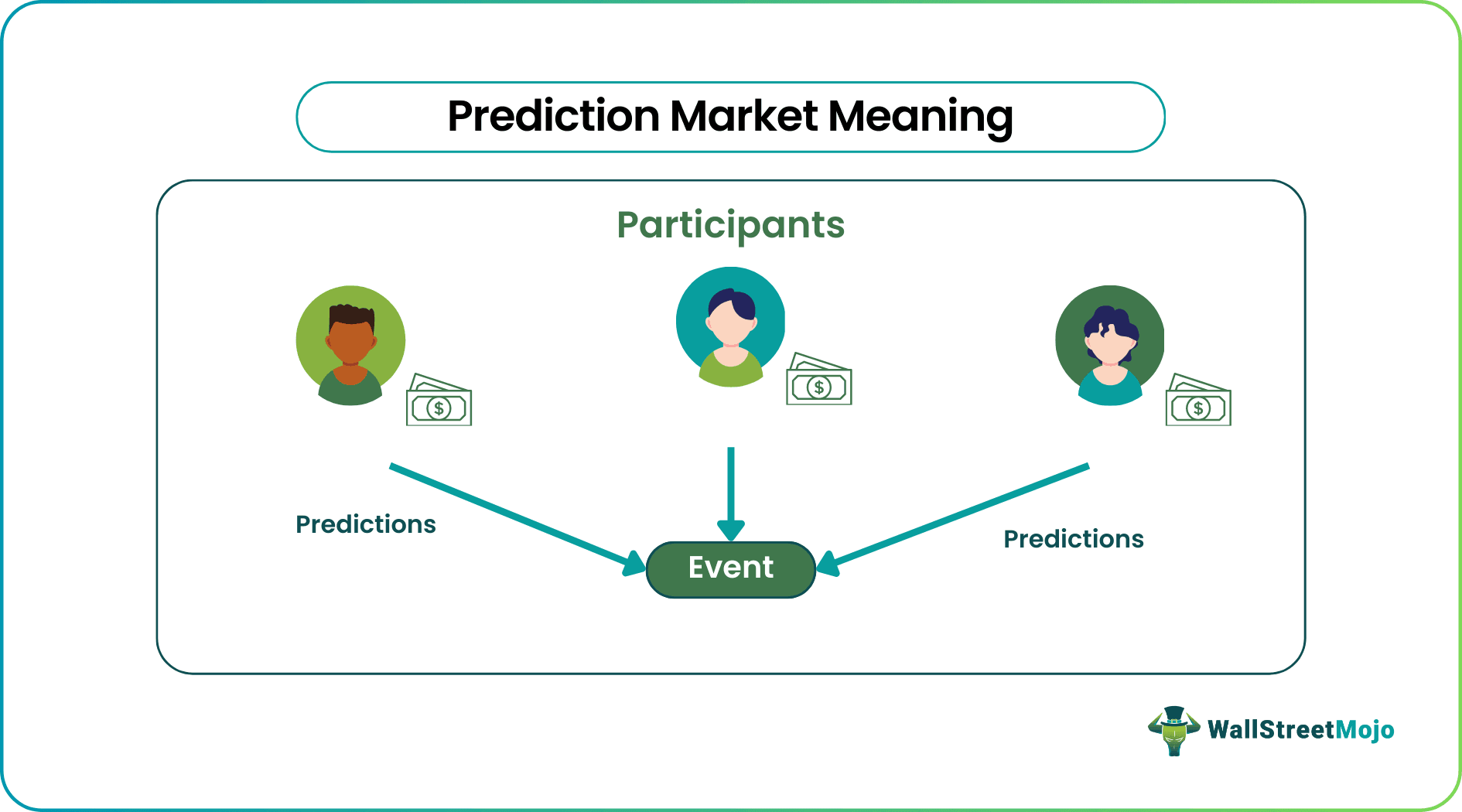
Unlike a sportsbook, a prediction market usually frames contracts as financial instruments tied to a measurable outcome. Traders buy and sell positions based on the probability that an event will happen. In theory, that creates a crowd-sourced forecasting tool. In practice, the line between informed speculation and gambling can get blurry fast.
The distinction matters because if courts treat these as legitimate market instruments, the doors open to new products, broader participation, and likely more aggressive competition. If they are treated more like gaming products, then the compliance burden changes dramatically and the growth story gets much harder.
Why New Jersey is not backing down
New Jersey’s push reflects a broader state-level concern: once a federally supervised platform starts offering contracts that resemble bets, local regulators do not want to be sidelined. States have spent years building gambling oversight regimes, and they are not eager to let a new digital product bypass them by dressing itself in financial language.
That tension is not just legal theater. It is about revenue, consumer protection, and political authority. If states lose the power to intervene, they may also lose control over where this industry can operate, how it advertises, and what protections customers get. For a state like New Jersey, which has spent decades cultivating gambling law expertise, that is not a minor concern.
The broader lesson is that innovation does not eliminate jurisdictional conflict. It amplifies it. The more a product sits between existing categories, the more every regulator claims a piece of it.
The real prize is a national market for uncertainty
If federal courts ultimately bless prediction markets, the upside goes well beyond one company. A national market could attract institutional capital, data firms, media organizations, and retail traders looking for a new way to express views on elections, inflation, sports, or policy outcomes. That kind of scale would make prediction markets more than a novelty. It would make them infrastructure.
That future is both exciting and unsettling. On one hand, prediction markets can surface dispersed information faster than traditional polling or expert consensus. On the other, they can incentivize perverse incentives, especially around politically sensitive events. A market that prices future outcomes also creates a market for influence, speculation, and possibly abuse.
The most important question is not whether prediction markets are innovative. It is whether they can be made trustworthy enough to operate at scale without becoming a loophole for gambling under a fintech label.
Prediction markets and the regulatory triangle
To understand why this case is so consequential, you have to look at the three-way tug-of-war between financial regulators, state authorities, and lawmakers. Each sees the product differently.
- Financial regulators see a contract that may fit into existing market supervision frameworks.
- State regulators see a wagering product that could fall under gaming laws.
- Lawmakers see a fast-moving category that may need new rules entirely.
That regulatory triangle creates uncertainty, but it also explains why the category has not exploded more quickly. Companies can build the technology faster than governments can decide what it is. When that happens, litigation becomes the product roadmap.
The compliance burden could define winners
If the courts lean toward federal preemption, companies with strong legal teams, risk controls, and market infrastructure will have an advantage. Smaller players may struggle to meet the compliance bar. That could consolidate the sector around a few serious platforms and push out cowboy operators.
If states retain power, fragmentation will likely favor regionally tailored products and slower scaling. That may sound bad for growth, but it could also reduce some of the more reckless behavior that shows up when a speculative market expands too quickly.
What investors and users should watch next
For investors, the immediate signal is whether courts appear ready to treat prediction markets like a legitimate financial rail rather than a regulatory curiosity. For users, the practical question is simpler: will these platforms become broadly accessible, or will they remain constrained by legal uncertainty?
There are a few signals worth watching:
- Whether courts emphasize federal market regulation over state gambling authority.
- Whether platforms expand into new event categories or stay narrowly focused.
- Whether policymakers propose clearer rules for event contracts.
- Whether consumer protection complaints rise as usage grows.
Pro Tip: if you are evaluating a prediction market platform, do not just look at the payouts. Look at the rulebook. Settlement language, jurisdiction limits, and dispute resolution matter just as much as the contract itself.
Why this matters beyond one lawsuit
This dispute is really about how America classifies products that do not fit neatly into old buckets. Prediction markets are part finance, part information system, part gambling-adjacent speculation machine. The U.S. has a long history of forcing new technologies into legacy rules, and the results are often messy.
If the Supreme Court and lower courts effectively validate a national framework, the category could mature quickly. Expect better liquidity, more public attention, and a broader debate over whether forecasting markets improve decision-making or simply monetize anxiety. If the courts reject that framework, the industry may not disappear, but it will likely remain trapped in legal limbo, where every expansion is a fight.
That makes this a much bigger story than a single company’s court battle. It is a referendum on how modern markets get defined, who gets to regulate them, and whether the next major consumer finance category will be built by innovators first or by lawmakers first.
The bottom line
The Kalshi case could become a landmark for prediction markets, but the real story is the regulatory precedent it may set. If courts side with the platform, they may effectively greenlight a new class of nationwide event contracts. If they side with New Jersey, the industry may be forced back into a patchwork of state rules and narrow use cases. Either way, the future of trading on uncertainty just got a lot more concrete.
The information provided in this article is for general informational purposes only. While we strive for accuracy, we make no guarantees about the completeness or reliability of the content. Always verify important information through official or multiple sources before making decisions.