Supreme Court Shakes Up Birthright Citizenship
Supreme Court Shakes Up Birthright Citizenship
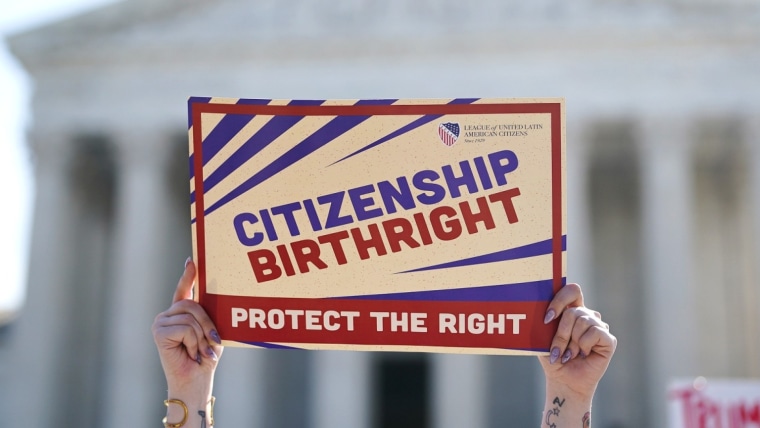
The Supreme Court has a way of turning legal fine print into national upheaval, and this latest move is no exception. If you are trying to understand how birthright citizenship, immigration policy, and federal authority collide, the stakes are suddenly much higher than a single court ruling. This is not just another Washington fight with loud headlines and short attention spans. It is a direct test of who gets to define citizenship in America, how much power states can exert on immigration-adjacent policy, and whether long-standing legal assumptions still hold in a country increasingly shaped by executive action and judicial intervention. For families, advocates, employers, and lawmakers, the uncertainty is the point. The Court has once again pushed a deeply political question into the center of constitutional debate, and the fallout could be immediate.
- The Supreme Court is forcing a fresh fight over
birthright citizenshipand constitutional interpretation. - The decision could affect immigration policy, state enforcement, and federal authority.
- Legal uncertainty may trigger new lawsuits, policy reversals, and administrative confusion.
- The ruling matters because it reaches beyond immigration into the balance of power itself.
Why this ruling matters now
The immediate reaction to any Supreme Court decision about birthright citizenship tends to focus on politics, but the deeper story is institutional. The Court is not just resolving a dispute. It is signaling how aggressively it is willing to reinterpret core assumptions that have governed American identity for generations. That matters because citizenship is not an abstract concept. It affects access to rights, benefits, passports, legal protections, and the basic question of belonging.
The practical problem is that once the Court opens the door to narrowing or rethinking citizenship doctrine, the ripple effects spread fast. Immigration lawyers start gaming out the next test case. State officials look for leverage. Federal agencies are forced to clarify enforcement. And ordinary people are left trying to understand whether the rules that shaped their lives are still stable.
Expert takeaway: When the Court revisits a foundational doctrine, the legal shockwave is often larger than the ruling itself. The real disruption begins when agencies, states, and courts start interpreting the new boundaries differently.
How the Supreme Court is reshaping the debate
At the center of the controversy is a long-running legal fight over the meaning of the Constitution and the extent of federal power. Supporters of a more restrictive approach argue that the law has been applied too broadly or too mechanically. Critics say that any effort to weaken birthright citizenship threatens a basic promise embedded in the nation’s legal architecture.
This is where the Court’s role becomes particularly consequential. The justices are not simply reading text. They are choosing interpretive frameworks, weighing history, and deciding whether longstanding practice should continue to carry force. Those choices may sound academic, but they are operational in the real world. A narrower interpretation could change how government agencies process claims, how courts review challenges, and how states frame their own immigration-related policies.
What makes birthright citizenship so combustible
Few constitutional issues are as emotionally charged as citizenship because it sits at the intersection of law and identity. The debate has become more intense because immigration politics now drives everything from gubernatorial campaigns to presidential messaging. That creates a feedback loop: political pressure fuels legal challenges, and legal ambiguity fuels more politics.
For many observers, the core question is whether the Court is preserving constitutional stability or inviting policy volatility. For businesses, schools, hospitals, and local governments, the practical burden is less ideological and more administrative: uncertainty makes planning harder. If families cannot predict legal status with confidence, every connected institution has to prepare for complications.
The policy ripple effects could be enormous
Any major shift in birthright citizenship doctrine would not remain isolated. It could influence how federal agencies communicate guidance, how states coordinate with immigration officials, and how local governments respond to demographic and legal changes. Even without a sweeping rewrite, ambiguity alone can create a climate of fear and delay.
That is especially true in areas where legal status interacts with public services. Hospitals may see more documentation anxiety. Schools may face questions from parents. Employers could encounter more confusion in onboarding or compliance workflows. The law may appear to change slowly on paper, but institutions often react immediately when the political signals become unstable.
- Federal agencies may need to issue updated guidance or defend existing procedures.
- States may test the limits of enforcement and legislative authority.
- Courts could be flooded with follow-on challenges seeking clarification.
- Families may face uncertainty about documents, status, and future claims.
Why this matters beyond immigration
The broader significance reaches beyond one policy fight. This is also a story about how American institutions absorb disruption. When the Court revisits a bedrock issue, it often creates a chain reaction across the executive branch, Congress, and state governments. That chain reaction can reveal whether the system still has the capacity to absorb conflict without breaking into contradictory rules.
There is also a democratic legitimacy question lurking beneath the legal language. If the public sees citizenship rules as constantly shifting, trust in the system erodes. If a Supreme Court decision appears to settle one issue while creating three more, the result can be confusion rather than clarity. That is a dangerous place for a country already under strain from political polarization and information overload.
Bottom line: The fight over
birthright citizenshipis really a fight over whether foundational rights remain stable enough to anchor a modern democracy.
What to watch next
The next phase will likely unfold in the familiar but frustrating pattern of modern American law: lawsuits, administrative responses, political spin, and more litigation. The most important thing to watch is not just what the Court said, but how institutions behave after the ruling. That behavior will determine whether the decision becomes a narrow doctrinal adjustment or the start of a much larger constitutional reset.
Signals that will shape the outcome
Watch for official guidance from federal agencies, state-level policy experiments, and any rapid-fire challenges from advocacy groups or attorneys general. Also watch for language shifts. In modern legal politics, the words chosen by agencies and judges often matter as much as the ruling itself.
If the Court has opened the door to new interpretation, expect the next few months to be defined by strategic testing. That may include narrower cases meant to chip away at precedent, or broader challenges designed to force a more definitive answer. Either way, the uncertainty will not stay theoretical for long.
How readers should think about the ruling
The smart response is not panic, but attention. Major Supreme Court shifts rarely unfold cleanly, and public understanding often lags behind legal reality. If you are following this issue, focus on three things: how the ruling is being implemented, which institutions are contesting it, and whether the Court has left room for future reinterpretation.
That is where the real story lives. A single opinion can change the legal weather, but the climate shifts only when the rest of the system adapts. This case has the potential to do exactly that. Whether it becomes a constitutional landmark or just the first salvo in a larger battle depends on what happens next.
For now, the message is clear: birthright citizenship is no longer just a settled phrase in American law. It is back on the table, and the consequences could reshape politics, policy, and the meaning of citizenship itself.
The information provided in this article is for general informational purposes only. While we strive for accuracy, we make no guarantees about the completeness or reliability of the content. Always verify important information through official or multiple sources before making decisions.