Syria Sanctions Shift Reshapes Global Risk
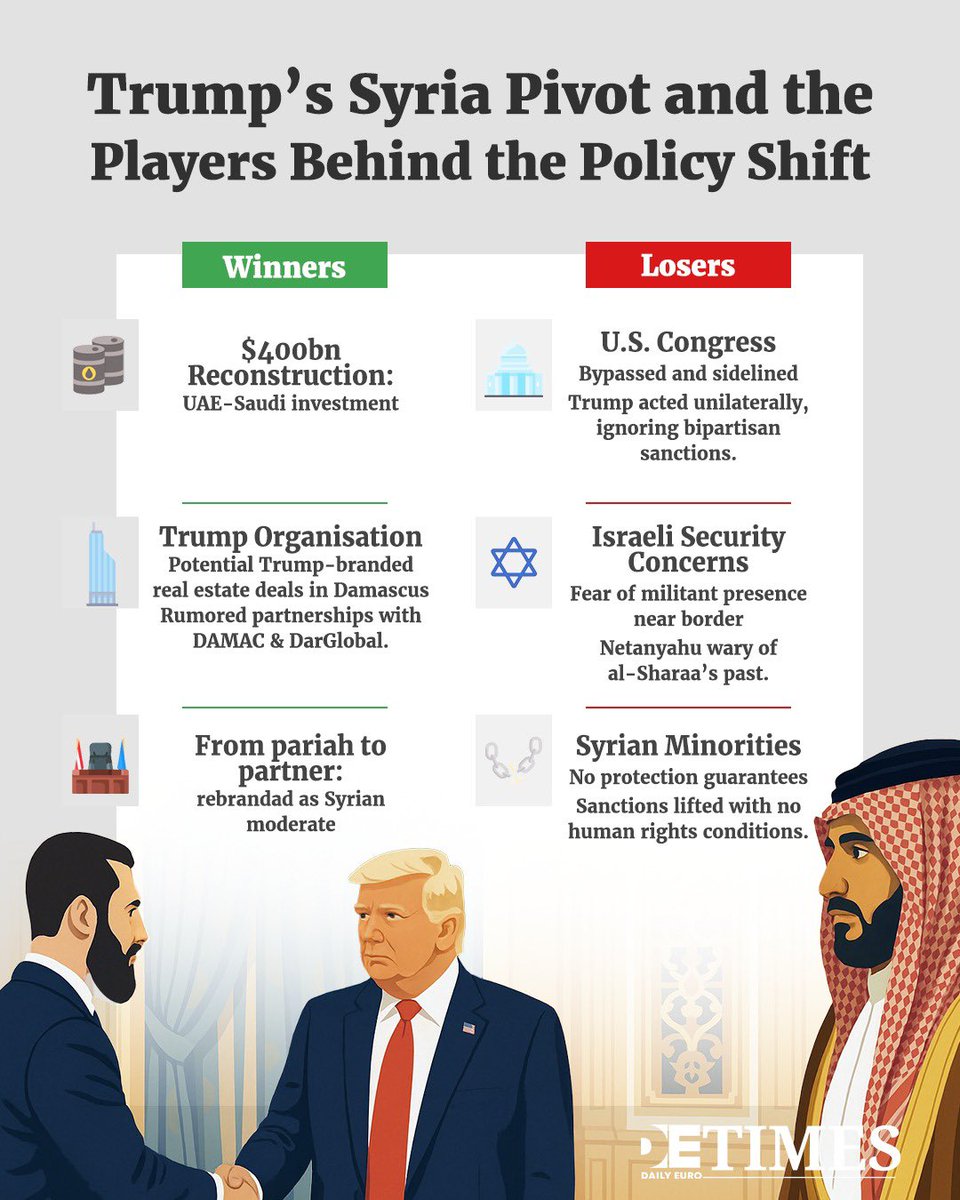
Syria Sanctions Shift Reshapes Global Risk
The Syria sanctions shift is not just another diplomatic headline. It is a stress test for how governments balance accountability, reconstruction, regional security, and economic reality after years of conflict. For businesses, aid groups, and policymakers, the stakes are immediate: who gets access, who carries legal exposure, and whether any easing of restrictions can help civilians without empowering the networks that survived the war. That tension has haunted every Syria policy debate for years. Now it is back at the center of the global agenda. Any change in sanctions posture has ripple effects far beyond Damascus, touching energy markets, cross-border trade, refugee policy, and the credibility of Western foreign policy. The hard question is no longer whether pressure works in theory. It is whether the current model still matches the facts on the ground.
- The Syria sanctions shift could alter diplomatic leverage, aid delivery, and regional commerce.
- Any policy reset faces a core dilemma: helping civilians without strengthening entrenched power structures.
- Businesses and NGOs must track compliance risks around
payments,logistics, anddual-use goods. - Regional players may treat sanctions changes as a signal about future normalization.
- What happens next will shape both reconstruction politics and broader geopolitical credibility.
Why the Syria sanctions shift matters now
Sanctions are often described as a blunt instrument because they are. They can freeze assets, limit banking access, choke imports, and isolate political elites. But in long-running conflicts like Syria, they also become part of the landscape: not a temporary pressure campaign, but a semi-permanent operating condition for governments, companies, humanitarian agencies, and ordinary citizens.
That is why any Syria sanctions shift attracts such intense scrutiny. It is not only about whether one government gets diplomatic breathing room. It is about whether the international community is changing its theory of influence. For years, the basic assumption was clear: maintain pressure, deny legitimacy, and use economic restrictions to seek political concessions. The trouble is that prolonged sanctions regimes often outlast the strategy that created them. Conditions evolve. Power centers adapt. Informal markets expand. Civilians absorb more pain than political insiders.
The current debate reflects that uncomfortable reality. If sanctions remain too rigid, they can hinder recovery and complicate humanitarian work. If they are eased too quickly, they can reward impunity and reduce leverage before meaningful political change occurs. There is no clean solution, only trade-offs.
The strategic case for recalibration
The strongest argument for revisiting sanctions is practical rather than ideological. Syria’s economy has been devastated, infrastructure remains degraded, and humanitarian needs are massive. Even when sanctions include exemptions for aid, the real world is messier. Banks over-comply. Insurers step back. Shipping channels tighten. Contractors avoid exposure. The result is a chilling effect that reaches far beyond the intended targets.
Humanitarian access is never just about exemptions
On paper, exemptions can look generous. In practice, an NGO trying to move medical equipment, repair power systems, or process cross-border vendor payments can hit a wall. Compliance teams tend to ask the same hard questions: Is the counterparty clean? Could the goods be diverted? Does this transaction touch a restricted entity? Is there exposure through USD settlement or correspondent banking?
That friction matters. It slows projects, raises costs, and deters legitimate operators. A sanctions adjustment, even a narrowly tailored one, can signal that some categories of work are safer to pursue.
Regional diplomacy is moving faster than Western policy
Another reason this moment matters is that regional governments have often shown more appetite for tactical engagement than Western capitals. That does not mean consensus exists. It means geopolitical reality has been shifting faster than some policy frameworks. Border management, refugee pressure, narcotics trafficking, and reconstruction interests all push neighboring states toward some form of engagement, even if they remain deeply skeptical of the Syrian leadership.
If sanctions policy does not account for that drift, it risks becoming less effective over time. Pressure works best when coalitions are aligned. Once that alignment weakens, sanctions can lose force while keeping all their complexity.
Key insight: A sanctions regime can remain legally intact long after it stops functioning strategically as intended.
The argument against a softer approach
There is also a compelling counterargument, and it should not be dismissed. Critics of easing sanctions warn that policy relaxation can become normalization by stealth. Once restrictions are softened, even selectively, the political message changes. Investors and regional actors may interpret that shift as a green light. Elites with deep patronage networks are often best positioned to capture whatever economic upside follows.
This is the central skepticism: reconstruction money does not automatically become public benefit. In systems shaped by conflict, opaque procurement, and political favoritism, new capital can reinforce old hierarchies. Roads, grids, ports, and housing projects are not politically neutral. They create contracts, dependencies, and influence.
Leverage is easier to lose than regain
Sanctions are difficult to calibrate, but once leverage is surrendered, restoring it is even harder. If political prisoners remain detained, accountability mechanisms stay weak, or governance reforms do not materialize, critics ask a fair question: what exactly is the international community getting in return?
That concern is intensified by precedent. Across multiple regions, selective diplomatic openings have sometimes delivered short-term optics without structural reform. Policymakers know this history. That is why even modest sanctions changes trigger outsized debate.
What businesses should watch in a Syria sanctions shift
For companies, this is less about abstract foreign policy and more about operational risk. A sanctions update can open doors, but it can also create compliance traps. The headline may say restrictions are easing. The fine print may say only specific sectors, counterparties, or transaction types are affected.
Compliance is a moving target
Any organization considering Syria-linked activity should focus on process, not assumptions. That means reviewing:
- Counterparty screening across owners, affiliates, and intermediaries
- Payment routing risks involving sanctioned banks or exposed jurisdictions
- Supply chain visibility for materials that could fall under
dual-usecontrols - Contract language covering sanctions reversals, force majeure, and licensing requirements
- Internal escalation paths for high-risk approvals and legal review
A common mistake is treating a policy announcement like a full reopening. That is rarely how these regimes work. Changes often emerge as layered exceptions, temporary authorizations, or narrow licensing windows. If your governance model cannot keep pace, legal exposure grows fast.
Pro tip: The biggest sanctions mistake is not acting too slowly. It is moving on a headline before your compliance team has mapped the actual scope of permission.
Financial institutions remain the gatekeepers
Even if governments soften rules, banks decide whether transactions can move. Their appetite for risk often lags official policy, especially in conflict-linked environments. So the practical effect of a Syria sanctions shift may depend less on political rhetoric and more on whether financial institutions believe the compliance burden is manageable.
That is why implementation matters as much as policy design. If new guidance is vague, the private sector will default to caution.
Why this matters for politics and credibility
There is also a broader issue here: credibility. Sanctions are among the most visible tools of modern foreign policy. When governments impose them, they signal moral intent and strategic pressure. When they revise them, they reveal what priorities have changed. If the Syria sanctions shift is framed badly, it can look like exhaustion rather than strategy.
That perception matters. Allies watch for consistency. Adversaries watch for fatigue. Civilians in conflict zones watch for sincerity. A well-designed adjustment needs to explain not only what is changing, but why, under what conditions, and with what safeguards.
Policy clarity is part of policy power
The most effective sanctions systems are not necessarily the toughest. They are the clearest. Stakeholders need to understand the purpose, triggers, off-ramps, and enforcement logic. Without that, sanctions become symbolic performance: punitive enough to complicate life, but too incoherent to shape outcomes.
A credible strategy would likely combine several elements: narrowly defined relief channels, aggressive anti-diversion monitoring, explicit humanitarian carve-outs, and measurable benchmarks tied to future adjustments. That approach does not eliminate risk. It simply replaces ambiguity with structure.
What happens next
The next phase will likely be incremental, not dramatic. Expect policymakers to test narrow openings before embracing any broad reset. That could mean limited sectoral flexibility, tighter humanitarian guidance, or conditional mechanisms linked to specific political or security benchmarks.
Three outcomes are possible.
- Scenario one: symbolic changes with limited practical effect because banks and companies still avoid exposure.
- Scenario two: targeted relief that improves aid and basic commerce without unlocking large-scale reconstruction capital.
- Scenario three: a wider normalization signal that reorders regional diplomacy and weakens the remaining pressure architecture.
The second path is the one many policymakers would prefer. It is also the hardest to execute. It requires precision, monitoring, and political discipline over time.
The bottom line on the Syria sanctions shift
The Syria sanctions shift is ultimately a test of whether foreign policy can adapt without surrendering principle. That is the tension running through every debate: pressure versus pragmatism, accountability versus access, signaling versus results. Anyone promising a simple answer is selling certainty that this issue does not offer.
Still, one thing is clear. Keeping an old sanctions model on autopilot is not a strategy. If governments want sanctions to remain credible, they need to show how those measures serve real objectives under present conditions, not just past assumptions. For businesses, NGOs, and regional actors, the message is equally blunt: watch the details, not the headlines. In this arena, legal text, banking behavior, and political sequencing matter more than public messaging. And that is exactly why the Syria sanctions shift could become one of the most consequential policy stories to track right now.
The information provided in this article is for general informational purposes only. While we strive for accuracy, we make no guarantees about the completeness or reliability of the content. Always verify important information through official or multiple sources before making decisions.