Tax Windfall Oil Profits Now
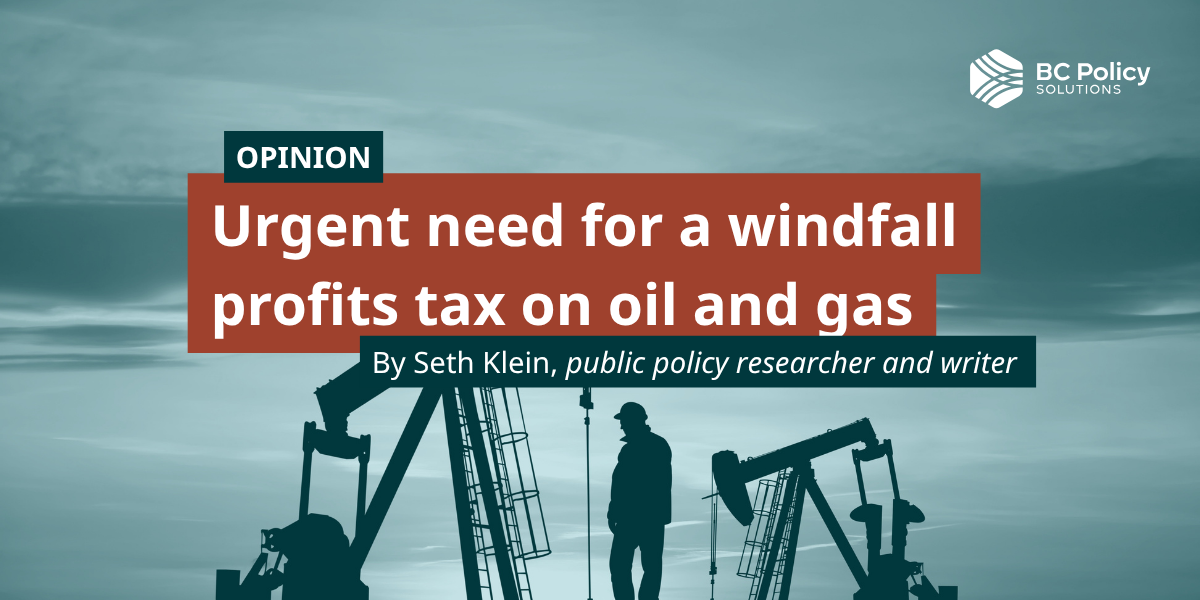
Tax Windfall Oil Profits Now
Windfall oil profits are not just a line item on corporate earnings calls – they are a stress test for governments already squeezed by inflation, debt, and public anger over rising energy costs. When oil and gas companies book outsized gains during a crisis, the political question stops being abstract. It becomes immediate: who carries the burden, and who captures the upside? That is why the debate over a windfall oil profits tax matters far beyond the energy sector. It sits at the intersection of fiscal policy, inequality, climate strategy, and state capacity. For policymakers trying to stabilize budgets without gutting public services, this is one of the clearest levers on the table. The real fight is not whether these profits exist. It is whether states have the will to reclaim part of them.
- Windfall oil profits tax proposals target extraordinary gains made during crisis conditions rather than normal business earnings.
- Supporters argue the revenue can fund consumer relief, public investment, and cleaner energy infrastructure.
- Critics warn about investment slowdowns, but design details determine whether those risks are real or overstated.
- The bigger issue is strategic: whether governments can turn temporary corporate booms into long-term public resilience.
Why the windfall oil profits tax debate suddenly feels urgent
Energy shocks have a unique political force. They hit households fast, spread through transport and food prices, and expose how vulnerable modern economies remain to fossil fuel volatility. At the same time, producers can record extraordinary profits not because they innovated, expanded productivity, or served consumers better, but because global disruptions pushed prices sharply upward.
That distinction is critical. A windfall is different from ordinary profitability. It is, by definition, an unexpected gain produced by external conditions. In the oil sector, those conditions often include war, sanctions, supply constraints, or extreme market instability. That makes the case for intervention stronger than in a standard tax debate.
The core argument is simple: if the public absorbs the downside of an energy crisis, the public has a claim on the upside when producers benefit from that same crisis.
This is also why the issue keeps returning across multiple jurisdictions. Governments need revenue. Voters want fairness. And energy companies, despite their importance, are increasingly hard to defend when households are paying more to heat homes or fill cars while executive compensation and shareholder returns surge.
How a windfall oil profits tax actually works
The mechanics matter. A poorly built tax can become political theater. A well-designed one can raise serious revenue without destroying incentives to invest.
It targets excess profits, not baseline operations
Most windfall tax frameworks do not apply to all profits equally. They typically establish a threshold based on historical averages, normal returns, or a benchmark price. Earnings above that level are taxed at a higher rate. In practical terms, governments are trying to separate routine profitability from gains produced by extraordinary market distortion.
That means the tax can be structured to preserve incentives for ongoing production while capturing part of the exceptional upside. In policy terms, this is important because it answers one of the most common industry objections: that any additional tax will automatically choke supply.
It can be temporary, conditional, or triggered by price spikes
Another smart design choice is duration. A windfall oil profits tax can be framed as a temporary emergency measure, linked to specific price thresholds or crisis conditions. That makes it easier to defend politically and legally. It also reassures markets that the state is not rewriting the entire investment model overnight.
Governments can define the trigger in technical language such as price > benchmark or a profit margin that exceeds a pre-set historical band. The point is not to punish success. It is to recognize when profits are detached from normal market performance.
Revenue use determines credibility
The fastest way to lose public trust is to collect windfall revenue and bury it inside a general budget black hole. The strongest proposals link proceeds to visible public goals: direct bill relief, transport subsidies, sovereign stabilization funds, renewable energy buildouts, or climate adaptation.
If policymakers want legitimacy, they should be explicit. A public-facing framework might look something like 40% consumer relief, 30% grid modernization, 20% debt stabilization, 10% energy transition workforce support. Clear allocation turns a tax from a slogan into a strategy.
Why critics are partly right – and still miss the larger point
Opponents of a windfall oil profits tax usually make three arguments. First, they say it discourages capital investment. Second, they argue companies will shift operations or accounting to avoid the burden. Third, they warn that governments become addicted to punitive, short-term tax grabs.
Those concerns are not invented. Energy projects are capital-intensive, globally mobile, and highly sensitive to regulatory signals. If a tax is unpredictable, retroactive, or written as political revenge, it can absolutely damage confidence.
But that does not mean the policy itself is flawed. It means the policy must be designed with discipline.
Bad tax design is a governance problem, not proof that excess profits should be left untouched.
The broader miss from critics is strategic blindness. Leaving windfall gains entirely in private hands during a broad economic crisis imposes its own cost. Governments then borrow more, cut more, or let public frustration deepen. That is not neutral. It is a political choice with long-term consequences.
And there is another uncomfortable truth here: the oil and gas sector has historically benefited from public infrastructure, legal protections, favorable tax treatment, and in many cases direct or indirect subsidies. The argument that the state should disappear the moment extraordinary profits arrive is not a serious theory of markets. It is selective libertarianism.
Where the money could matter most
The most compelling case for a windfall oil profits tax is not moral outrage. It is practical statecraft. If governments collect this revenue, where should it go?
Consumer protection during energy shocks
Short-term relief is politically unavoidable and economically rational. Households facing sharp energy cost increases reduce spending elsewhere, which drags broader economic activity. Direct rebates, targeted bill support, and public transport assistance can soften that blow quickly.
Pro tip: targeted support is usually stronger than universal subsidies. It helps the most vulnerable without locking governments into expensive long-term price distortion.
Energy system resilience
This is where many governments underperform. They treat windfall revenue as a patch, not a pivot. But a crisis-generated tax can be used to reduce exposure to the next crisis: modernized grids, storage, transmission, home efficiency retrofits, and strategic electrification.
That matters because the volatility at the center of this debate is not temporary in any meaningful sense. Geopolitical fragmentation, climate shocks, and supply disruptions are becoming structural features of the global economy.
Funding a managed transition
If states are serious about reducing dependence on fossil fuel price cycles, they need capital. A windfall oil profits tax offers a politically coherent funding source. It takes exceptional gains from the old energy model and uses them to build the next one.
That does not mean an overnight fossil fuel exit. It means financing a more controlled shift – cleaner power, industrial upgrading, workforce retraining, and infrastructure capable of supporting new demand patterns.
Why this matters beyond oil
At first glance, this looks like a narrow energy policy argument. It is not. It is really a test of whether governments can govern during periods of asymmetric crisis economics. When shocks hit, some sectors suffer while others capture extraordinary gains. The question is whether the state has modern tools to redistribute part of that imbalance in the public interest.
The same logic has surfaced in banking, digital platforms, and commodity trading. But oil is the clearest case because the social impact is so immediate. Every surge in fuel prices becomes a multiplier across the economy. Every delay in policy response becomes a credibility problem for elected leaders.
A serious government should ask a basic question: if it cannot tax exceptional profits during a national or global emergency, when exactly will it ever use fiscal power?
The politics are messy, but the public case is strong
There is no point pretending this is easy. Oil and gas companies are politically connected, economically significant, and highly skilled at framing any tax increase as an attack on energy security. Some of that messaging works because governments often communicate badly. They announce taxes vaguely, fail to define the benchmark, and do not specify the public return.
That is a self-inflicted mistake. The winning case is not anti-business rhetoric. It is disciplined public-interest framing.
- Define the windfall clearly: extraordinary gains beyond historical norms.
- Set transparent triggers: pre-announced price or profit thresholds.
- Protect productive investment: carve out legitimate reinvestment where appropriate.
- Publish revenue use: connect collections to relief, resilience, and transition.
- Make it temporary but renewable: crisis tool, not permanent improvisation.
That structure gives policymakers a credible middle path. It avoids the optics of confiscation while rejecting the idea that crisis profits should remain untouched.
What smart governments should do next
If states want this policy to work, they need to treat it like infrastructure, not improvisation. Build a rules-based framework before the next shock intensifies. Establish legal definitions, accounting standards, reporting requirements, and deployment channels for the revenue. That reduces uncertainty for industry and increases confidence for the public.
At a technical level, governments should think in terms like benchmark_profit, excess_margin, and temporary_rate rather than political slogans. The more predictable the framework, the harder it is for opponents to portray it as arbitrary confiscation.
They should also pair the tax with a broader industrial and energy plan. On its own, a windfall oil profits tax is a useful tool. As part of a larger strategy, it becomes something more powerful: a mechanism for converting crisis volatility into public capacity.
The smartest version of this policy does not just raise money. It buys governments time, legitimacy, and room to build a less fragile economy.
The bottom line on a windfall oil profits tax
The case for taxing windfall oil profits is stronger than ever because the alternatives are getting worse. Governments can keep socializing the pain of energy shocks while privatizing the upside, or they can claim a fair share of extraordinary gains and use it to protect households and strengthen the future. That choice is economic, but it is also moral and strategic.
No tax will solve the structural weaknesses exposed by energy crises. But refusing to act sends its own message: that public hardship is manageable, while private windfalls are untouchable. For states facing fiscal pressure, political distrust, and climate-era instability, that is not realism. It is surrender.
A well-built windfall oil profits tax is not radical. It is what competent government looks like when markets deliver extreme outcomes and citizens expect more than lectures about patience.
The information provided in this article is for general informational purposes only. While we strive for accuracy, we make no guarantees about the completeness or reliability of the content. Always verify important information through official or multiple sources before making decisions.