Tennessee Republicans Redraw Memphis Power
Tennessee Republicans Redraw Memphis Power
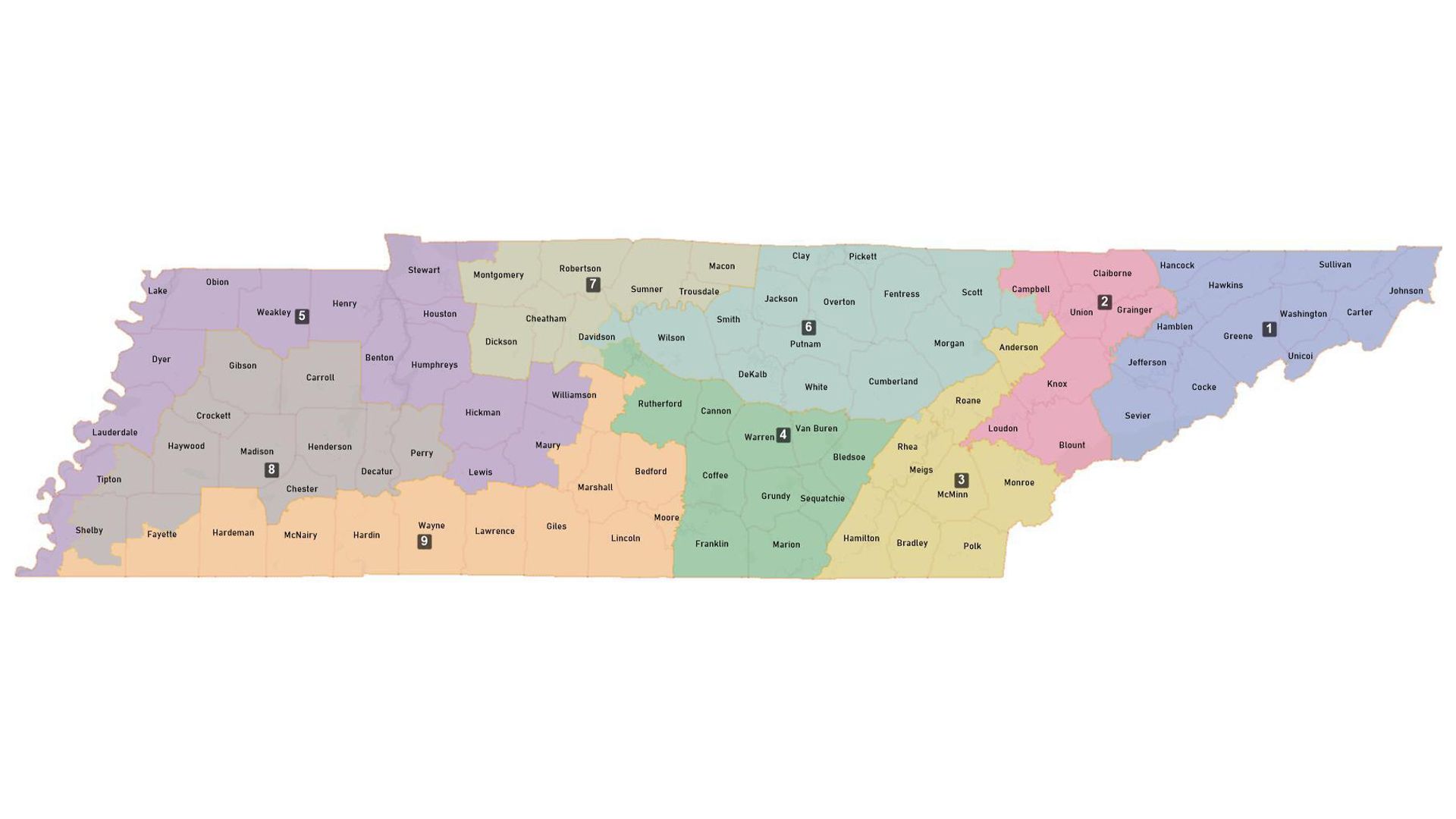
The fight over a new Tennessee House map in Memphis is not just another local boundary dispute. It is a stress test for who gets heard, who gets diluted, and how far a party in power can push redistricting before it starts to look less like governance and more like engineering. Memphis, a majority-Black city with a distinct political identity, has long served as a counterweight to the rest of Tennessee’s deep-red landscape. When lawmakers move its lines, they are not simply adjusting geography. They are recalculating political leverage, community cohesion, and the practical meaning of representation.
That is why this latest push matters beyond Shelby County. It sits at the intersection of race, partisan strategy, and the hard mechanics of state power. For voters, organizers, and local leaders, the question is brutally simple: does the new map reflect Memphis, or does it fragment it?
- Tennessee House map changes in Memphis could reshape Black political representation and Democratic voting strength.
- The dispute is about more than borders: it is about community influence, legislative priorities, and long-term power.
- Republican redistricting strategy reflects a broader national playbook built around precision and incumbency protection.
- Any map fight in Memphis carries legal, demographic, and moral consequences well beyond one election cycle.
Why the Tennessee House map fight matters now
Redistricting is often framed as a technical exercise, but in practice it is one of the most powerful political tools available to lawmakers. A district line can decide whether a neighborhood remains politically intact or gets split across multiple seats. It can determine whether communities with shared needs elect candidates who understand them or get absorbed into larger blocs with very different priorities.
In Memphis, that tension is amplified. The city is not just Tennessee’s largest Black population center. It is also one of the few places in the state where Democratic and Black political power is concentrated enough to consistently shape outcomes. That makes it a target whenever the broader partisan goal is to reduce opposition power without formally taking away anyone’s vote.
Maps do not have to ban voters to weaken them. They only have to rearrange them.
That is the core skepticism surrounding the current proposal. Supporters may describe it as a lawful redraw or a modernization effort. Critics see a familiar strategy: divide a strong urban base, spread it out, and make surrounding districts safer for the party already in control.
How redistricting works when politics is the real software
If you want to understand modern map fights, think less about paper maps and more about optimization. Today’s redistricting process is shaped by demographic data, past election results, turnout patterns, and block-level precision. The inputs are legal requirements like population equality and Voting Rights Act compliance. The outputs are districts built to maximize political advantage while staying inside the lines of formal legality.
The two classic tactics
There are two terms that define this space, and both matter in the Tennessee House map debate:
packing: concentrating a group of voters into fewer districts so their influence is maximized in one place but reduced elsewhere.cracking: splitting a group across several districts so it cannot form a majority in any of them.
Critics of aggressive redistricting often argue that a map does one, the other, or some combination of both. In a city like Memphis, where race and party overlap heavily, even small boundary changes can have outsized consequences.
Why Memphis is uniquely vulnerable
Urban voters are geographically concentrated. On one hand, that can produce strong representation. On the other, it makes those communities easier to manipulate. A line moved a few blocks can shift schools, housing corridors, and long-standing neighborhoods into districts anchored by suburban or exurban voters with different priorities. What looks modest on a map can become transformative at the ballot box.
This is where the debate stops being abstract. If a new Tennessee House map weakens the voting cohesion of Black neighborhoods in Memphis, the result is not just symbolic. It can alter what issues rise in Nashville, which committee chairs feel pressure to act, and how resources are allocated on transportation, education, public safety, and healthcare.
The real stakes for Black political power in Memphis
Memphis has a long and hard-fought history of Black civic organizing. Representation in local and state government did not emerge by accident. It was built through turnout, coalition building, legal battles, and years of resistance to structures designed to minimize Black influence. Any attempt to redraw political boundaries in the city inevitably touches that history.
That is why the strongest criticism of the map is likely to center on whether it undermines minority opportunity districts or dilutes communities that have been able to elect candidates of choice. This is not only a partisan complaint. It is a representation complaint. A city can keep its population and still lose its power if that population is distributed in a way that blunts electoral impact.
Representation is not only about counting people. It is about whether those people can translate numbers into governing power.
Supporters of the redraw may argue that districts must evolve with population shifts and that mapmakers have wide discretion. That is true up to a point. But discretion becomes suspect when the beneficiaries are predictable, the burden falls on historically marginalized communities, and the pattern mirrors previous efforts to erode urban influence.
Tennessee House map strategy fits a national pattern
What is happening in Memphis does not exist in isolation. Across the United States, state legislatures have treated redistricting as a frontline partisan weapon. The logic is brutally efficient: if you can lock in structural advantages through district design, you reduce the risk of losing power even when public opinion shifts.
Why statehouse maps matter more than many voters realize
Congressional maps tend to get the headlines, but state legislative maps often have a more direct effect on daily life. State houses shape school funding, reproductive policy, infrastructure spending, criminal justice rules, labor rights, and election law. If one party can harden control at the state level, it gains leverage over the policy stack that voters feel most often.
That makes Memphis especially important. Weakening urban representation in the Tennessee House could reduce the city’s capacity to resist statewide agendas that do not reflect local priorities. It could also discourage turnout if voters conclude that outcomes are being predetermined through map design rather than earned through persuasion.
The legal and political gray zone
Not every aggressive map is illegal. That is part of the problem. Courts have struggled to define when partisan line-drawing becomes unconstitutional, and legal protections around racial dilution depend heavily on fact-specific analysis. Lawmakers know this. The most sophisticated maps are often built to push right up against legal limits without clearly crossing them.
From a strategic standpoint, that means the loudest battle is often political before it is judicial. Community groups, local officials, clergy, and voting rights advocates try to frame the public narrative early because once a map is enacted, reversing it can be slow, expensive, and uncertain.
What happens next if the map moves forward
If the proposal advances, expect several layers of response. First comes local backlash: public testimony, organizing, media scrutiny, and pressure on lawmakers. Then comes technical analysis, where advocates and experts compare demographic data, voting-age population figures, and election performance under current versus proposed lines. Finally, there is the possibility of litigation if challengers believe the map violates federal protections or state constitutional principles.
For ordinary voters, the practical impact may be less visible at first. The map itself is static. The consequences are cumulative. A weakened district can lead to different candidates, different incentives, and different legislative behavior over multiple cycles. The result is often a slow shift in what a city can demand from its state delegation.
Pro Tip for following redistricting fights
- Watch whether communities are being split along recognizable neighborhood lines.
- Look at past election results in the proposed districts, not just population totals.
- Pay attention to
voting-age populationand not only total population. - Compare whether the map increases or reduces the number of districts where Black voters can elect preferred candidates.
These details sound technical, but they are where the real story lives. Redistricting arguments are won in the gap between what a map looks like and what it actually does.
Why this battle reaches beyond Memphis
The larger significance of the Tennessee House map fight is cultural as much as electoral. Memphis has often stood apart from the political identity that dominates the rest of the state. It is more urban, more Black, more labor-oriented, and often more skeptical of Nashville’s priorities. Redrawing its power is a way of redefining who Tennessee is allowed to be politically.
That is why the issue resonates beyond one chamber or one city. If a state can steadily reduce the influence of its largest urban centers, it creates a model of governance where density, diversity, and dissent are tolerated economically but sidelined politically. That may be efficient for the majority party. It is far less healthy for democratic legitimacy.
A map can preserve the appearance of representation while quietly narrowing its substance.
And that is the central risk here. The formal structure remains. Elections still happen. Districts still exist. But if the line-drawing process systematically weakens communities that vote the wrong way or look demographically inconvenient, the system starts to drift from competitive democracy toward managed outcomes.
The bottom line on the Tennessee House map
The battle over the Tennessee House map in Memphis is not a niche procedural drama. It is a direct contest over whether representation should mirror communities or strategically disassemble them. Republicans may see a chance to strengthen their advantage. Critics see a move that threatens Black political power in one of the South’s most important cities.
Both things can be true politically, but only one of them answers the deeper democratic question well.
If Memphis is carved in a way that reduces its ability to speak with force in Nashville, the damage will not be confined to election-night math. It will shape policy, trust, turnout, and civic belonging for years. That is why this map fight deserves national attention. It is not just about where lines go. It is about who those lines are meant to serve.
The information provided in this article is for general informational purposes only. While we strive for accuracy, we make no guarantees about the completeness or reliability of the content. Always verify important information through official or multiple sources before making decisions.