Tornado Outages Expose Fragile Power Grids
Tornado Outages Expose Fragile Power Grids
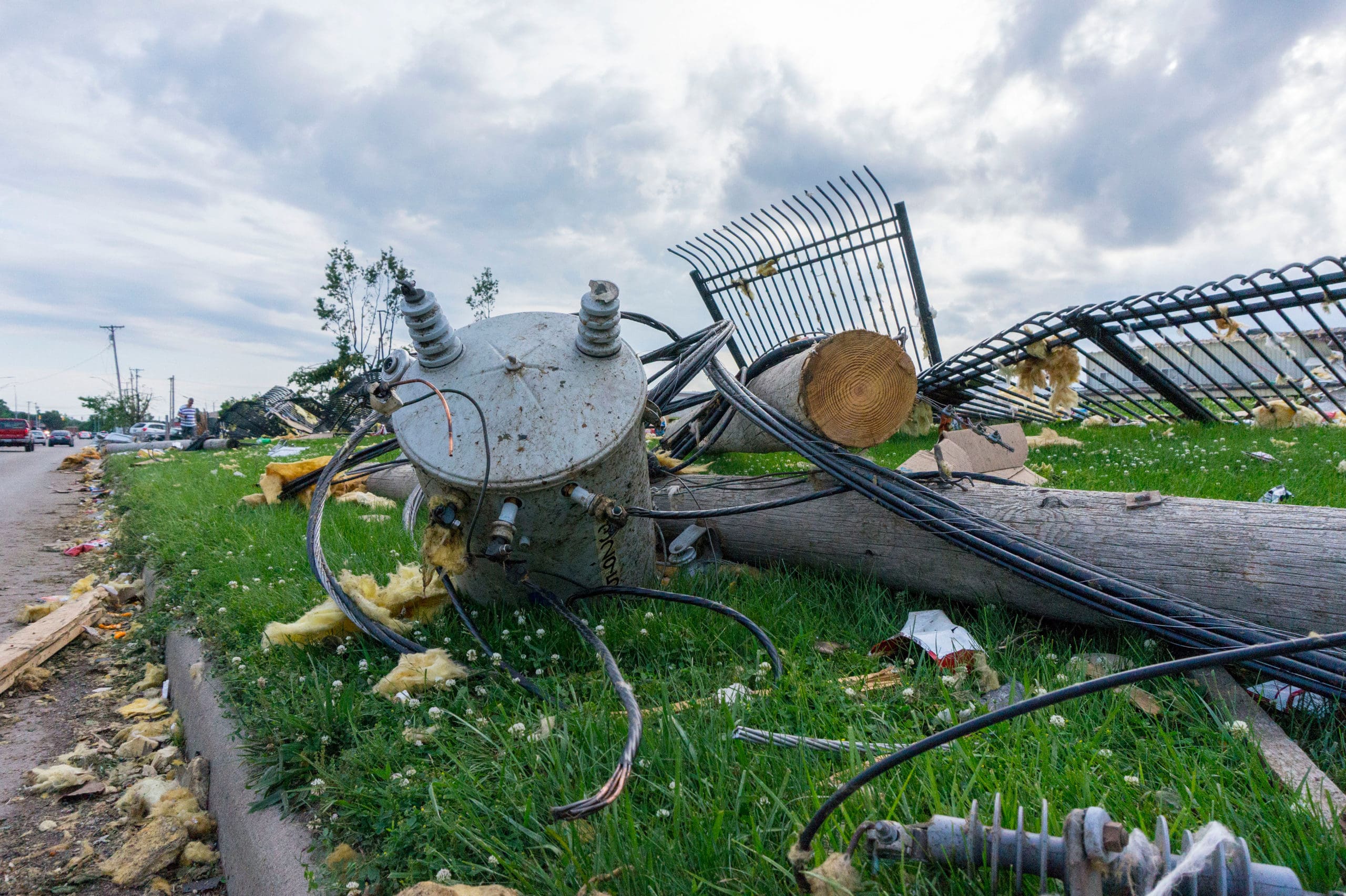
When a tornado rips through a region, the visible damage grabs the headlines. The less visible crisis starts a few minutes later: the grid begins to fail. In Illinois and Wisconsin, severe storms have once again underscored how quickly power outages after tornadoes can cascade into a broader emergency, knocking out communications, interrupting emergency response, and turning routine recovery into a race against time. This is not just about downed lines and darkened neighborhoods. It is about the brittle architecture of modern infrastructure, where a single violent weather event can expose how much of daily life depends on a network that is expected to bend but often breaks. For utilities, local governments, and residents, the real question is no longer whether storms will hit. It is whether the grid can absorb the impact without leaving communities stranded.
- Severe storms can trigger widespread outages within minutes, compounding tornado damage.
- Restoration is slowed by road closures, debris, and uncertainty about the full scope of grid failure.
- Resilience now depends on smarter infrastructure, faster crew deployment, and better backup planning.
- Power outages after tornadoes are becoming a stress test for public safety, telecom, and healthcare systems.
Power outages after tornadoes are a grid problem, not just a weather problem
At first glance, an outage looks like a straightforward repair job. A line is down, a transformer is damaged, a substation is compromised. But power outages after tornadoes reveal a far more complex failure mode. Electricity systems are deeply interconnected, which means localized damage can trigger broader instability. A single snapped pole can isolate a neighborhood. A compromised feeder can slow restoration across a larger district. If a substation takes a direct hit, the consequences can ripple outward fast.
That is why the storm impacts in Illinois and Wisconsin matter beyond the immediate footprint of the tornadoes. They highlight how vulnerable overhead distribution networks remain in high-wind events, especially in communities where grid hardening has lagged behind climate risk. Utilities can restore service quickly when damage is narrow and accessible. They struggle when storms scatter debris, flood roads, and make inspection difficult. In that environment, every hour without power becomes more than an inconvenience. It becomes a logistical bottleneck for everything else.
Grid resilience is not just about preventing outages. It is about limiting the domino effect once one part of the system goes dark.
Why the first 24 hours matter most
The first day after a tornado is where the biggest gap opens between emergency planning and real-world execution. Crews need to assess damage, clear access routes, isolate hazards, and begin repairs while weather conditions can still be unstable. Meanwhile, residents are trying to charge phones, preserve food, keep sump pumps running, and track where to go if shelters are needed. Hospitals, water systems, and cell towers all move to backup power, but backup systems are usually designed for short windows, not extended grid stress.
That is why power outages after tornadoes quickly become a public safety issue. Without electricity, gas stations cannot pump fuel, traffic signals stop working, and local businesses face inventory losses. For people with medical devices or temperature-sensitive medications, even a short outage can be dangerous. The first 24 hours are when utilities and officials have the least information and the most pressure. A quick restoration is ideal, but the real challenge is prioritization: which circuits come back first, which critical facilities need immediate attention, and where can crews safely work?
The hidden infrastructure weak points
Overhead lines remain the easiest target
Much of the distribution network in the Midwest still runs above ground, where it is exposed to wind, debris, and falling trees. When tornadoes strike, overhead lines are often the first visible casualty. Undergrounding helps in some areas, but it is expensive and not always practical across large territories. That leaves utilities balancing cost, reliability, and geography in ways that often favor the status quo.
Substations and transformers are high-value targets
Substations are not glamorous, but they are critical. If storm debris damages switching equipment or transformers, restoration can slow dramatically. Replacement parts are not always sitting nearby, and large transformers can take time to transport and install. This is one reason severe weather can create extended outages even when most of the visible damage appears minor.
Communications systems can fail alongside power
Modern recovery depends on connected systems, but those systems are not immune to outages. If cell towers lose backup power or fiber routes are damaged, residents may lose access to alerts, maps, and utility updates. That makes outage management harder for everyone. The irony is sharp: the tools used to coordinate recovery can be disrupted by the same storm that caused the emergency.
How utilities are changing the response playbook
Utilities are not standing still. In storm-prone regions, many are investing in a mix of hardening and operational speed. That includes stronger poles, more automated switching, better vegetation management, and improved storm forecasting models that help crews pre-position before the worst weather arrives. The goal is not to make the grid invincible. That is unrealistic. The goal is to reduce the number of customers affected and shorten the time to restore critical service.
There is also a growing emphasis on micro-targeted restoration. Instead of waiting for a full network assessment, utilities are increasingly using data to isolate damaged sections and restore unaffected segments faster. Smart meters, sensor networks, and automated fault detection can help crews identify where the system broke and where service can be brought back safely.
Speed matters, but so does precision. Restoring the wrong circuit too early can create new hazards.
What this means for communities
Residents should not assume utilities can solve everything alone. Community preparedness still matters, especially in regions where tornado season overlaps with heat, flooding, or high humidity. Households that keep chargers, batteries, flashlights, bottled water, and a plan for refrigerated medications are better positioned to ride out a prolonged outage. Local governments can help by ensuring shelters have backup power and by communicating clearly about restoration priorities.
Power outages after tornadoes also expose inequity. Households with generators, backup internet, and flexible work options recover faster than those without. That gap can widen quickly when outages last longer than a day. The storm does not just knock out electricity. It can deepen existing divides in safety, mobility, and access to information.
Why this matters for the next wave of extreme weather
It is tempting to treat each tornado outbreak as a standalone event. That would be a mistake. The Midwest is dealing with a broader shift in risk management, where severe convective storms, strong winds, and compound weather events are testing infrastructure built for a less volatile era. The lessons from Illinois and Wisconsin are relevant well beyond those states. Every utility serving a storm-exposed region is being forced to answer the same questions: how much can the grid take, how fast can it recover, and what level of disruption is now considered acceptable?
The answer is probably less forgiving than planners would like. Customers increasingly expect continuity, even when the weather is hostile. That expectation is pushing utilities toward more resilient design, more distributed energy resources, and better emergency coordination with local agencies. The old model – repair after the fact – is not enough when outages can hit hundreds of thousands of people in a matter of minutes.
The future of storm resilience will be measured in minutes
The next frontier is not simply preventing every outage. It is shrinking the window between damage and recovery. That will require better sensors, stronger distribution equipment, more targeted tree trimming, and smarter backup power for critical infrastructure. It may also require policy changes that make resilience investments easier to fund before disasters strike, rather than after.
For now, the Illinois and Wisconsin storms are another reminder that the modern grid lives under constant stress. Tornadoes do not just damage buildings. They test the systems that keep hospitals running, roads moving, and families connected. And when power outages after tornadoes spread, the outage itself becomes part of the disaster. The real measure of progress is not whether storms stop happening. It is whether communities can keep functioning when they do.
The information provided in this article is for general informational purposes only. While we strive for accuracy, we make no guarantees about the completeness or reliability of the content. Always verify important information through official or multiple sources before making decisions.