Track Ebola Origins to Stop the Next Outbreak
Track Ebola Origins to Stop the Next Outbreak
Every major Ebola scare exposes the same uncomfortable truth: we still know too little about how the virus jumps from wildlife into people. That gap is not academic. It is the difference between spotting a spillover early and watching a local health crisis metastasize into a regional emergency. The pressure is rising because deforestation, hunting, land-use change, and climate shifts are pushing humans closer to animal reservoirs faster than surveillance systems can adapt. If public health leaders want to blunt the next outbreak, they need more than reactive treatment kits and emergency drills. They need a serious, sustained effort to map Ebola’s wildlife origins, trace spillover pathways, and turn that knowledge into faster detection and smarter prevention. The clock is already running.
- Ebola prevention starts with identifying the wildlife reservoirs and spillover routes, not just treating human cases.
- Environmental disruption is expanding human-animal contact, making spillover events more likely.
- Surveillance, community trust, and rapid diagnostics are the real frontline defenses.
- Better outbreak control depends on linking ecology, veterinary science, and public health.
- The next pandemic threat may look local at first, but its consequences will not stay that way for long.
Why Ebola wildlife origins matter now
The headline risk with Ebola is obvious: a virus with a terrifying fatality rate, a history of explosive outbreaks, and the ability to overwhelm fragile health systems. But the deeper problem is structural. Until scientists understand where Ebola persists in nature and how it crosses into humans, response efforts will always be partially blind. That means public health agencies can react to outbreaks, but they cannot fully prevent them.
This is why the phrase Ebola wildlife origins matters so much. It is not just a research question. It is an operational map for prevention. If the suspected reservoirs, transmission bridges, and environmental triggers are better understood, authorities can target surveillance where spillover is most likely, warn high-risk communities sooner, and design interventions that reduce exposure before the first human case appears.
“Outbreak control is no longer just a hospital problem. It is a land-use problem, a wildlife problem, and a trust problem all at once.”
The spillover problem is bigger than one virus
Ebola is often discussed as if it were a standalone threat, but it sits inside a much larger pattern of zoonotic disease emergence. When forests are fragmented, wildlife habitats shrink. When roads expand, hunters and traders move deeper into previously remote areas. When food insecurity rises, people rely more heavily on bushmeat and forest resources. Each of those pressures increases the number of opportunities for a virus to leave its natural host and find a human host.
That is the real challenge. Spillover is not a freak accident. It is a predictable outcome of ecological disruption. The world has learned this lesson repeatedly with emerging infections, and yet the systems built to detect these threats are still siloed. Human health departments watch hospitals. Animal health teams monitor livestock. Conservation groups study ecosystems. Very few institutions have the resources to connect those dots fast enough.
What scientists are trying to pin down
Researchers still need to answer several crucial questions about Ebola wildlife origins:
- Which species actually maintain the virus over time?
- How often does spillover happen, and under what environmental conditions?
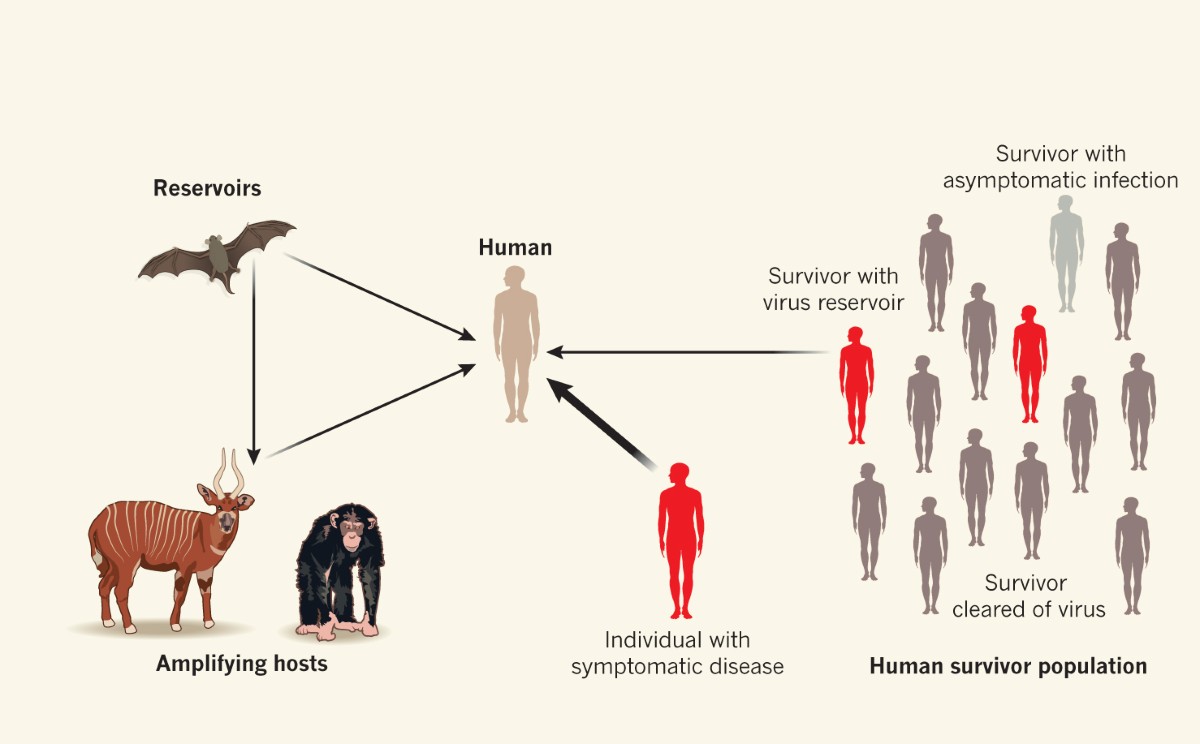
- Do multiple animal species act as reservoirs, amplifiers, or dead-end hosts?
- What roles do climate, migration, and seasonal behavior play in transmission?
Those questions are not trivial. The answers determine where surveillance teams should sample, which communities need education, and how much confidence governments can place in early warning systems.
Ebola wildlife origins and the case for One Health
The most effective way to think about Ebola prevention is through the One Health model, which treats human health, animal health, and environmental health as inseparable. That may sound tidy on paper. In practice, it requires budgets, logistics, and political will that many countries still do not have.
One Health matters because Ebola is unlikely to be solved by a vaccine alone. Vaccines can help stop spread after a case appears, but they do little to prevent the initial jump from wildlife to people. A prevention-first strategy demands field surveillance in bats and other animals, environmental monitoring, community reporting systems, and laboratory capacity to identify early infections quickly.
What a stronger surveillance stack looks like
A credible prevention system would include:
- Routine sampling of wildlife in high-risk ecologies
- Rapid sequencing to identify viral strains and trace changes
- Community-based reporting networks in remote areas
- Cross-border data sharing between health ministries
- Mobile labs and field teams that can confirm suspected cases quickly
That stack sounds expensive because it is. But the cost of inaction is always higher. Outbreak response burns through money at a staggering rate: emergency logistics, treatment centers, protective equipment, border controls, lost productivity, and long-term social disruption. Prevention is not a luxury. It is the cheaper option that governments keep underfunding until it is too late.
Why response-only strategies keep failing
Too many Ebola policies still assume that the best way to fight a crisis is to wait for a human case, then surge in with containment tools. That approach can work better today than it did a decade ago, thanks to improved diagnostics, better infection control, and more experience in outbreak management. But it is still inherently reactive.
The weakness is obvious: by the time the first patient reaches a clinic, the virus has already found a path out of nature and into human networks. At that point, public health teams are racing a problem that has already gained momentum. Contact tracing, isolation, ring vaccination, and community education remain essential, but they are downstream tools. They do not replace the need to understand and interrupt spillover itself.
“If the first warning sign is a sick patient in a rural clinic, the system has already missed the moment when prevention was cheapest and most effective.”
The operational lessons policy makers keep ignoring
There is a frustrating pattern in global health: crisis attention spikes, funding briefly follows, then the system drifts back toward underpreparedness. Ebola should have broken that cycle by now. Instead, many countries still struggle with fragile labs, weak rural health infrastructure, and limited wildlife surveillance capacity. That is why the conversation about Ebola wildlife origins has to move from scientific circles into government planning and disaster preparedness.
The strongest policy approach would combine several layers of defense.
- Environmental intelligence: identify regions where habitat disruption and human encroachment overlap with high-risk wildlife
- Local engagement: build trust with communities that are most likely to encounter spillover events
- Health system readiness: train clinics to recognize and isolate suspected cases rapidly
- Regional coordination: share alerts across borders before outbreaks travel
Pro tip: countries with limited budgets should not try to monitor everything. They should focus on known hotspots, seasonal patterns, and human behaviors that create the highest exposure risk. Precision beats breadth when resources are scarce.
How community behavior shapes outbreak risk
It is easy to frame Ebola as a laboratory or wildlife issue, but the human layer is just as important. Local practices around hunting, caregiving, burial, and health-seeking behavior can either slow an outbreak or accelerate it. That is why top-down messaging often fails. Communities are not simply passive recipients of public health orders. They are the first line of defense, and they need information that is practical, respectful, and culturally grounded.
Any serious prevention strategy should invest in trusted local messengers, not just posters and emergency hotlines. People are more likely to report unusual animal die-offs, sick contacts, or strange symptoms when they believe the health system will respond with support rather than punishment. Trust is not a soft variable. It is a hard operational asset.
What to watch next in Ebola research
The next wave of progress will likely come from better tools, not just bigger promises. Portable sequencing, improved ecological modeling, and more integrated disease intelligence platforms can help researchers detect patterns that used to be invisible. Artificial intelligence may also help flag ecological and epidemiological signals earlier, but only if the underlying data are good enough and shared widely enough to matter.
That said, technology is not a magic shield. A machine-learning model trained on weak surveillance data will only produce fast guesses, not reliable warnings. The real breakthrough will come from merging field science with public health practice. If researchers can connect animal hosts, environmental stress, and human exposure in a single analytic picture, governments will finally be able to move from crisis response to true prevention.
The bottom line on Ebola wildlife origins
The next big Ebola outbreak will not be stopped by panic, press conferences, or short-term emergency spending alone. It will be stopped – if it is stopped – by finding where the virus hides in nature, understanding how it escapes, and building systems that can interrupt the jump before it reaches a hospital bed. That is why Ebola wildlife origins is one of the most consequential public health questions of the decade.
The lesson is stark. If policymakers treat spillover as an environmental footnote, they will keep paying for outbreaks after they begin. If they treat it as a core security issue, they can actually reduce the odds of the next crisis. The difference between those two futures is not theoretical. It is measurable, fundable, and already overdue.
The information provided in this article is for general informational purposes only. While we strive for accuracy, we make no guarantees about the completeness or reliability of the content. Always verify important information through official or multiple sources before making decisions.
