Trump Bets Big on War and the Economy
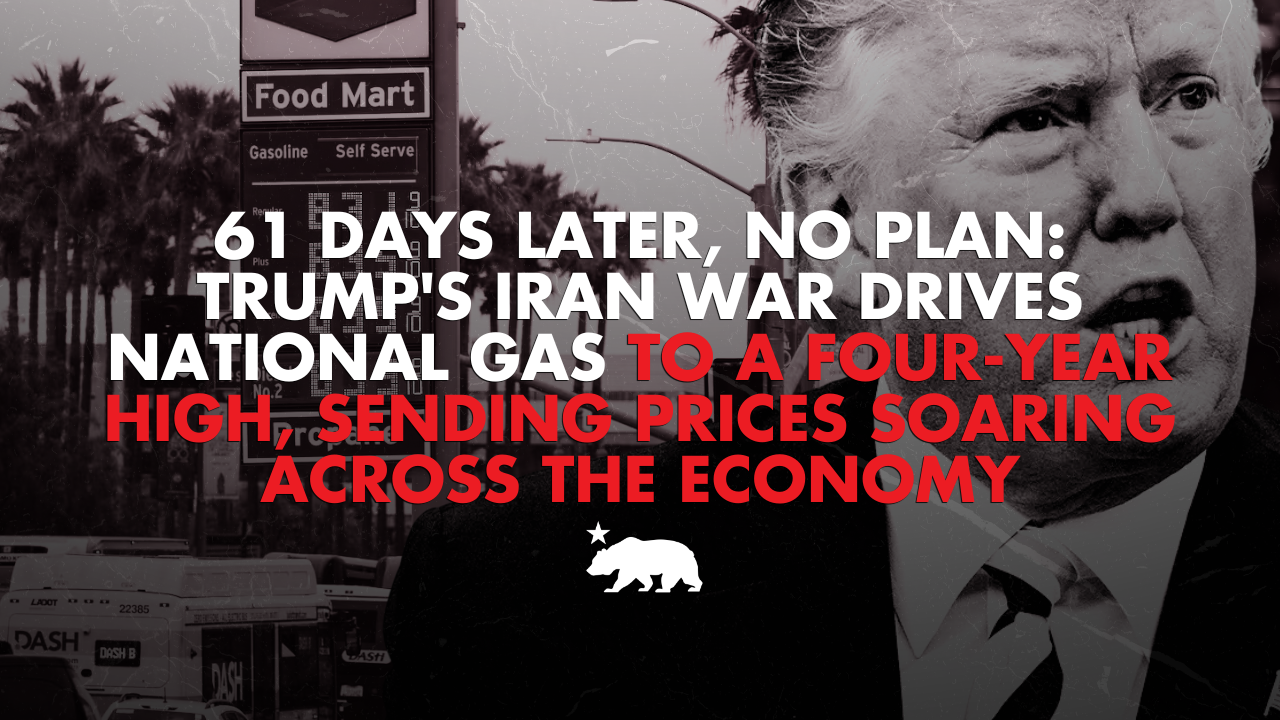
Trump Bets Big on War and the Economy
The Trump economy Iran war debate is no longer a side plot in American politics – it is rapidly becoming the main stage. When voters feel squeezed by prices, uncertain about jobs, and exhausted by global instability, any president or candidate who links national strength to economic relief is making a massive gamble. That is exactly what is happening here. The pitch is simple on its face: toughness abroad signals control at home. But history is rarely that neat, and markets, allies, and voters tend to punish oversimplified narratives.
The deeper tension is harder to ignore. A military confrontation involving Iran can rattle oil prices, unsettle supply chains, and intensify inflation fears just when households are already watching every bill. For Trump, the strategy can energize supporters who want forceful leadership. It can also expose a contradiction at the heart of the message: promising stability while flirting with the kinds of shocks that often destroy it.
- Trump economy Iran war messaging fuses foreign policy toughness with economic reassurance.
- That strategy can help politically, but it carries serious risks for inflation, energy prices, and market confidence.
- Voters may reward strength rhetoric briefly, yet punish any sign of rising household costs.
- Iran-related conflict is not just a geopolitical issue – it is an economic stress test.
- The real question is whether political theater can outrun financial reality.
Why the Trump economy Iran war message is powerful
Trump has long understood something many politicians only half-grasp: voters do not compartmentalize crises. They do not separate a headline about missile strikes from a gas receipt, or an overseas escalation from a retirement account. They experience politics as one blended stream of confidence and fear. That makes the economy + security message unusually potent.
At its strongest, this framing tells voters that American economic pain is not random. It suggests that weakness abroad invites instability that eventually lands at home through higher energy costs, damaged deterrence, and reduced confidence. For supporters, that is not just emotionally satisfying – it feels actionable. It offers a villain, a remedy, and a leader claiming he can execute both.
Foreign policy messaging becomes politically dangerous when it stops being about strategy and starts being sold as instant economic therapy.
The problem is that geopolitical escalation rarely behaves like campaign copy. Military pressure can create leverage, but it can also trigger retaliation, disrupt shipping, and drive commodity spikes. The more a political message promises calm through confrontation, the more vulnerable it becomes to real-world turbulence.
How Iran conflict could hit the economy fast
Oil is still the first pressure point
Any serious confrontation involving Iran immediately raises concerns around global energy flows. Even if direct supply disruptions never fully materialize, the market often reacts to risk before damage is visible. Traders price in uncertainty. Insurers raise shipping costs. Energy volatility spreads outward.
That matters because oil shocks rarely stay contained. They can move from crude benchmarks to gasoline prices, freight costs, airline margins, and consumer sentiment in surprisingly little time. Households may not track the Strait of Hormuz on a map, but they notice when the number on the pump changes overnight.
Inflation psychology matters almost as much as inflation itself
Consumers and businesses react not just to current prices but to what they expect next. If conflict headlines make people believe costs are about to climb, spending behavior changes. Companies may raise prices preemptively. Workers may push harder for wage increases. Investors may adjust rate expectations.
In practical terms, even a limited conflict can have outsized economic effects if it alters expectations. That makes the political upside of a forceful posture more fragile than it looks.
Markets hate uncertainty more than ideology
Wall Street can digest many things: regulation, tax shifts, partisan rhetoric. What it struggles with is unpredictability. A widening Iran crisis introduces unknowns around military duration, regional response, cyber retaliation, and global trade. Markets can tolerate a doctrine. They are far less tolerant of improvisation.
This is where the Trump economy Iran war story becomes especially high stakes. Trump often benefits politically from projecting confidence and disruption. Financial systems, by contrast, reward clarity, process, and risk management. Those are not always compatible styles.
The political logic behind the strategy
From a campaign perspective, the logic is straightforward. If voters already view the world as disorderly, a candidate can argue that only a more confrontational approach restores credibility. Pair that with promises of lower prices, stronger growth, and renewed leverage, and the message begins to feel cohesive.
It is also tailored to a media environment that rewards compression. Complex regional dynamics are translated into a short political claim: strength works, weakness costs money. That message travels well because it is easy to repeat, emotionally legible, and connected to daily pain.
- It creates a clean contrast: force versus drift.
- It binds foreign policy to kitchen-table concerns: gas, groceries, retirement savings.
- It turns uncertainty into leadership branding: only one figure is presented as decisive enough to act.
But there is a structural weakness here. Once a politician ties international confrontation to economic recovery, every market tremor becomes political evidence against the claim. If prices rise, the message is no longer abstract. It is measurable.
What voters are likely to care about most
Not ideology – cost
Most voters will not parse detailed arguments about deterrence doctrine or regional balancing. They will ask more immediate questions. Did gas get more expensive? Did groceries stop climbing? Did the broader economy feel steadier or shakier after the escalation?
That does not mean foreign policy is irrelevant. It means the public often judges it through downstream effects. A successful narrative of strength can hold for a while, especially during rally-around-the-flag moments. But if household budgets worsen, that grace period shrinks fast.
Competence may matter more than aggression
There is also a subtle but crucial distinction between appearing strong and appearing competent. Voters often reward forceful language in moments of anxiety, but they tend to prefer disciplined execution over permanent volatility. If the public senses that escalation lacks a clear endgame, enthusiasm can fade.
American voters often admire toughness in theory and stability in practice. The politician who promises both is making a promise that reality frequently tests.
The contradiction at the center of the Trump economy Iran war case
The central contradiction is hard to miss: a movement built on lowering costs and restoring predictability is leaning on a geopolitical posture that can produce the opposite. That does not automatically make the strategy irrational. Politics often rewards confidence before outcomes arrive. But it does make the approach inherently unstable.
To make this framing durable, Trump or his allies would need to convince voters of several things at once:
- That pressure on Iran would remain controlled.
- That any economic turbulence would be temporary.
- That long-term deterrence would lower costs rather than raise them.
- That domestic economic gains would outweigh the external shock.
Those are ambitious claims. Any one of them could fail under stress. Together, they form a political stack with very little tolerance for error.
What business leaders and markets would watch next
Energy sensitivity
Executives in logistics, manufacturing, aviation, and retail would immediately monitor fuel exposure. Companies with thin margins do not need a full-blown oil crisis to feel pressure. Even moderate increases can alter guidance, hiring assumptions, and investment timing.
Consumer resilience
The consumer has been the backbone of recent economic narratives, even amid inflation fatigue. If conflict headlines sap confidence, households could pull back. That matters far beyond politics. Consumer hesitation can ripple into earnings, inventories, and labor demand.
Policy signaling
Markets would also scrutinize the coherence of the policy response. Is there a clear objective? Are military and economic communications aligned? Are officials preparing for cyber risk, shipping disruption, or sanctions blowback? Strategic ambiguity may work diplomatically in some contexts, but investors usually prefer explicit frameworks.
Pro Tip: When political messaging centers on national strength, watch for the practical indicators that determine whether the story holds: oil futures, consumer sentiment, shipping insurance costs, and central bank language on inflation expectations.
Why this matters beyond one campaign
This is bigger than Trump, and bigger than a single election cycle. It reflects a broader shift in how American politics sells foreign policy. Security arguments are increasingly being packaged as consumer arguments. Military posture is discussed not just in terms of alliances or deterrence, but in terms of price stability and household confidence.
That fusion is politically effective because it matches how people actually experience uncertainty. But it can also flatten the truth. War and economic stability are not interchangeable levers. They intersect, sometimes violently. A leader who treats force as an all-purpose instrument may discover that the costs arrive faster than the benefits.
There is another long-term implication. If every geopolitical confrontation is framed as a direct test of domestic prosperity, the public may grow less patient with complex alliances, slower diplomacy, and strategic restraint. That would reshape not only campaign rhetoric but the operational logic of U.S. power.
The likely endgame
The most plausible outcome is not a clean political win or loss from rhetoric alone. It is a rolling test. Trump can benefit if he captures public frustration and presents conflict through the language of control. He can suffer if events on the ground or in the markets break that illusion.
And that is the real story. The Trump economy Iran war framework is compelling because it compresses fear into a simple promise. It is risky because the global system is under no obligation to cooperate. Oil traders, shipping firms, central bankers, and anxious consumers do not vote as a bloc, but together they can rewrite any political message.
For voters, the question is not whether toughness sounds good. It usually does. The question is whether toughness, as practiced, lowers the temperature or raises the bill. That distinction will determine whether this strategy looks like strength – or like another expensive illusion.
The information provided in this article is for general informational purposes only. While we strive for accuracy, we make no guarantees about the completeness or reliability of the content. Always verify important information through official or multiple sources before making decisions.


