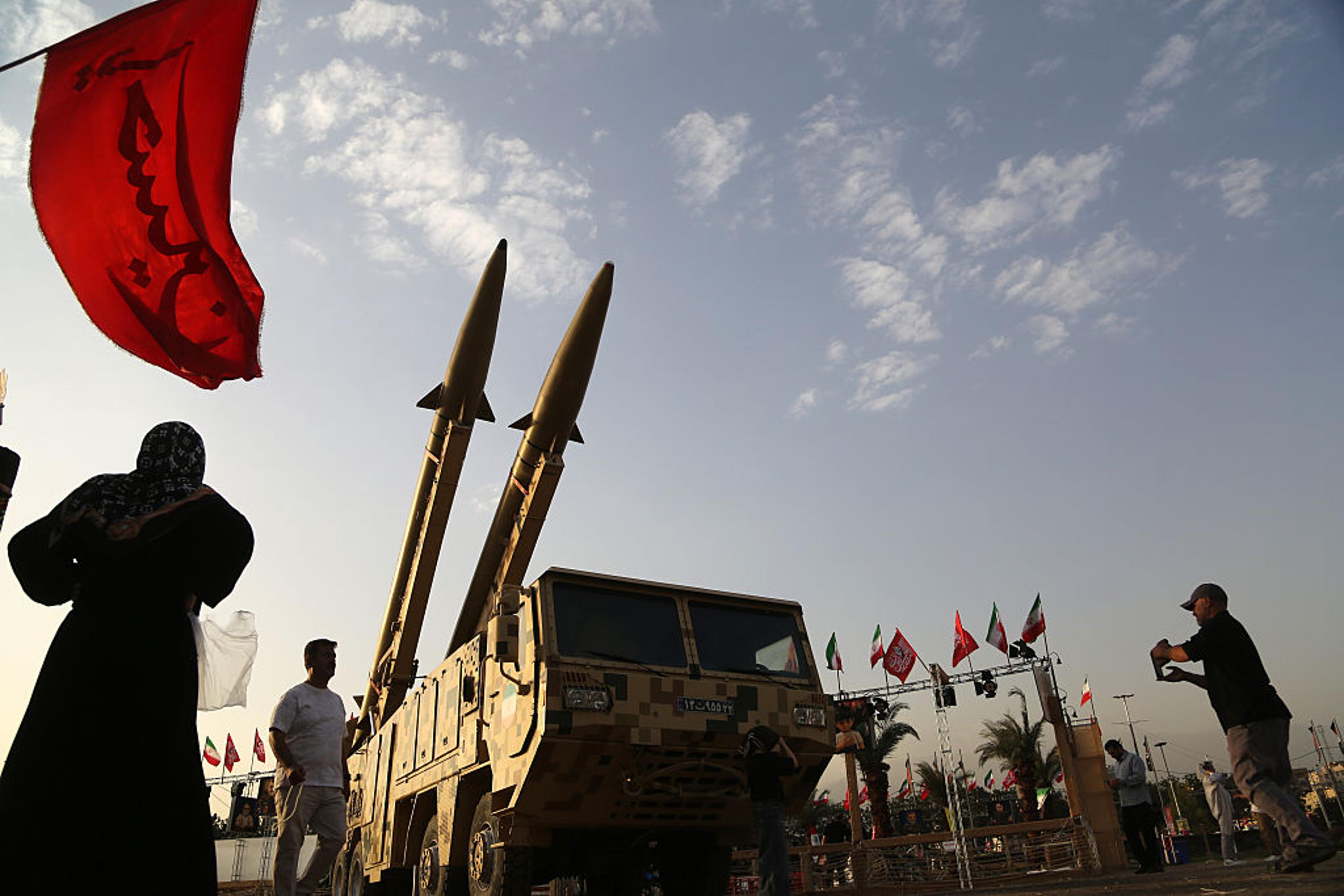
Trump Escalates Hormuz Mission as Iran War Hits Day 66

Trump Escalates Hormuz Mission as Iran War Hits Day 66
The Hormuz mission is not just another military headline. It is the kind of move that can rattle oil markets before breakfast, push insurers into panic mode by lunch, and reset global risk calculations by the closing bell. With the Iran war now on day 66 and Donald Trump announcing a new mission tied to the Strait of Hormuz, the story is no longer confined to battlefield updates. It is about maritime chokepoints, deterrence, political signaling, and whether Washington believes it can control escalation in one of the most combustible corridors on Earth.
For governments, traders, shippers, and ordinary consumers, the pain point is obvious: when the Strait of Hormuz looks unstable, energy prices, supply chains, and geopolitical nerves all move at once. This is why the latest announcement matters far beyond the region.
- Trump’s Hormuz mission raises the stakes in an already volatile Iran war.
- The Strait of Hormuz remains a global pressure point for energy markets and commercial shipping.
- Military signaling is now inseparable from economic fallout, especially for oil prices and insurance costs.
- The central question is deterrence versus escalation: can a mission designed to secure transit avoid widening the conflict?
Why the Hormuz mission changes the picture
The Strait of Hormuz is one of those places that appears on maps more often than most people think about it. Yet it sits at the center of a huge share of global energy transit. Any mission announced around it carries outsized meaning because the strait is less a local waterway than a strategic pressure valve for the global economy.
That is why a Hormuz mission immediately triggers several interpretations at once. On the military side, it suggests convoy protection, surveillance expansion, rapid response planning, and a more visible naval posture. On the political side, it signals that the United States wants to demonstrate control and reassure allies. On the market side, it tells investors and energy traders to prepare for turbulence even if no immediate disruption occurs.
When leaders talk about protecting Hormuz, they are really talking about protecting the credibility of the global trading system.
That framing matters. Once credibility becomes part of the mission, backing down gets harder. Every patrol, interception, or warning can become a test of resolve.
Iran war day 66 and the shift from battlefield to bottleneck
Wars evolve. Early phases tend to revolve around direct strikes, territorial claims, and immediate military objectives. By day 66, the conflict narrative often changes. It starts to include logistics, endurance, international pressure, and strategic chokepoints. That is exactly why this moment feels so significant.
The latest developments suggest the conflict is now being measured not only by what happens on land or in the air, but by what could happen at sea. The Strait of Hormuz offers leverage without requiring a conventional breakthrough. It allows states and non-state actors to influence world markets, force diplomatic engagement, and amplify uncertainty with comparatively limited tactical actions.
That creates a dangerous asymmetry. A drone incident, a vessel inspection, a suspected mining threat, or an aggressive maneuver near commercial shipping can produce consequences far beyond the immediate event. Insurance rates rise. Freight schedules change. Energy buyers hedge more aggressively. Political leaders face demands to respond. The chain reaction is fast.
Why maritime risk now dominates the conversation
There are three reasons maritime risk has moved to the center of the Iran war discussion:
- Economic concentration: too much energy supply passes through too narrow a corridor.
- Operational ambiguity: attribution at sea can be messy, delayed, and politically contested.
- Escalation speed: naval incidents can turn into multinational crises almost instantly.
That combination makes the Hormuz mission look less like a side operation and more like a strategic pivot.
What Trump is signaling with the Hormuz mission
Trump’s announcement appears designed to accomplish multiple goals at the same time. First, it tells Iran and its proxies that the United States is willing to project force where the economic stakes are highest. Second, it reassures Gulf partners and shipping interests that Washington is not prepared to let commercial passage become hostage to uncertainty. Third, it speaks to a domestic political audience that values strong, visible action over vague diplomacy.
But strong signaling is a double-edged tool. If the mission is framed too broadly, it may create expectations of a more aggressive posture than policymakers actually want. If it is framed too narrowly, adversaries may test the boundaries.
Deterrence works best when the red lines are clear, the mission is limited, and everyone believes the other side understands the cost of miscalculation.
That is the challenge here. Maritime deterrence depends on precision, discipline, and communication. It is not enough to show up with more ships. The mission needs a defined purpose, rules of engagement, and clear thresholds for response.
The practical military logic
At a practical level, a mission in and around Hormuz likely revolves around a familiar toolkit:
- Expanded naval patrols and visible presence operations.
- Enhanced intelligence, surveillance, and reconnaissance coverage.
- Coordination with partner navies and regional bases.
- Protection for commercial vessels or high-risk transit corridors.
- Rapid response planning for harassment, seizure attempts, or attacks.
In modern command environments, that kind of posture often runs through systems such as ISR, maritime domain awareness platforms, secure communications nodes, and layered air defense. Even if the public language stays broad, the operational backbone is usually highly technical and tightly managed.
Why the Strait of Hormuz still terrifies markets
Markets do not wait for certainty. They price fear early. The reason is simple: the Strait of Hormuz is one of the few places where geopolitical tension can become a direct tax on the global economy almost overnight.
If conflict threatens passage, several things can happen in parallel. Energy traders may bid up crude on anticipated supply risk. Tanker operators may reroute or delay. Marine insurers may increase premiums. Import-dependent economies may brace for inflationary pressure. Airlines, manufacturers, and logistics firms may all feel the effects downstream.
This is what makes the Hormuz mission more than military signaling. It is effectively a market intervention by other means. By promising protection, Washington is attempting to suppress panic as much as deter attacks.
Why this matters for businesses and consumers
Even readers far from the Gulf should pay attention. Disruption in Hormuz can affect:
- Fuel and transport costs.
- Input prices for manufacturing.
- Shipping timelines and inventory planning.
- Inflation expectations across multiple sectors.
That means the geopolitical story quickly turns into a business story and, eventually, a household budget story.
The biggest risk is miscalculation, not just confrontation
The most dangerous scenarios are not always the ones built around deliberate, full-scale escalation. Often, they begin with confusion. A radar lock. A warning shot. A vessel that ignores instructions. A drone feed interpreted the wrong way. A chain of command that reacts faster than diplomats can intervene.
That is why military planners obsess over procedures, not just firepower. In a congested and politically charged space like Hormuz, operational discipline can matter more than raw capacity.
Pro Tip for reading these developments
Watch the language around freedom of navigation, escort operations, defensive posture, and rules of engagement. Those phrases often reveal whether a mission is designed to reassure, to deter, or to prepare for active confrontation.
If officials emphasize short, narrow objectives, that usually suggests controlled signaling. If they begin broadening the mission language toward regional security guarantees or retaliation frameworks, the escalation ladder is getting steeper.
Can a Hormuz mission actually stabilize the region?
Possibly, but only under strict conditions. A credible maritime security operation can reduce opportunistic attacks, reassure shipping companies, and buy time for diplomacy. It can also impose costs on actors seeking to weaponize uncertainty. In that sense, the mission has a stabilizing logic.
But it can just as easily produce the opposite result if it is perceived as open-ended, politically performative, or tactically provocative. Stability comes from predictability. If every side reads the mission differently, predictability disappears.
This is the core paradox: the same show of force meant to calm markets can also convince rivals that a broader confrontation is coming. Once that belief takes hold, even defensive steps can be interpreted as pre-attack positioning.
What to watch next in the Iran war and the Hormuz mission
The next phase will likely be defined by signals more than declarations. Watch for these indicators:
- Whether commercial shipping traffic changes behavior in measurable ways.
- Whether insurance and freight costs spike sharply.
- Whether allied governments publicly join or endorse the mission.
- Whether Iran changes its naval or proxy posture.
- Whether officials begin using language that expands the mission scope.
If shipping remains steady and messaging stays disciplined, the mission may function as intended: a deterrent with economic reassurance built in. If there are incidents, mixed signals, or retaliatory cycles, the operation could become a trigger point instead of a stabilizer.
The strategic verdict on Trump’s Hormuz mission
The blunt truth is that Trump’s announcement lands at a moment when symbolism and strategy are nearly impossible to separate. The Iran war at day 66 is no longer just about who can strike harder. It is about who can shape risk, control narratives, and dominate the chokepoints that matter to the global economy.
The Hormuz mission is significant because it acknowledges that reality. It treats maritime security as the hinge between regional conflict and global consequence. That is the right diagnosis. Whether it becomes the right prescription depends on restraint, clarity, and execution.
For now, the announcement should be read neither as empty theater nor as automatic escalation. It is something more consequential: a signal that the war has entered a phase where sea lanes, oil flows, and credibility may matter as much as missiles. And when the Strait of Hormuz becomes the focal point, the rest of the world does not get to look away.
The information provided in this article is for general informational purposes only. While we strive for accuracy, we make no guarantees about the completeness or reliability of the content. Always verify important information through official or multiple sources before making decisions.