Trump Finances Put Power and Ethics on Collision Course
Trump Finances Put Power and Ethics on Collision Course
Trump finances have never been just a campaign sidebar. They are the pressure point where money, influence, and governance collide, and that collision is becoming harder to ignore. When a political figure with sprawling business interests returns to the center of public power, every deal, debt, asset, and patronage network starts to matter. The problem is not only whether the numbers add up. The deeper issue is whether the public can trust that decisions are made for the country rather than for a balance sheet. That is the uncomfortable question hanging over Trump finances and the broader issue of government conflicts, especially in a political climate where accountability competes with spectacle.
- Trump finances remain a live governance issue because private assets can shape public decisions.
- Government conflicts become harder to police when business holdings and political power overlap.
- Transparency is not a slogan here – it is the only workable guardrail.
- The real risk is not one transaction, but a system that normalizes blurred boundaries.
Why Trump finances still matter
Trump finances matter because money is never merely personal when the person in question sits near the machinery of state. A private portfolio can create incentives, dependencies, and vulnerabilities that ripple into policy choices. Even the appearance of a conflict can weaken trust, and trust is one of the few assets a government cannot borrow. The issue is not confined to one real estate project, one loan, or one brand license. It is about whether a political leader can separate private gain from public duty in a way ordinary citizens can verify.
That is where skepticism is warranted. Modern politics already asks the public to absorb a lot of complexity: blind trusts, shell entities, partnerships, debt structures, and valuation disputes. Add a figure whose brand is itself a business model, and the line between governance and monetization becomes almost impossible to see. The danger is not only corruption in the narrow legal sense. It is the normalization of a system where conflicts are treated as background noise.
The structure of the conflict problem
Government conflicts typically emerge in a few predictable ways. Officials may steer policy toward industries that benefit them personally. They may avoid actions that would hurt a major donor, partner, or creditor. Or they may simply create enough ambiguity that no one can confidently say where public interest ends and private interest begins. In the case of Trump finances, the concern is amplified by scale: large holdings, recognizable brands, and a long history of turning public attention into commercial value.
Follow the incentives, not just the headlines
The most important part of this story is not the dramatic allegation. It is the incentive structure. If a political decision affects a property, licensing deal, regulatory approval, or lender relationship, then that decision is automatically under suspicion. Even when there is no provable quid pro quo, the environment itself can distort behavior. That distortion is what ethics rules are supposed to prevent, and it is why disclosure matters as much as enforcement.
When money and authority live in the same room, trust starts to decay long before a scandal becomes provable.
Trump finances and the transparency gap
One reason Trump finances remain such a persistent story is that transparency in politics is often reactive rather than preventive. Disclosures come late. Investigations move slowly. Records can be incomplete, formatted to obscure more than they reveal, or structured to satisfy minimal legal requirements without answering the public’s real questions. That gap creates a paradox: the more complicated the financial web, the more important transparency becomes, yet the harder it is for ordinary people to evaluate it.
This is where public skepticism is healthy. A government official can insist that there is no conflict, but without clear separation and visible accounting, that claim is impossible to test. A credible ethics framework would not ask citizens to take anyone at their word. It would make the boundaries legible: divestiture, independent management, full disclosure, and enforceable recusal rules. Without those mechanisms, the system relies on trust it has not earned.
Why disclosure alone is not enough
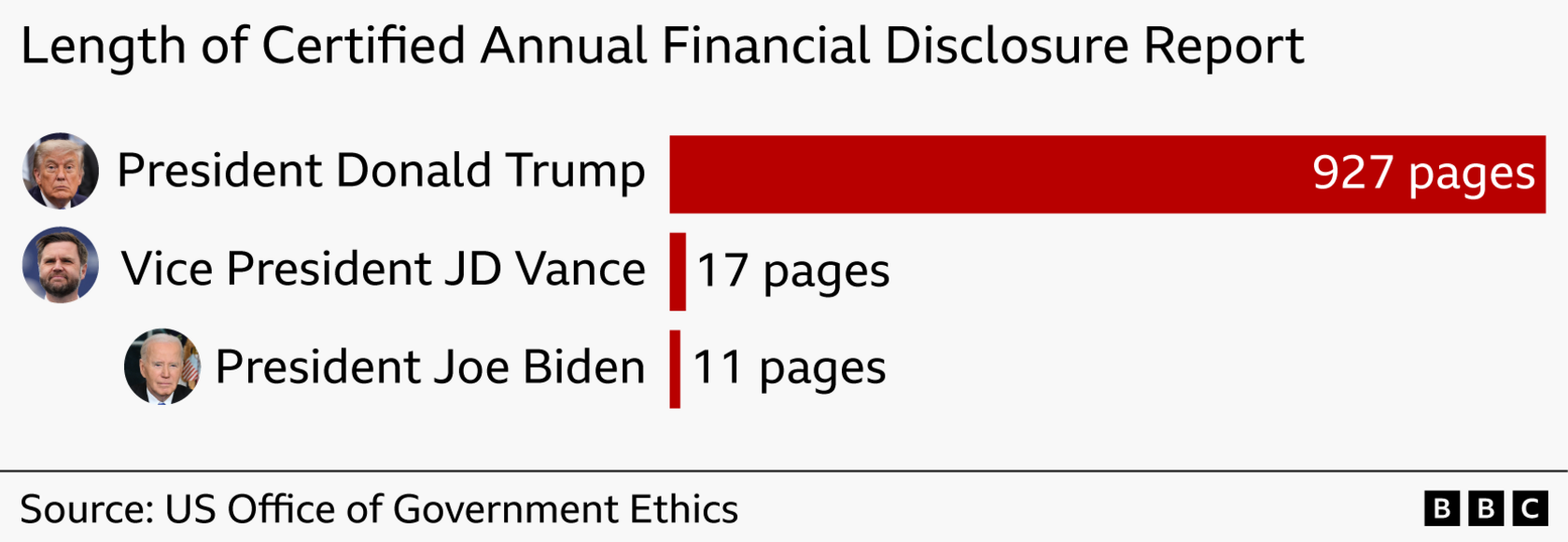
Disclosure is necessary, but it is not sufficient. A thick stack of filings can create the illusion of accountability while hiding the practical reality. If assets remain intertwined with political influence, the public still has to wonder whether decisions are shaped by personal exposure. That is why compliance culture matters. Ethics is not a box to check. It is a design problem.
- Full divestiture is cleaner than partial separation when conflicts are recurring.
- Independent management helps, but it does not erase perceived influence.
- Recusal rules must be clear enough to be enforced, not interpreted opportunistically.
- Plain-language disclosures are essential for public oversight.
What this means for American governance
The broader lesson from Trump finances is that the United States still lacks a durable consensus on how much private wealth a public official should be allowed to carry into office. Other democracies tend to demand stricter separation because they understand a simple truth: power plus opaque money is corrosive. In the U.S., the line has been fuzzier, in part because wealth is often framed as proof of independence rather than a source of risk.
That framing is increasingly outdated. A modern executive branch touches everything from antitrust enforcement to tax policy to federal contracting. If an official has continuing financial stakes in industries affected by those decisions, the potential for conflict is not theoretical. It is built into the job description. The challenge is not to assume bad faith at every turn. It is to build institutions that do not require perfect faith in the first place.
Strong ethics systems do not depend on the character of one person. They depend on rules that survive the person.
The political cost of blurred lines
Blurred lines have a political cost beyond any single investigation. They fuel cynicism, which then depresses participation, which then makes accountability even harder. Voters begin to assume that all politics is transactional, that every criticism is partisan, and that every defense is self-serving. That is a dangerous equilibrium because it benefits the most powerful actors: they can survive scrutiny by making scrutiny feel routine.
Trump finances sit at the center of that dynamic because they are emblematic of a larger cultural fight over whether business success and public service can coexist without corruption. The answer, in practice, depends on structure. If the structure is weak, even well-intentioned officials can drift into conflict. If the structure is strong, the system can tolerate ambition without handing over the keys to private interest.
Pro tip for readers tracking ethics questions
When assessing any public official’s financial conflicts, ask three questions: What assets remain under their control? Who benefits from their policy choices? And what independent mechanism exists to verify separation? Those questions cut through the fog far better than partisan talking points.
How Trump finances could shape what comes next
The future implication of Trump finances is not limited to one presidency or one election cycle. If a high-profile leader can maintain deep financial ties while exercising public power, that becomes a template. Future candidates will point to it. Advisers will rationalize it. Voters will be told that this is simply how modern politics works. That is how exceptions become norms.
There is another path. The current backlash could push lawmakers, watchdogs, and voters toward tougher ethics standards, clearer disclosure requirements, and more robust enforcement. The pressure for reform often grows only after the public sees how easily trust can be gamed. If that happens, the controversy may leave behind at least one durable benefit: a more realistic understanding that integrity must be engineered, not improvised.
Why this matters now
Trump finances are more than a story about one person’s wealth. They are a stress test for democratic institutions. The real question is whether the system can distinguish lawful from legitimate, and legal from ethical. Those are not the same thing. A government can survive flawed optics for a while. It cannot function well if citizens conclude that financial power always outruns public obligation.
That is why this debate matters beyond partisan loyalty. If leaders can carry unresolved conflicts into office and call the arrangement acceptable, then every future ethics standard becomes easier to erode. If, instead, the public demands clearer separation, then the next generation of leaders will have to prove that service to the public is not just another revenue stream.
The lesson is blunt: transparency, separation, and enforceable ethics rules are not bureaucratic niceties. They are the infrastructure of trust. And without trust, even the most powerful office starts to look like a private enterprise.
The information provided in this article is for general informational purposes only. While we strive for accuracy, we make no guarantees about the completeness or reliability of the content. Always verify important information through official or multiple sources before making decisions.