Trump Fund Lawsuit Escalates
Trump Fund Lawsuit Escalates
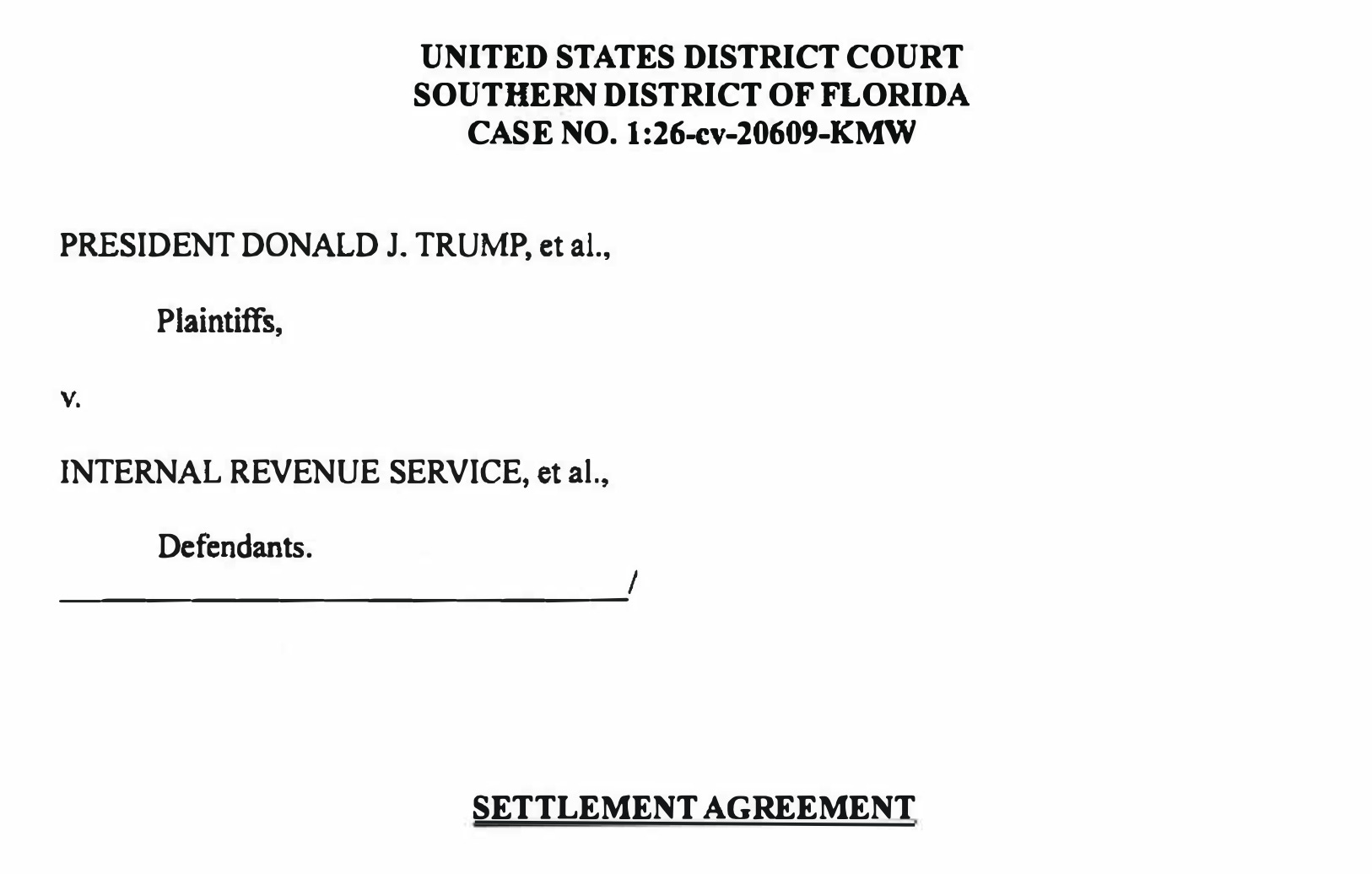
The next major fight over political money is not happening in a campaign ad or a cable news segment. It is happening in court. The Trump fund lawsuit now taking shape could become a defining test of how political organizations raise, store, and deploy cash long after Election Day. That matters because modern politics runs on sprawling networks of committees, nonprofit groups, digital fundraising machines, and legal entities that often blur the line between advocacy and influence.
For voters, watchdogs, and donors, the core frustration is familiar: money moves faster than transparency. By the time the public understands where funds came from or where they went, the political moment may already be over. This case has the potential to change that. It is not just about one organization or one political figure. It is about whether the rules governing political cash still fit the machinery that now dominates American elections.
- The Trump fund lawsuit could become a major stress test for campaign finance oversight.
- The legal fight appears to center on how political funds were solicited, controlled, and potentially used.
- Watchdog litigation like this can shape future fundraising practices even before a final ruling lands.
- The broader stakes include donor transparency, nonprofit accountability, and trust in post-election political operations.
Why the Trump fund lawsuit matters now
Political fundraising has evolved into a permanent infrastructure. It no longer switches off after ballots are counted. Instead, campaigns often feed into leadership committees, issue groups, legal defense efforts, grassroots entities, and aligned nonprofits. That ecosystem can be enormously effective. It can also be enormously difficult for the public to track.
This is why the Trump fund lawsuit matters beyond the headline. When a watchdog group challenges a fundraising structure or alleges misuse, the case forces a closer look at the mechanics of political finance: who asked for money, what promises were made, what entity received the funds, and whether the eventual use matched the original pitch.
That sequence is the real battleground. Courts are often less interested in political branding than in operational details. If fundraising messages implied one purpose while the underlying structure enabled another, that gap can become legally and politically explosive.
Political money cases rarely turn only on ideology. They turn on documentation, representations to donors, and whether the paper trail matches the public story.
What appears to be at the center of the dispute
At its core, this kind of case typically asks a few simple but consequential questions. Were donors clearly informed about where their money would go? Did the organizations involved have the legal authority to raise and distribute funds in the way they did? And were the transfers, allocations, or expenditures consistent with applicable election and nonprofit rules?
Those questions sound dry, but they cut straight to the legitimacy of modern political fundraising. The average donor sees a polished email, text message, or landing page. Behind that sits a complex stack of compliance processes, disclaimers, payment systems, committee relationships, vendor agreements, and reporting obligations.
The donor expectation problem
One of the most sensitive issues in any political finance dispute is donor intent. If a fundraising appeal strongly suggests one outcome – for example, supporting a legal challenge, election integrity effort, or specific advocacy campaign – but the money is routed more broadly, watchdogs may argue that donors were misled.
Legally, that can become a question of disclosure and representation. Politically, it becomes a trust issue. Once supporters believe they were marketed one mission and sold another, the damage can outlast any court ruling.
The organizational structure problem
Modern political operations often rely on multiple entities with different legal permissions. A campaign committee, a political action committee, and a nonprofit may all touch the same donor universe while following different rules. That is not inherently improper. In fact, it is often standard practice.
But standard does not mean simple. The more layers involved, the easier it becomes for accountability to thin out. If money moves through several organizations before reaching its final destination, watchdog groups will ask whether those transfers were adequately disclosed and legally justified.
The messaging problem
Fundraising language is engineered to convert attention into action. That means urgency, emotion, and repetition. Yet those same tactics can create legal vulnerability if the message appears more specific than the actual financial structure behind it.
Even details that seem minor can matter: disclaimers in small print, payment page defaults, recurring donation settings, or descriptions of a fund’s purpose. In a courtroom, those mechanics stop being background noise and become evidence.
How watchdog lawsuits shape politics even without a final win
One of the most underappreciated realities in American politics is that litigation can reshape behavior long before a judge issues a final decision. A high-profile watchdog case changes risk calculations immediately.
- Fundraising teams may revise copy to avoid aggressive or ambiguous claims.
- Compliance staff may tighten internal review for donation pages, disclaimers, and transfer rules.
- Vendors may demand more documentation around how funds are described and processed.
- Donors may become more skeptical of emotionally charged appeals.
That is why the Trump fund lawsuit is strategically important. Even if the legal claims face a steep climb, the case can still alter the operating environment. Political organizations hate uncertainty. When a lawsuit puts fundraising language and financial architecture under a microscope, every similarly structured group pays attention.
The immediate impact of a campaign finance lawsuit is often cultural before it is legal: more caution, more documentation, and a more defensive approach to donor communications.
The bigger shift in political money
American politics has moved into an era of continuous monetization. Campaigns do not just ask supporters to vote. They ask them to subscribe, donate monthly, respond to texts, join emergency drives, and fund post-election efforts. The fundraising engine stays live because outrage, loyalty, and identity now function as renewable resources.
That makes oversight harder. Regulators and courts were not designed for a digital political economy where millions of small-dollar transactions can be generated in hours through hyper-targeted messaging. The legal framework still revolves around concepts like disclosure, coordination, committee purpose, and donor notice, but the interfaces used to solicit money have become much more sophisticated.
Why digital mechanics matter
A modern fundraising operation is not just a legal structure. It is a product stack. Think donation pages, payment processors, list segmentation, message testing, recurring billing logic, and CRM systems. In technical terms, a campaign’s fundraising machine can behave a lot like a high-conversion e-commerce funnel.
That introduces a difficult question for regulators: when does persuasive optimization become misleading design? In other sectors, policymakers increasingly debate dark patterns, default settings, and deceptive user flows. Political fundraising is now firmly inside that conversation.
Even if this case is framed primarily around organizational conduct, it lands in a broader climate where user experience design and legal compliance are no longer separable.
What this means for donors, campaigns, and watchdogs
For donors
The practical takeaway is simple: specificity matters. Supporters should pay close attention to what a fundraising appeal says, what entity is listed, and what disclaimers appear near the point of payment. If a page references one purpose but routes funds through a different structure, that is worth scrutiny.
Pro tip: Treat political donation pages like financial contracts, not emotional petitions. The persuasive copy gets attention, but the legally meaningful details are often in the final lines and processing disclosures.
For campaigns and aligned groups
The lesson is not that aggressive fundraising is over. It is that aggressive fundraising now carries higher reputational and legal risk. Smart operators will respond by aligning message precision with backend reality. That means tighter approvals, cleaner disclaimers, and fewer assumptions that donors will never question routing or usage.
Internally, teams may need to audit the full path of a donation. In a simplified workflow, that can look like appeal -> landing page -> payment processor -> recipient entity -> transfer authority -> reported use. If any part of that chain is confusing, a future lawsuit becomes easier to imagine.
For watchdog organizations
Cases like this are about more than enforcement. They are also signaling tools. Watchdogs use litigation to define the boundaries of acceptable conduct, test weak spots in the system, and create public pressure where regulators may be slow or reluctant to act.
That strategy can be controversial, especially in hyper-polarized environments. But it is often one of the few ways to force detailed public examination of political fundraising practices that otherwise remain opaque.
The likely defenses and the legal gray zone
Any organization targeted in a case like this is likely to argue that donors received adequate notice, that the entities involved operated within existing law, and that the fundraising language was legally sufficient even if critics now dislike its tone or implications. That defense can be powerful because campaign finance law is full of gray areas, and courts are often cautious about overreaching into political speech.
That is the tension at the center of the Trump fund lawsuit. Political fundraising messages are expressive, strategic, and protected in ways commercial advertising is not always treated. But that protection does not eliminate obligations around accurate representation and lawful financial handling.
The result is a legal landscape where outcomes can hinge on nuance: exact wording, donor-facing disclosures, fund transfer records, governance documents, and evidence of intent. The public may want a dramatic moral verdict. Courts usually deliver narrower answers.
Why this could become a template case
Whether this specific lawsuit succeeds or stalls, it could still become a template for future challenges. The political money system now depends on a few repeatable tactics: emotionally urgent appeals, broad networks of affiliated entities, and post-election fundraising that often extends well beyond traditional campaign goals. If watchdog groups can identify a viable theory for challenging those practices, more cases will follow.
That would matter for both parties, not just one figure or movement. Once a litigation theory proves usable, it tends to travel. Opponents copy it. Watchdogs refine it. Compliance teams adapt to it. Over time, what began as one lawsuit can harden into a new baseline for acceptable fundraising conduct.
The most important political lawsuits are not always the ones that win spectacularly. They are the ones that change how the next hundred fundraising emails get written.
The bottom line on the Trump fund lawsuit
The Trump fund lawsuit is not just another partisan food fight. It is a live test of how much legal and public scrutiny the modern political money machine can withstand. At stake is more than one fundraising vehicle. The broader question is whether the rules of donor transparency and organizational accountability still work in a political economy built for speed, emotion, and endless monetization.
If the case gains traction, expect ripple effects across campaign operations, nonprofit governance, and digital fundraising strategy. If it falters, that too will send a message: that current law still gives political organizations wide room to market urgency first and explain structure later.
Either way, this is the kind of dispute that reveals the real architecture of power. Not the speeches. Not the slogans. The plumbing.
The information provided in this article is for general informational purposes only. While we strive for accuracy, we make no guarantees about the completeness or reliability of the content. Always verify important information through official or multiple sources before making decisions.