Trump Iran Clip Shows Power of Soundbite Politics
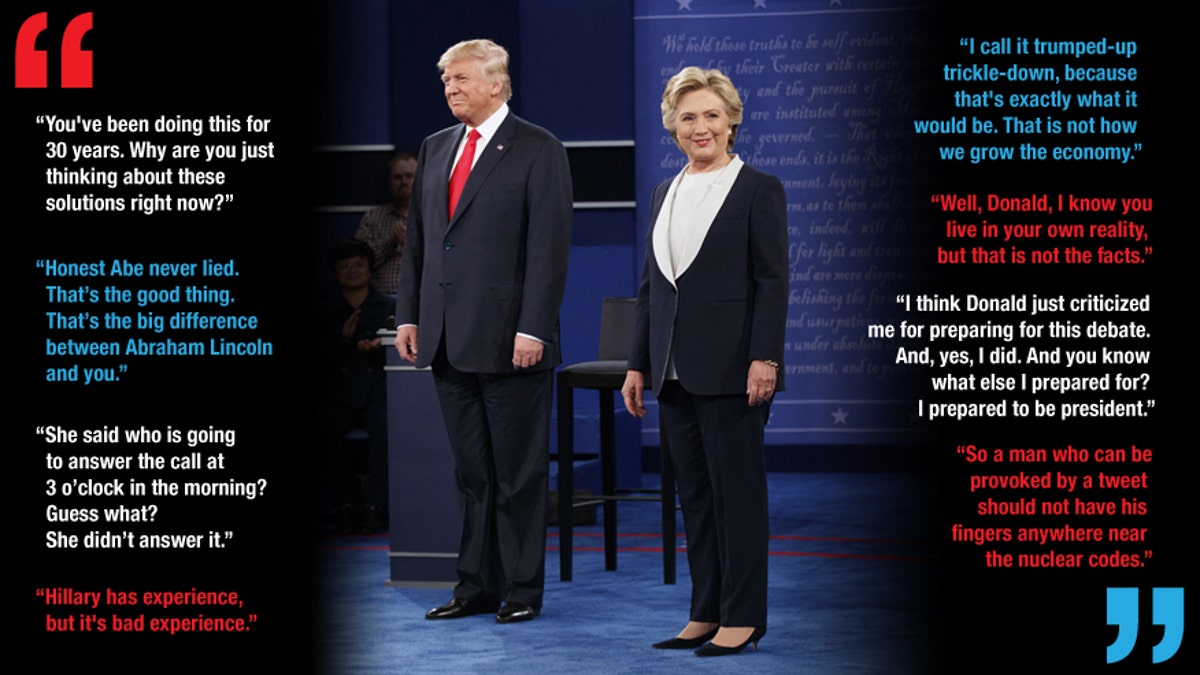
Trump Iran Clip Shows Power of Soundbite Politics
One short clip can now do the work of an entire campaign speech, a press conference, and a cable-news panel. That is the uncomfortable reality behind the Trump Iran clip: a fragment of video, stripped to its most combustible lines, can harden perceptions before anyone has time to check context, verify timing, or even understand what was said. For politicians, platforms, and viewers, this is no longer a media side issue. It is the battlefield. The rise of soundbite politics has made every clipped remark a potential flashpoint, especially when the subject is Iran, where rhetoric already carries geopolitical weight. The result is a news cycle that rewards speed over nuance and outrage over clarity.
- Short-form clips can define a political story before full context arrives.
- The Trump Iran clip highlights how crisis messaging now competes with algorithmic distribution.
- Soundbite politics increases the risk of misinterpretation, escalation, and audience polarization.
- Media literacy matters more when a few seconds of video can shape a national narrative.
- Platforms and publishers are being pushed to balance virality with verification.
Why the Trump Iran clip landed so hard
The Trump Iran clip matters because it sits at the intersection of three powerful forces: political branding, foreign policy, and platform-native distribution. A remark about Iran is never just a remark. It is a signal that can be read by voters, adversaries, allies, and media outlets all at once. When that signal is compressed into a short video, it loses friction. It becomes easier to repost, easier to weaponize, and harder to interpret.
That is the central feature of soundbite politics: the message is no longer built to persuade patiently. It is built to travel. And travel it does, often faster than the facts surrounding it. In that environment, a single soundbite can dominate the conversation while more substantive questions – policy specifics, diplomatic intent, or strategic consequences – get buried under reaction clips and commentary loops.
Soundbite politics is rewriting the news cycle
There was a time when political messaging relied on speeches, interviews, and newspapers to build momentum. Now the decisive unit is often a ten-second clip. Soundbite politics thrives because it matches the incentives of modern platforms. Short videos are easier to share, quote, remix, and argue over. They fit the attention economy perfectly.
For newsrooms, this creates a nasty tradeoff. Publish the clip quickly and you risk amplifying something misleading or incomplete. Wait for verification and you may lose relevance to social platforms already dictating the story. That tension is especially visible in coverage of Trump, whose political style has long been optimized for repetition and confrontation. When the topic shifts to Iran, the stakes rise further because even casual phrasing can echo into military, diplomatic, and market concerns.
“The modern political clip is not just content. It is a distribution strategy disguised as a quote.”
Why short clips are so persuasive
Short clips feel credible because they look raw. Viewers often assume that fewer edits mean more honesty. But in practice, the opposite can be true. A clip can omit the question that prompted the answer, the surrounding sentence that changes the meaning, or the timing that explains the tone. In other words, brevity can create an illusion of transparency.
This is why the Trump Iran clip is more than a passing viral moment. It is a case study in how easily context can be separated from content. Once that happens, audience reactions become self-reinforcing. People share the version that confirms their prior beliefs, and the platform rewards the most emotionally charged interpretation.
What the Trump Iran clip tells us about platform power
The biggest story here may not be the clip itself, but the system that made it so influential. Social platforms increasingly act as editorial engines, even when they deny that role. Their ranking systems decide what gets seen, what gets buried, and what gets recirculated with fresh outrage attached. That means the political meaning of a clip is shaped not only by the speaker, but by the architecture of distribution.
For readers, this is a reminder to treat viral video as a starting point, not a verdict. A clip can be real and still be misleading. It can be authentic and still be incomplete. It can also be politically useful in ways that have little to do with truth. That is why every viewer now needs a basic verification mindset.
Pro tips for reading political clips
- Check whether the clip includes the full question and answer.
- Look for the surrounding event: rally, interview, press gaggle, or edited repost.
- Watch for cuts, jump edits, captions, or added text overlays that change meaning.
- Separate what was said from how it is being framed by commentators.
- Ask whether the clip is describing policy, signaling loyalty, or provoking reaction.
These habits are not about skepticism for its own sake. They are about resisting the reflex to treat the first version of a story as the final version. In a media environment built for acceleration, that discipline is now a survival skill.
Why the Iran angle raises the temperature
Iran is not just another foreign policy subject. It is a high-sensitivity topic that can trigger immediate strategic speculation. A comment connected to Iran may be read through the lens of sanctions, military posture, diplomacy, or regional escalation. That is why even a clipped soundbite can generate outsized attention.
This is where soundbite politics becomes more dangerous than mere media theater. Political rhetoric about Iran can affect markets, defense debate, and public perception of international risk. When the language is compressed and detached from context, audiences are left to fill the gaps with fear, partisanship, or assumption. That vacuum is where misinformation thrives.
“When foreign policy is reduced to a viral quote, context becomes the first casualty.”
For strategists, this means messaging has to be built with the clip economy in mind. Every line can be excerpted. Every pause can be interpreted. Every phrase can be replayed in a different political frame hours later.
The future of political messaging is already here
What happens next is fairly predictable. Politicians will keep speaking in ways that anticipate clipping. Media outlets will keep racing to contextualize what social platforms have already amplified. And audiences will keep encountering politics as a feed of fragments rather than a coherent argument. The Trump Iran clip is simply one more proof that this is the operating system now.
The real challenge is not just better fact-checking. It is designing a healthier information culture around clip-driven attention. That means publishers should pair viral video with immediate context. It means platforms should stop rewarding the most inflammatory interpretation by default. And it means readers have to slow down enough to ask basic questions before hitting share.
What smarter coverage looks like
- Lead with context, not just the most explosive line.
- Explain what is missing from the clip, not only what is present.
- Use clear labels for edited, reposted, or cropped video.
- Distinguish between rhetorical performance and policy announcement.
- Show why the quote matters instead of assuming outrage will do the job.
These are not just editorial best practices. They are defenses against a political economy that monetizes confusion. The more efficient the clip machine becomes, the more valuable context becomes as a form of public service.
The bottom line on the Trump Iran clip
The Trump Iran clip is a vivid example of how soundbite politics now governs the pace and shape of public debate. A few seconds of video can override nuance, escalate emotions, and pull a complex geopolitical issue into the churn of online attention. That does not mean clips are useless. It means they are powerful, and power without context is dangerous.
If there is a lesson here, it is that media literacy is no longer optional. Readers need to understand how framing works, how algorithms reward heat, and how a clipped quote can become a political weapon. The next viral moment will arrive quickly. The question is whether audiences will be ready to see past the cut.
The information provided in this article is for general informational purposes only. While we strive for accuracy, we make no guarantees about the completeness or reliability of the content. Always verify important information through official or multiple sources before making decisions.
