Trump-Kim Courtship Rewrites Asia
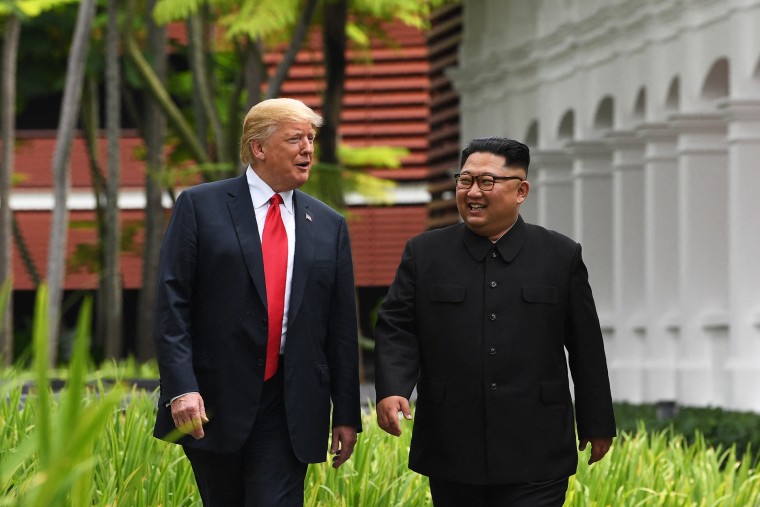
Trump-Kim Courtship Rewrites Asia
Donald Trump’s renewed courtship of Kim Jong Un is doing more than reopening an old diplomatic lane. It is shifting the bargaining table across Northeast Asia, and Seoul is increasingly the city staring at the wrong end of the equation. When Washington signals that a leader-to-leader breakthrough is possible, Pyongyang gets something it has long craved: status, leverage, and time. South Korea, meanwhile, risks becoming the most important player in the room that nobody consults first. That is not a small diplomatic irritation. It is a strategic problem with real consequences for missile defense, alliance cohesion, and the balance of power on the Korean Peninsula. The deeper issue is simple: any U.S.-North Korea negotiation that elevates spectacle over substance can strengthen Kim’s hand while weakening the allies meant to contain him.
- Trump’s outreach increases Pyongyang’s diplomatic leverage without requiring immediate concessions.
- Seoul fears being sidelined as Washington and Pyongyang dominate the headlines.
- Any deal that ignores verification and alliance coordination could weaken deterrence.
- The biggest risk is not just a bad summit, but a fragmented U.S.-South Korea strategy.
- North Korea benefits most when diplomacy becomes a stage rather than a process.
Why the Trump-Kim dynamic still matters
The Trump-Kim relationship remains one of the most consequential and unpredictable political side channels in global security. Even when no formal talks are underway, the mere possibility of direct engagement changes behavior. North Korea knows this. Kim Jong Un can extract attention simply by appearing open to dialogue, while continuing missile development behind the scenes. That combination is powerful because it forces everyone else to react.
For Washington, the temptation is obvious: a headline-friendly breakthrough, a summit, maybe even a photo-op that suggests progress where there may be little. For Pyongyang, the reward is more durable. Direct U.S. engagement can weaken sanctions pressure, reduce diplomatic isolation, and create space to demand incremental concessions without making meaningful ones in return. That is why Seoul’s anxiety is not paranoia. It is a reading of the incentives.
When diplomacy becomes personalized, North Korea gains leverage faster than it gives anything up.
Seoul’s fear is strategic, not emotional
South Korea is not worried simply because it is sensitive or excluded from the spotlight. It is worried because its security architecture depends on close coordination with Washington. If U.S. policy toward North Korea becomes overly transactional, Seoul could be left managing the consequences of a deal it did not shape.
That matters for three reasons. First, South Korea sits under the most immediate threat from North Korean artillery, missiles, and cyber operations. Second, any relaxation of pressure without verifiable disarmament could embolden Pyongyang. Third, alliance politics itself can become the target. North Korea has long tried to split the U.S.-South Korea partnership by offering just enough diplomacy to create disagreement over sanctions, exercises, and escalation control.
The danger is not hypothetical. A Washington-first negotiation can make Seoul look like a junior partner rather than an equal stakeholder. In a crisis, that perception alone can complicate deterrence. Allies need to believe they will be consulted before major shifts are made. If they do not, coordination suffers and adversaries notice.
The Trump-Kim gamble and Pyongyang’s price tag
There is a reason North Korea often raises its demands as soon as diplomacy becomes plausible. It is not weakness. It is strategy. Each round of high-level interest increases the value of Kim’s participation. That lets Pyongyang raise the price for even modest concessions such as a freeze, a test moratorium, or symbolic steps toward talks.
This is where the Trump-Kim equation becomes tricky. Trump has historically favored personal diplomacy, abrupt reversals, and highly visible wins. Kim prefers controlled escalation, rigid bargaining, and slow, asymmetric gain. Put those styles together and the result can be a negotiation that rewards the side most comfortable waiting.
North Korea also understands that the U.S. political cycle is a weapon. A president seeking a legacy-defining foreign policy achievement may be more willing to accept ambiguity. That gives Kim room to negotiate the appearance of restraint while preserving the capability that matters most: a credible nuclear deterrent.
What Pyongyang wants most
- Recognition as a nuclear-capable state.
- Sanctions relief without full denuclearization.
- Direct talks that bypass regional pressure from Seoul and Tokyo.
- Time to keep advancing missile and warhead programs.
That list is exactly why any summit-driven strategy has to be treated with skepticism. If the process is designed to produce momentum rather than verification, North Korea wins by default.
Why alliance coordination is the real test
The most important question is not whether Trump and Kim can meet. It is whether the United States can keep its alliance commitments intact while doing so. In practice, that means Seoul must be briefed, consulted, and aligned before any major diplomatic movement. It also means Washington cannot let North Korea use bilateral theatrics to pry apart a broader regional strategy.
South Korea has its own domestic politics, threat perceptions, and diplomatic priorities. If the U.S. drives forward without Seoul, it can undermine trust even if the intent is positive. That kind of rift is difficult to repair because security alliances are built on predictability. The moment one side starts improvising, the other starts hedging.
In Northeast Asia, consultation is not a courtesy. It is part of deterrence.
This is especially true when military exercises, missile defense coordination, and sanctions enforcement are all part of the same strategic package. Break one link, and the rest starts to wobble.
What a better approach looks like
A serious strategy does not begin with a summit. It begins with conditions. The U.S. should define what a meaningful step from North Korea actually looks like before the cameras start rolling. That includes verification, sequencing, and clarity on what sanctions relief would follow what action. Anything less turns diplomacy into theater.
For Seoul, the priority should be equally clear: keep the alliance centered, keep communication constant, and avoid being forced into a reactive posture. South Korea should be at the table early enough to shape red lines, not just later to manage fallout.
If policymakers want a practical framework, it looks more like this:
- Set concrete benchmarks before leader-level contact.
- Coordinate messaging across Washington, Seoul, and Tokyo.
- Maintain deterrence measures while talks proceed.
- Require verification before any major sanctions rollback.
- Avoid rewarding symbolic gestures with strategic concessions.
Pro tip for watching the next move
If North Korea starts signaling flexibility, look first at what it is asking for in return. The real story is rarely the invitation. It is the asking price. In this theater, the opening act is almost always about leverage, not peace.
Why this matters beyond the peninsula
The Trump-Kim dynamic is not just a Korea story. It is a test of whether major powers can still pursue diplomacy without turning allies into afterthoughts. If Washington normalizes solo bargaining with adversaries, other allies will take note. So will adversaries elsewhere. The message would be that attention, not accountability, drives U.S. policy.
That has broader consequences. China will watch for any weakening of the U.S.-South Korea-Japan security triangle. Russia will read the situation as another example of alliance strain. Even countries outside Asia will absorb the lesson that direct engagement with Washington can sometimes be more valuable than long-term compliance with international norms.
And then there is the domestic political angle. Leader-centric diplomacy can be seductive because it promises speed. But speed is often the enemy of durability. A deal that cannot survive changes in leadership, enforcement, or verification is not really a deal. It is a pause button.
The bottom line on Trump-Kim diplomacy
The danger in any revived Trump-Kim outreach is not simply that it fails. It is that it succeeds on the wrong terms. North Korea can profit enormously from the prestige of engagement while giving away almost nothing of substance. South Korea knows this pattern better than almost anyone, which is why it worries about being sidelined before the process even starts.
If Washington wants a real breakthrough, it needs to resist the lure of spectacle and put alliance coordination first. Otherwise, Pyongyang gets the photo, the platform, and the price increase. Seoul gets the bill.
The information provided in this article is for general informational purposes only. While we strive for accuracy, we make no guarantees about the completeness or reliability of the content. Always verify important information through official or multiple sources before making decisions.


