Trump Park Service Fees Hit Washington Hard
Trump Park Service Fees Hit Washington Hard
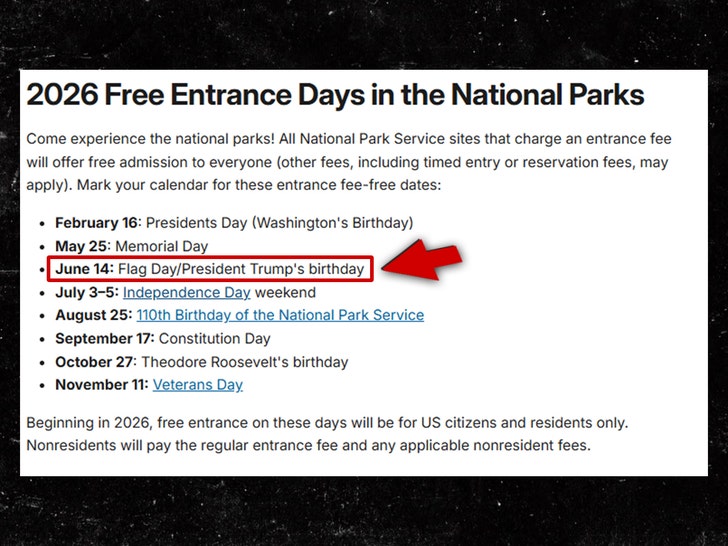
Public land fights are no longer abstract budget battles buried in agency memos. The latest clash over Trump Park Service fees lands where people actually feel it: at trailheads, campgrounds, visitor centers, and the fragile economies built around them. When federal recreation costs rise or access rules tighten, the fallout spreads fast – from families planning summer trips to gateway towns that depend on seasonal traffic. Washington has become a particularly sharp test case because climate pressure, maintenance backlogs, and political signaling are now colliding in one place. What looks like a narrow fee policy is really a debate over who gets to use public land, who pays to sustain it, and whether federal stewardship is being treated as public service or revenue extraction.
- Trump Park Service fees are about more than ticket prices – they reshape access, tourism, and federal land policy.
- Washington is a high-impact battleground because of heavy visitation, climate stress, and regional economic dependence on public lands.
- Supporters frame fee changes as budget realism; critics see a barrier to equitable access and a workaround for underfunding.
- The bigger issue is whether the National Park Service can fund maintenance and climate resilience without pricing out visitors.
Why Trump Park Service Fees Matter Beyond the Entrance Gate
Fee debates often get dismissed as minor administrative tweaks. That misses the larger mechanics. The National Park Service sits at the intersection of conservation, tourism, transportation, and climate adaptation. Any change to fee structures affects not just visitor behavior but also staffing plans, deferred maintenance priorities, shuttle operations, reservation systems, and local business forecasts.
That is why Trump Park Service fees matter politically. A fee increase can be framed as fiscal discipline, especially in an era when lawmakers resist broad agency spending. But on the ground, the practical effect can look different: fewer spontaneous visits, steeper costs for larger families, and more pressure on lower-cost or free public lands nearby. That can redistribute crowds rather than solve the actual problem of overuse.
Key insight: When public agencies rely too heavily on fees, access starts to function less like a civic right and more like a consumer product.
That tension becomes especially sharp in Washington, where public lands are both environmental assets and economic infrastructure.
Washington Is the Perfect Pressure Point
Washington is not just another state in this debate. It represents a compressed version of the national challenge. High-profile parks and federally managed sites draw intense visitor demand. Local communities rely on that traffic. At the same time, climate impacts – wildfire smoke, flooding, heat shifts, ecosystem stress, and infrastructure wear – are making basic stewardship more expensive.
So when fee pressure enters the picture, it does not exist in a vacuum. It lands on top of an already unstable system. Parks need more money for road repairs, restroom upgrades, trail stabilization, staffing, habitat protection, and emergency response. Visitors want better services but are increasingly sensitive to cost. Lawmakers want visible results without committing to long-term public investment.
The result is a policy loop that feels familiar across government: underfund an agency, then ask users to absorb the gap.
The climate angle changes everything
Climate stress makes this issue more urgent than a standard fee dispute. A park system facing rising maintenance costs cannot simply hold prices flat forever if its appropriations stagnate. But climate adaptation is also a collective public good. Reinforcing roads against washouts, protecting historic infrastructure, managing wildfire risk, and redesigning drainage systems are not premium add-ons. They are baseline stewardship functions.
If those costs are shifted too aggressively onto visitors, public land policy starts to drift away from its original democratic premise.
Gateway economies feel the changes first
Towns near parks tend to spot fee policy consequences before Washington insiders do. A higher entrance cost can influence trip length, food spending, lodging bookings, and whether travelers choose a park at all. Visitors do not always cancel outright. Sometimes they compress spending elsewhere. That means fee increases can quietly drain nearby businesses even if raw visitation numbers stay relatively strong.
For local operators, uncertainty can be as damaging as the fee itself. If policy swings with each administration, planning becomes harder. Seasonal hiring, inventory, transportation partnerships, and event scheduling all become riskier bets.
The Real Policy Fight Is About Federal Priorities
The most revealing question is not whether parks should charge fees. Many already do, and some level of user contribution is widely accepted. The real fight is over what fees are supposed to do.
Are they meant to supplement public funding, or replace it? That distinction matters. Supplemental fees can help parks improve services, manage crowds, and fund targeted projects. Replacement fees can create a two-tier system where parks survive only if enough people can afford them.
That is where the politics around Trump Park Service fees become more consequential. The approach reflects a broader governing instinct: shift the burden closer to the user, emphasize visible transactions, and treat federal access as something that should pay for itself whenever possible.
The skeptical read: Fee-heavy policy can look efficient on paper while masking a deeper retreat from public investment.
There is, of course, a counterargument. Supporters say parks cannot maintain quality, safety, and resilience without more direct revenue. They argue that visitors who benefit most from park services should contribute more to sustain them. That logic is not absurd. It is, in many ways, practical. But practicality has limits when the asset in question is a shared national inheritance.
Who Actually Pays When Fees Rise
The headline number on a park fee does not tell the full story. The real cost includes transportation, lodging, gear, food, time off work, and reservation complexity. For affluent travelers, a higher park fee may be little more than an annoyance. For working families, it can be the final nudge that turns a trip into a nonstarter.
That makes access equity central to the debate. Public lands are one of the few national institutions where people can still expect relatively open participation across class lines. Once fee structures become too aggressive, that promise weakens.
Visitors absorb more than the listed price
Even modest increases stack up quickly when layered with:
- Timed-entry systems that require extra planning
- Parking or vehicle-based charges that penalize family travel
- Camping and reservation fees that rise separately from admission
- Third-party booking friction that can make access feel transactional
Each of these may seem manageable in isolation. Together, they create a filtered access model.
Communities without alternatives get squeezed
Urban residents with nearby local parks may adapt. Rural communities and travelers seeking iconic federal sites have fewer substitutes. If Washington sites become more expensive, the burden does not fall evenly. It concentrates on the people for whom these public spaces are least interchangeable.
What Smart Park Funding Should Look Like
If policymakers are serious about protecting both access and infrastructure, they need a blended model rather than a blunt fee-first strategy. The strongest approach would combine stable appropriations, targeted visitor fees, climate resilience investment, and better operational transparency.
That is less flashy than a headline-grabbing fee overhaul, but it is far more durable.
Pro tips for evaluating fee policy claims
- Follow the purpose of the money: Is new revenue funding maintenance, climate adaptation, staffing, or just plugging a broader budget gap?
- Watch for equity offsets: Discount programs, annual passes, and community access initiatives reveal whether inclusion is a real priority.
- Check local economic effects: Park policy should be evaluated alongside tourism-dependent business health.
- Separate crowd management from monetization: Reservation controls and visitor caps may solve issues that fee hikes cannot.
Operationally, parks need more than cash
Fee revenue helps, but execution matters just as much. Agencies increasingly need modern systems for reservations, maintenance planning, emergency alerts, and climate monitoring. In practical terms, park operations are now deeply dependent on tools and workflows that behave more like critical infrastructure than old-school bureaucracy.
That means future-facing stewardship may require better internal systems such as asset-tracking platforms, digital reservation tools, GIS mapping layers, and climate-response planning built into agency operations. A fee strategy without operational modernization risks raising costs without meaningfully improving outcomes.
Why This Debate Will Outlast One Administration
Even if the immediate politics shift, the structural problem remains. Federal lands face growing climate expenses, persistent maintenance backlogs, and inconsistent congressional support. That reality makes future fee fights almost inevitable, regardless of party.
What changes from administration to administration is the philosophy behind the solution. One approach treats public lands as civic infrastructure worthy of broad taxpayer support. Another treats them as premium assets that should recover more of their own costs at the gate. The difference between those models is not technical. It is ideological.
Washington matters because it forces that ideology into public view. You can see the consequences in local business planning, visitor frustration, trail conditions, and the politics of who gets welcomed into these landscapes.
Bottom line: The argument over Trump Park Service fees is really an argument over whether public land remains broadly public when budgets get tight.
The Verdict on Trump Park Service Fees
The hard truth is that parks do need more money. Climate adaptation is expensive. Infrastructure is aging. Demand is not going away. Pretending otherwise is unserious. But using fees as the primary answer is a shortcut that can hollow out the public mission these places were built to serve.
A better path is available: keep targeted fees where they improve service and protect fragile sites, but anchor the system in reliable public funding. That preserves access while recognizing that stewardship at this scale is a national obligation, not a boutique transaction.
For Washington, the stakes are immediate. For the rest of the country, it is a preview. If policymakers turn every conservation challenge into a pricing problem, public lands may remain open in theory while becoming narrower in practice. That is why this fight deserves attention now, before fee policy quietly redraws the map of who public land is really for.
The information provided in this article is for general informational purposes only. While we strive for accuracy, we make no guarantees about the completeness or reliability of the content. Always verify important information through official or multiple sources before making decisions.