Trump Pushes AI Power Play
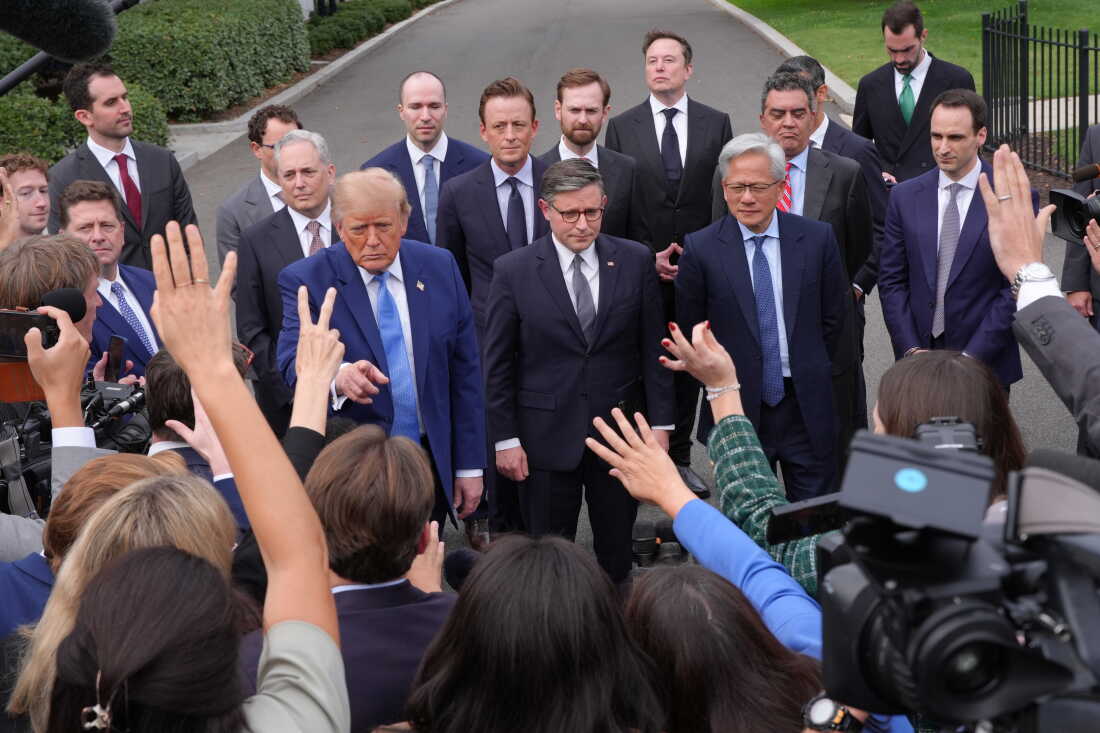
The Trump AI meeting at the White House was not just another photo op with Silicon Valley royalty. It was a signal flare for an industry that now sits at the center of economic policy, national security, education, energy planning, and geopolitical competition. When the most powerful AI executives gather around a president who wants American dominance framed as policy, the stakes move far beyond product demos and quarterly earnings. For businesses, educators, developers, and voters, the message is blunt: artificial intelligence is no longer a side conversation in Washington. It is becoming infrastructure, leverage, and political identity all at once.
- The White House meeting underscored how closely AI policy is now tied to national competitiveness and private-sector investment.
- Tech leaders are seeking predictable rules while avoiding regulation that slows model development and deployment.
- Education, workforce training, and energy capacity are becoming central to the next phase of AI adoption.
- The meeting highlighted a new bargain: industry brings capital and capability, government brings policy direction and national scale.
Why the Trump AI meeting matters now
The timing is the story. AI has shifted from speculative hype to a structural force that touches search, software, cloud infrastructure, chips, defense systems, classrooms, hospitals, and call centers. The White House gathering placed the industry’s biggest names in the same political frame: America must lead in AI, and leadership will require cooperation between government and the companies building the models.
That framing is powerful because it changes the conversation from whether AI should be regulated to how aggressively the United States should organize around it. The Trump administration’s posture appears oriented toward speed, competitiveness, and domestic capability. That likely means a friendlier environment for large-scale AI investment, data center expansion, chip supply chain priorities, and public-private programs aimed at training the workforce.
AI policy is becoming industrial policy. The companies that once wanted Washington to stay out of their way now want Washington to clear the road.
There is an obvious tension here. The same companies asking for policy clarity also control systems that could reshape labor markets, information ecosystems, cybersecurity, and education. A presidential meeting with AI leaders can project seriousness, but it also raises the core question: will policy serve the public, or will it mostly validate the ambitions of the firms already winning?
The Trump AI meeting puts tech CEOs back in the policy cockpit
The guest list matters because access is power. When executives from major technology companies sit down with the president, they are not simply exchanging pleasantries. They are shaping the language of the next policy cycle: innovation, safety, competitiveness, talent, infrastructure, and national security. Each word carries financial consequences.
For AI labs and platform companies, the policy wish list is fairly clear. They want less uncertainty around AI regulation, smoother permitting for data centers, support for advanced chips, immigration pathways for technical talent, and government adoption of AI tools. They also want to avoid a fragmented state-by-state compliance regime that could make deployment slower and more expensive.
For the White House, the incentives are just as clear. AI promises productivity growth, military modernization, educational tools, and a political narrative about American strength. A president can point to AI investment as evidence of economic momentum while also framing competition with China as a race the U.S. cannot afford to lose.
The uneasy alliance between Washington and Silicon Valley
This alliance is not natural. Silicon Valley has historically preferred flexibility, experimentation, and loose regulatory boundaries. Washington wants accountability, control, and political wins. The result is a transactional partnership where both sides need each other and distrust each other.
Tech leaders need government for power grids, chip policy, national security contracts, and global diplomatic support. Government needs tech leaders because the frontier of machine learning capability sits overwhelmingly inside private companies. The public sector does not currently have the talent, compute, or deployment speed to lead alone.
Pro Tip for business leaders: treat AI policy as a board-level issue, not an IT issue. If federal priorities tilt toward AI adoption, companies that already have governance, data readiness, and training plans will move faster than rivals still debating whether generative AI is a fad.
AI education is becoming a national strategy
One of the most consequential threads around the meeting is education. AI literacy is quickly becoming the new digital literacy. The next workforce will need to understand how to use AI tools, question their outputs, protect sensitive data, and collaborate with automated systems without surrendering judgment.
That creates pressure on schools, colleges, and employers. If AI tools become standard in offices, labs, factories, and classrooms, then unequal access to those tools becomes an economic risk. Students who learn with AI tutors, coding assistants, and research copilots may gain a compounding advantage over students locked out by cost, policy confusion, or institutional fear.
The education challenge is not simply teaching students to use chatbots. It is teaching them how to think in an economy where software can draft, summarize, translate, code, design, and persuade.
A serious national AI education agenda would include teacher training, curriculum standards, privacy protections, procurement guidance, and clear rules for academic integrity. Without that, schools will remain stuck between panic and improvisation. Some will ban tools they cannot monitor. Others will adopt them without safeguards. Neither path is good enough.
What educators should watch
- Procurement rules: Schools will need safe ways to evaluate
AI toolsbefore student data enters commercial systems. - Teacher support: AI adoption fails when educators are handed software without training or planning time.
- Assessment redesign: Homework and essays will need to measure reasoning, process, and originality in new ways.
- Equity: Access to high-quality AI systems may become a new dividing line in education.
The infrastructure problem behind the AI boom
Every AI strategy eventually runs into physics. Frontier models require enormous amounts of compute, and compute requires chips, power, cooling, land, fiber, and capital. That is why AI policy cannot be separated from energy policy. If the administration wants the U.S. to dominate AI, it must confront the practical bottlenecks that determine whether models can be trained and deployed at scale.
Data centers are no longer background plumbing. They are strategic assets. Communities will increasingly face decisions about whether to welcome facilities that promise investment and jobs but demand large amounts of electricity and water. Utilities will be pushed to forecast AI-driven load growth. Regulators will have to decide who pays for grid upgrades: tech companies, ratepayers, or taxpayers.
This is where the politics get difficult. Everyone likes the language of innovation. Fewer people like transmission lines, power plants, local zoning fights, and rising utility bills. The winners of the AI race may be the companies and regions that solve these unglamorous problems first.
Regulation is the missing center of the debate
The White House can champion AI leadership, but leadership without rules is not a strategy. It is a wager. The risks are already visible: synthetic media, fraud, biased automated decisions, cyberattacks, labor displacement, and the concentration of informational power inside a handful of platforms.
At the same time, overly broad regulation could freeze smaller companies out of the market by making compliance affordable only for giants. That is the paradox. Rules meant to restrain Big Tech can sometimes entrench Big Tech if they are written poorly.
A smarter framework would distinguish between low-risk and high-risk uses. An AI system that helps draft marketing copy should not face the same scrutiny as one used for medical triage, loan decisions, military targeting, or child-facing education. The regulatory target should be impact, not vibes.
A practical AI policy checklist
- Require transparency for high-stakes automated decisions.
- Mandate security testing for powerful frontier models.
- Protect users from deceptive
deepfakecontent and impersonation. - Support open standards that prevent vendor lock-in.
- Create liability rules that clarify responsibility when AI systems cause harm.
Why this matters for businesses right now
For companies outside the tech sector, the Trump AI meeting is a warning against complacency. AI adoption is moving from experimentation to operational strategy. That means leaders need policies for data governance, employee use, procurement, security, and customer disclosure.
The most dangerous approach is uncontrolled adoption. Employees are already pasting text, spreadsheets, code, and customer information into AI tools. If organizations do not provide approved workflows, workers will create their own. That can expose confidential data and produce decisions no one can audit.
But the second most dangerous approach is paralysis. Competitors using AI responsibly may reduce costs, speed up product development, improve customer service, and discover new revenue streams. Waiting for perfect certainty is not a strategy when the market is actively reorganizing around automation.
Pro Tip: create a simple internal standard for AI use. Define approved tools, banned data types, review requirements, and escalation paths. Even a basic AI governance policy is better than pretending employees are not already experimenting.
The geopolitical subtext is impossible to ignore
The meeting also fits into a larger contest over technological power. AI leadership affects defense, intelligence, scientific research, manufacturing, and global influence. The U.S. wants to maintain its edge in advanced chips, cloud platforms, foundation models, and talent. China is pushing its own AI ecosystem with state backing and aggressive industrial policy.
That rivalry gives American AI companies unusual leverage. Their products are not just consumer tools. They are strategic capabilities. That status can bring support, contracts, and political protection. It can also bring scrutiny, export controls, and expectations that companies align with national priorities.
The danger is that national security language can become a shield against accountability. If every AI policy question is framed as a race against rivals, then privacy, labor rights, and democratic oversight risk being treated as obstacles rather than design requirements.
The bottom line on the Trump AI meeting
The White House gathering captured the new reality of AI: the industry is too powerful to ignore, too important to leave unmanaged, and too concentrated to treat casually. Trump’s message appears to be that America should move fast, build big, and win the AI race. That may energize investment and accelerate deployment, but it also raises the burden on policymakers to protect the public interest.
The best outcome would be a national AI strategy that combines speed with accountability: more infrastructure, better education, clearer rules, stronger security, and broader access. The worst outcome would be a closed-door bargain where the largest companies get the policy environment they want while everyone else deals with the consequences.
The AI era will not be decided by model releases alone. It will be decided by who controls the infrastructure, who writes the rules, and who gets access to the upside.
That is why this meeting matters. It was not merely a gathering of executives and politicians. It was a preview of how power will be negotiated in the next technology cycle, and the negotiation has already begun.
The information provided in this article is for general informational purposes only. While we strive for accuracy, we make no guarantees about the completeness or reliability of the content. Always verify important information through official or multiple sources before making decisions.