Trump Pushes AI Utility Pledge
Trump Pushes AI Utility Pledge
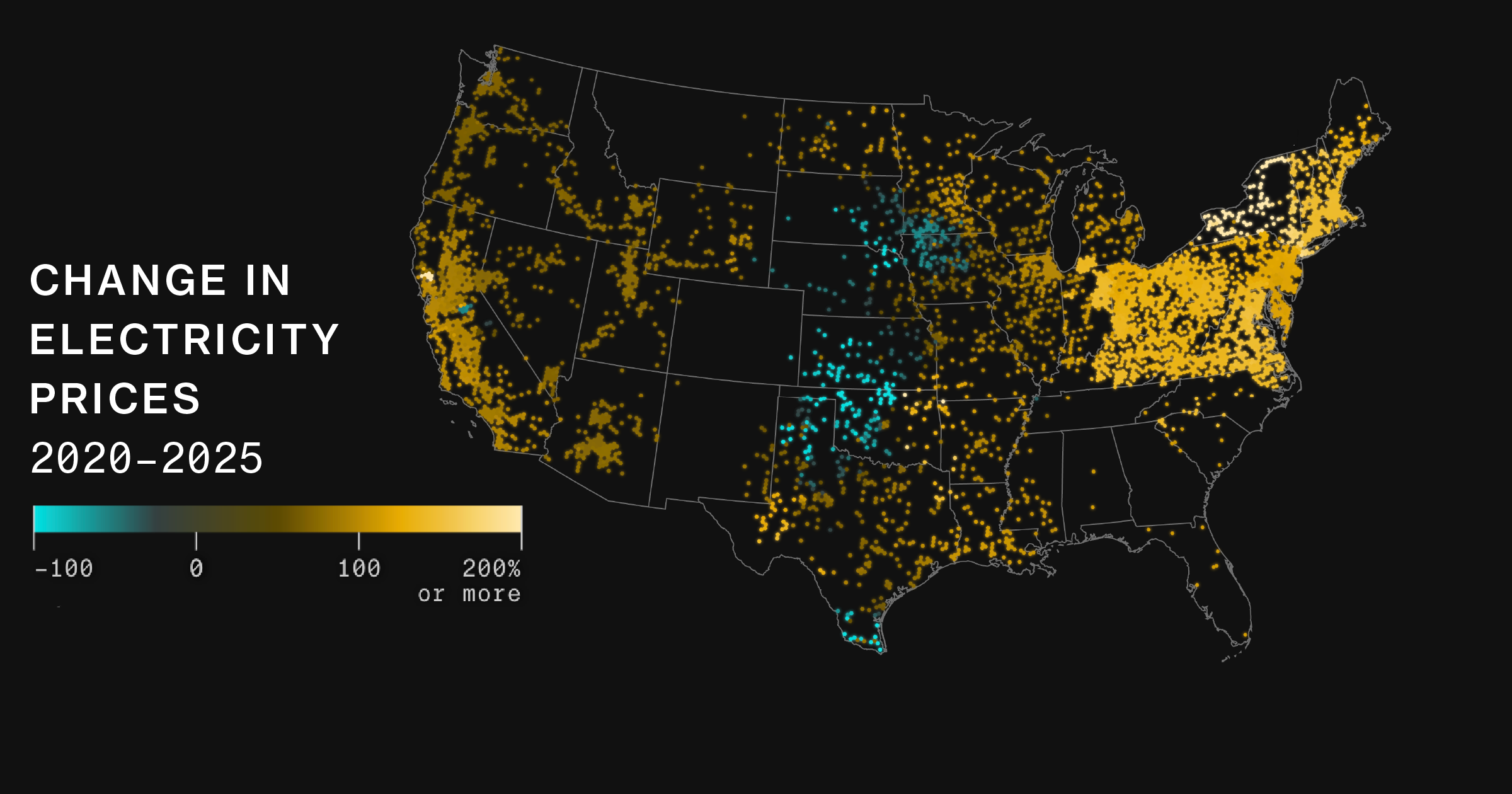
Electricity bills are becoming the new political pressure point in the AI boom. As data centers multiply and demand spikes, the cost of keeping the digital economy humming is landing on households, businesses, and local utilities. That is why a voluntary AI pledge from the Trump camp matters: it is not just a policy signal, it is a bet that public anger over utility bills can be redirected toward the fastest-growing infrastructure story in tech. The catch is that voluntary promises rarely tame a market this aggressive. If AI keeps scaling the way investors want, the grid will feel it first, and ratepayers may end up paying the real price.
- Trump is broadening a voluntary pledge aimed at easing AI-driven utility bill pressure.
- The move spotlights how data center growth is colliding with power-grid limits.
- Voluntary commitments can shape headlines, but they rarely replace regulation.
- Energy costs are becoming a defining issue in the AI infrastructure race.
- The real test is whether policy can slow bill spikes without slowing innovation.
Why the AI utility bill fight is suddenly political
Artificial intelligence has moved beyond software hype and into the physical economy. Every model update, inference request, and cloud expansion depends on power-hungry server racks, cooling systems, and transmission capacity. That reality is now showing up on utility statements. For policymakers, AI-driven utility bill surges are a rare issue that connects tech, inflation, and household frustration in one package. For voters, it is simpler: if the grid gets strained, monthly bills rise.
Trump’s expanded voluntary pledge tries to frame the problem as one that can be managed without heavy-handed intervention. That may play well politically, especially with a message that promises industry cooperation instead of new mandates. But the energy equation is stubborn. More AI means more data centers. More data centers mean more electricity demand. And more demand, if not matched by new generation and transmission, means higher costs somewhere in the system.
“Voluntary pledges can buy time, but they do not automatically buy down demand.”
How the pledge fits into the broader AI power crunch
The timing matters. The AI buildout is no longer limited to hyperscale cloud giants. Regional operators, chipmakers, and industrial software firms are all racing to secure compute. That creates a competitive squeeze on utilities, which are being asked to support a wave of new load without destabilizing service for existing customers.
That is where the politics get sharp. A pledge to blunt AI-driven utility bill surges is effectively an attempt to get ahead of a backlash before it hardens into regulation. The strategy is familiar in tech: ask the industry to behave responsibly, then hope that self-restraint is enough to prevent a deeper crackdown. The problem is that utilities are not the same as app stores or ad networks. Grid planning takes years. Transmission projects can take longer. And if a region becomes a magnet for AI infrastructure too quickly, the local system can buckle long before the policy debate catches up.
Data centers are becoming the new industrial giants
For decades, policymakers treated factories, refineries, and manufacturing plants as the biggest energy story. Data centers are now joining that club, but with less visibility and more speed. A single campus can draw as much electricity as a small city. Add enough campuses, and the cumulative effect looks less like innovation and more like an infrastructure stress test.
That is why the phrase AI-driven utility bill surges is more than a talking point. It is shorthand for a structural problem: the digital economy is becoming an electricity economy again. The more compute-intensive the industry gets, the more vulnerable it becomes to the old limits of generation, distribution, and rate design.
Why a voluntary pledge may help and where it falls short
There is a reason politicians like voluntary commitments. They are flexible, headline-friendly, and easier to sell than mandates. In theory, a pledge can encourage companies to improve efficiency, shift loads away from peak hours, invest in cleaner power, or partner with utilities on planning. In practice, the results depend on incentives, enforcement, and whether the firms involved feel real public pressure.
Here is the core issue: voluntary pledges are often strongest at the moment they are announced and weakest when cost tradeoffs appear. If a data center operator can save time by building faster, or if a utility can recover costs by raising rates, the pledge becomes a soft constraint. That is why critics are likely to see Trump’s move as a political shield rather than a durable solution.
- Potential upside: Faster cooperation between utilities, regulators, and AI operators.
- Potential downside: No binding limits on power-hungry expansion.
- Practical risk: Costs are delayed, then passed to consumers anyway.
- Best case: Efficiency improvements and better grid planning reduce near-term strain.
Where the policy could still matter
Even if the pledge is not a cure-all, it can still shape behavior at the margins. Large companies hate uncertainty, and a political spotlight on utility bills can push executives to be more cautious about where and how they build. It can also encourage state regulators to ask tougher questions about load forecasts, interconnection queues, and who pays for new infrastructure.
That matters because the grid problem is not only about total demand. It is also about timing and geography. A cluster of AI facilities in one region can create local bottlenecks even if national supply looks manageable. If a voluntary pledge nudges companies toward smarter siting decisions, or encourages them to absorb more of the upgrade cost, it could meaningfully reduce the shock to households.
The real economics behind AI-driven utility bill surges
The public tends to think of AI as a software story. But the economics are more concrete. Training massive models requires huge bursts of power. Serving those models to millions of users requires steady, round-the-clock electricity. Cooling that hardware adds another layer of load. As adoption grows, utilities must either expand capacity or ration the strain through higher rates, demand management, or delayed connections.
That is why the utility question is becoming inseparable from the AI business model. Investors want faster deployment. Utilities want predictable load growth. Regulators want fairness. Consumers want affordable bills. Those goals are increasingly in conflict.
“If AI scales without grid planning, ratepayers become the silent financier of the boom.”
And that is the line politicians are now trying to avoid crossing. Once households start blaming AI for their utility bills, the debate shifts from innovation to extraction. That is dangerous for an industry that still relies on goodwill, public subsidies, and local permitting to keep expanding.
What this means for utilities, regulators, and households
For utilities, the message is clear: they cannot treat data center demand as just another commercial account. They need better forecasting, more transparent rate structures, and faster coordination with operators who can shift load or invest in on-site generation. For regulators, the challenge is to prevent other customers from subsidizing the AI buildout.
Households should pay attention because the cost shift can be subtle. Rate hikes may be justified as infrastructure investment, but if a growing share of that spending is driven by AI demand, consumers deserve to know. That is where accountability becomes critical. If policy only celebrates the promise of AI while ignoring its power footprint, the public will eventually notice the gap.
Pro tips for tracking the policy fallout
- Watch for new utility filings tied to large data center projects.
- Check whether regulators require cost-sharing for transmission upgrades.
- Look for language on demand response, peak shifting, and efficiency targets.
- Follow state-level debates, because energy policy is often decided locally first.
Why this story matters beyond one pledge
The bigger lesson is that AI is no longer just a product cycle. It is becoming a systems-level force that touches energy policy, local infrastructure, labor, and household budgets. Trump’s expanded voluntary pledge is interesting because it acknowledges that reality without fully embracing the regulatory burden that reality demands.
That tension will define the next phase of the AI boom. If companies can keep expanding while quietly offloading infrastructure costs, the backlash will only grow. If governments step in too hard, they risk slowing deployment and pushing investment elsewhere. The likely outcome is a messy middle ground: partial pledges, selective regulation, and a lot of debate over who should pay.
For now, the headline is not just that a political campaign is talking about AI. It is that AI has become serious enough to threaten a utility bill, and that is when the public starts paying attention.
The information provided in this article is for general informational purposes only. While we strive for accuracy, we make no guarantees about the completeness or reliability of the content. Always verify important information through official or multiple sources before making decisions.