Trump Signals Hezbollah Talks and Lebanon Aid
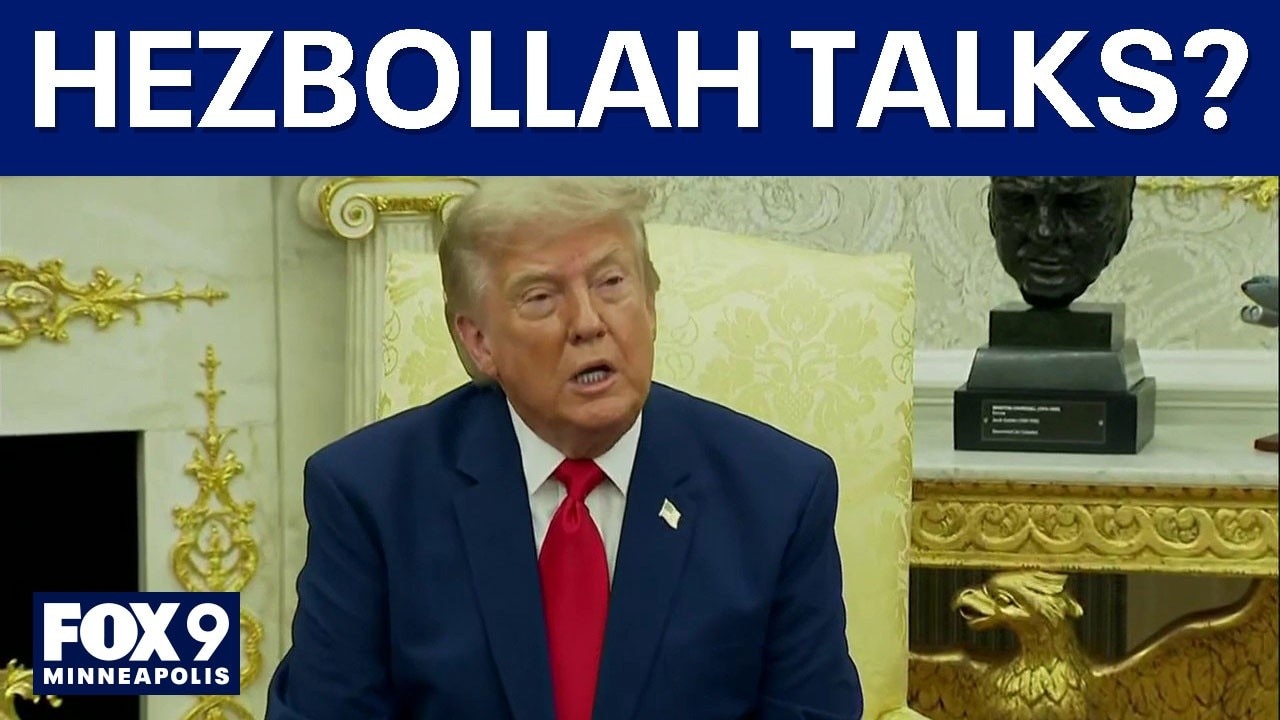
Trump Signals Hezbollah Talks and Lebanon Aid
Donald Trump has just thrown a volatile new signal into an already fragile Middle East equation: openness to talks with Hezbollah, paired with a vow to help Lebanon. That combination is politically explosive, diplomatically messy, and strategically revealing. For Washington, any hint of engagement with Hezbollah – a U.S.-designated terrorist organization – is not a routine policy adjustment. It is a test of whether hardline messaging can coexist with pragmatic statecraft. For Lebanon, the promise of aid sounds welcome, but it also raises the old question: is this real relief, or another burst of rhetoric aimed at a global audience? The stakes are high because even a small shift in U.S. posture can ripple through Beirut, Jerusalem, Tehran, and Capitol Hill at once.
- Trump’s comments suggest a possible pivot toward pragmatic engagement, but the legal and political barriers remain severe.
- Any Lebanon aid would likely be shaped by U.S. security interests, not just humanitarian need.
- Hezbollah remains the central obstacle: no administration can treat it like a normal political actor without consequences.
- The signal matters because it could reshape expectations in a region where words often move markets, militias, and alliances.
What Trump is really signaling on Hezbollah talks
The headline is simple, but the implications are not. Trump saying he is open to talks with Hezbollah does not automatically mean direct negotiations, formal recognition, or a policy reversal. It could mean a wide range of things: indirect messaging, backchannel diplomacy, pressure-driven bargaining, or simply political positioning designed to project flexibility. Still, the phrase matters because the U.S. has spent years building a posture of isolation around Hezbollah, pairing sanctions with warnings and leaving little room for ambiguity.
That is why this kind of statement lands differently from ordinary campaign-style bluster. When a former or future president signals openness to contact with a group like Hezbollah, foreign ministries, intelligence officials, and regional power brokers all start recalculating. Even if nothing follows, the signal itself can alter expectations. In the Middle East, expectations are policy-adjacent. They influence whether actors escalate, pause, hedge, or negotiate through intermediaries.
When U.S. leaders suggest they may talk to a sanctioned armed movement, the most important effect is often not the talk itself – it is the uncertainty that follows.
Why Lebanon aid is politically easier and strategically harder
Helping Lebanon sounds straightforward until you look at the machinery behind it. Lebanon is not just another aid recipient. It is a state under immense economic pressure, with weak institutions, a battered banking system, and a political order deeply entangled with armed factions, sectarian power-sharing, and foreign influence. Any aid package tied to a Trump-era or Trump-style approach would almost certainly come with conditions, filters, and political messaging attached.
That is where the real tension begins. Humanitarian support for Lebanon is easy to sell in moral terms, but difficult to deliver cleanly. Washington will want to ensure funds do not strengthen Hezbollah’s networks or reinforce a political status quo it sees as destabilizing. That means aid could arrive through tightly controlled channels: food assistance, medical support, reconstruction aid, or targeted development financing. But the larger structural crisis in Lebanon – governance, corruption, debt, and security fragmentation – cannot be solved by check-writing alone.
The key issue is not whether Lebanon needs help. It does. The question is whether U.S. help can be designed without empowering the very actors Washington wants to contain.
Hezbollah talks and Lebanon aid in the context of U.S. policy
To understand why this matters, you have to zoom out. U.S. policy toward Lebanon has long been trapped between two instincts: support the Lebanese state and isolate Hezbollah. Those goals often collide. Beirut’s institutions are fragile, and Hezbollah is woven into the country’s political and military landscape. That means any aid, sanctions regime, or diplomatic outreach eventually brushes up against the same dilemma: how do you stabilize a country without legitimizing an armed group inside it?
That dilemma is not new, but Trump’s comments sharpen it. A willingness to talk could be interpreted as realism, especially if Washington believes isolation has failed to change Hezbollah’s behavior. Yet realism has limits. Hezbollah is not merely a local political party with a military wing in the abstract. It is a heavily armed, regionally connected organization with ties to Iran and a central role in the balance of power along Israel’s northern border. Talking to it is not like talking to a municipal coalition or a rival bloc in parliament.
Why the United States keeps hitting the same wall
American policy keeps colliding with the same structural problem: Lebanon needs state capacity, but state capacity is compromised by non-state power. The result is a policy loop. The U.S. wants to strengthen Lebanon, so it funds institutions. But institutions are weak, so corruption and factional capture dilute the impact. Washington then turns to sanctions and pressure, hoping to weaken Hezbollah. Yet pressure on Hezbollah often spills onto Lebanon’s economy and public services, which deepens the instability the U.S. says it wants to avoid.
That contradiction is why any statement about aid or talks should be read carefully. The policy may sound bold, but the implementation will be constrained by the same old problem: Lebanon is not a clean diplomatic environment.
What a real Trump approach could look like
If Trump were to move beyond signaling, a plausible approach would likely blend pressure with limited pragmatism. That could include indirect talks through intermediaries, tighter enforcement against Hezbollah financing, and selective aid to Lebanese civilians and state institutions. It might also involve using the promise of help as leverage: support reform, curb militant influence, or lose access to assistance.
That would fit a familiar Trump pattern: maximum rhetorical flexibility, maximum negotiating ambiguity, and a preference for deals framed as wins. But the risk is obvious. Ambiguity can create leverage, but it can also create confusion. Allies may worry about inconsistency. Adversaries may test boundaries. And in Lebanon, confusion is not a side effect – it is often the operating environment.
- Potential upside: A more flexible U.S. stance could open backchannels that reduce miscalculation.
- Potential downside: Mixed signals could weaken deterrence and muddy existing sanctions policy.
- Practical reality: Aid will likely be limited, monitored, and politically conditioned.
Why Hezbollah remains the central obstacle
Any story about Lebanon eventually becomes a story about Hezbollah because the group sits at the intersection of security, politics, and regional proxy conflict. It has influence inside Lebanon’s institutions, but it also operates as an armed actor with external alliances and strategic calculations that extend far beyond Beirut. That makes it uniquely difficult for Washington to engage without sending a signal of acceptance.
Even a cautious conversation could be framed by Hezbollah supporters as validation. Opponents, especially in Israel and among some Lebanese factions, could see it as a dangerous concession. That is the bind: the act of talking may be useful, but the symbolism can be destabilizing. Any administration entertaining this path would need to define the objective immediately. Is the goal de-escalation along the border? Is it prisoner exchange dynamics? Is it influence over Lebanese politics? Or is it simply about testing whether Hezbollah can be pulled into a narrower, less violent mode of behavior?
A conversation with Hezbollah only makes strategic sense if the U.S. knows exactly what it wants and what it is willing to concede. Otherwise, it is theater with geopolitical consequences.
Why this matters beyond the headline
On the surface, this looks like another Trump foreign policy soundbite. It is bigger than that. If the U.S. even appears to soften its posture toward Hezbollah, it could influence how regional actors interpret Washington’s appetite for confrontation, compromise, or selective engagement. That matters in a region where perception often moves faster than policy documents.
For Lebanon, the stakes are immediate. The country needs external support, but it also needs a credible path out of political paralysis. If Trump’s comments evolve into a genuine aid-and-talks framework, Lebanon could gain breathing room. If they fade into campaign noise, the country remains stuck with the same crisis architecture: economic collapse, political fragmentation, and constant external pressure.
For the U.S., the test is whether it can avoid two failures at once: the failure of empty rhetoric and the failure of unrealistic purity. Neither pure isolation nor unconditional engagement has a great track record here. A serious policy would require discipline, clear objectives, and the patience to work through intermediaries without pretending the region’s hardest actors will suddenly become easy partners.
The likely future of this policy signal
Expect scrutiny, not certainty. Regional governments will watch for follow-up statements. Lebanese leaders will look for details on aid channels. Hezbollah will assess whether this is an opening, a bluff, or a temporary media cycle. And U.S. policymakers will have to decide whether Trump’s comments are a one-off, a negotiating trial balloon, or the first hint of a broader recalibration.
The safest conclusion is also the most unsatisfying one: the signal matters, but the substance is still unclear. That does not make it irrelevant. In Middle East diplomacy, ambiguous signals can be the first stage of real change – or the prelude to another round of confusion. The difference depends on whether the rhetoric gets backed by a coherent strategy.
For now, the message is simple: talk is cheap, but geopolitical signals are not.
The information provided in this article is for general informational purposes only. While we strive for accuracy, we make no guarantees about the completeness or reliability of the content. Always verify important information through official or multiple sources before making decisions.


