Trump Taps UFC for White House Power Move
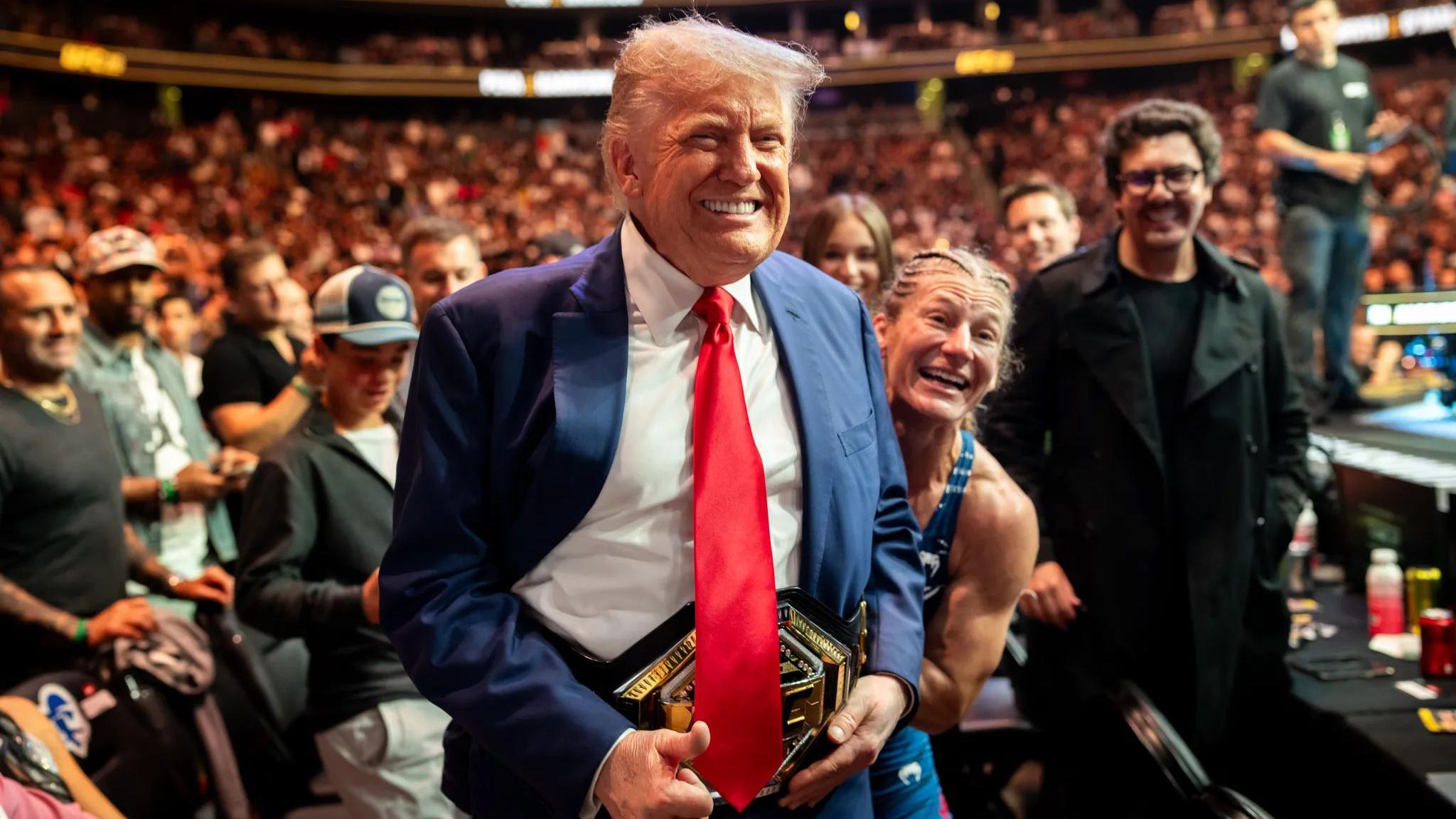
Trump Taps UFC for White House Power Move
Donald Trump is not just flirting with spectacle anymore – he is trying to fuse it into the machinery of power. A White House UFC event would not merely be a weird headline or a one-night photo op. It would be a signal that politics, entertainment, and combat sports have fully collapsed into the same stage. For supporters, that is the point: dominance, theater, and a willingness to break every stale rule in Washington. For critics, it is a warning flare that governance is being treated like pay-per-view. The real story here is not whether the event looks outrageous. It is whether Trump understands that outrage itself has become the product, and whether the White House is now willing to market it.
- The proposal would merge political branding with UFC spectacle at the highest level.
- It reflects Trump’s long-running instinct to use sports and entertainment as political force multipliers.
- The move could energize supporters while deepening concerns about the dignity of the presidency.
- Any event of this kind would raise security, optics, and institutional questions immediately.
Trump Taps UFC as a political amplifier
Trump has never treated the UFC as just another sports organization. He has treated it like a cultural megaphone. The crowd, the camera work, the chants, the pageantry – all of it maps cleanly onto his politics. A UFC event at the White House would be the most aggressive expression of that instinct yet, turning a symbol of state power into a venue for high-adrenaline branding.
That is what makes Trump UFC White House event such a loaded phrase. It is not only about combat sports. It is about the deliberate blending of identities: candidate, president, promoter, and performer. Trump has always liked arenas where loyalty is loud and opposition is visible. UFC gives him both.
When politics borrows the visuals of combat sports, the message is rarely subtle: strength matters more than process, and spectacle can eclipse substance.
Why the optics matter more than the matchups
If this were simply about hosting athletes, the controversy would be smaller. But the White House is not an event hall. It is a national symbol. Bringing a UFC production into that setting would force a larger conversation about what the presidency is supposed to represent and who gets to define its tone.
The optics are especially potent because UFC already sits in a uniquely modern media lane. It is part sport, part entertainment, part political identity marker. That makes it useful to a politician who wants to speak to viewers who distrust traditional institutions and crave something visceral. The event would not need to persuade everyone. It would only need to dominate attention for a news cycle, then another, then another.
That is the Trump model: do something polarizing enough that every critic becomes part of the promotion.
The strategy behind Trump UFC White House event
There is a method to this kind of chaos. Trump has long understood that modern power is not only measured by policy wins. It is measured by narrative control, social reach, and emotional intensity. UFC is ideal for that because it already packages conflict as entertainment and loyalty as identity.
Putting the UFC at the White House would do several things at once:
-
It would reinforce Trump’s image as a political outsider who still controls the center of power.
-
It would give him a live audience that is predisposed to respond to dominance and confrontation.
-
It would generate a news cycle that crowds out quieter political failures or policy disputes.
-
It would let him speak in the visual language of strength without having to defend conventional governing metrics.
This is not accidental. It is branding with institutional backing.
Why UFC fits Trump’s media instincts
Trump has always favored arenas where the energy is immediate and the crowd reaction is measurable. UFC does not rely on abstraction. It delivers bodies, volume, and tension. That is why it works so well as political imagery. It compresses a whole ideology into a single frame: winners, losers, conflict, and hierarchy.
For Trump, that is gold. It allows him to project decisiveness without entering the messy terrain of policy detail. It also fits a broader media environment where attention is scarce and provocation is efficient.
What this means for the White House brand
The White House has always been a stage, but not every administration has been willing to treat it that way. Trump’s version of leadership collapses the distance between governing and performing. A UFC event would harden that identity into a public ritual.
That matters because symbols are sticky. Once the presidency is associated with a particular kind of spectacle, it becomes harder to reclaim dignity, neutrality, or restraint. The institution absorbs the performance. Even if the event lasts only a few hours, the visual memory can linger for years.
Pro tip: when evaluating political theater, ask not just who it entertains, but what norms it quietly rewrites.
The institutional risk is bigger than the embarrassment
Some critics will dismiss this as another Trump stunt. That is too easy. The deeper issue is that recurring spectacle changes expectations. If the White House becomes a venue for provocative programming, then every future administration inherits the precedent that power should be packaged like content.
That is a serious shift. Governance depends on a degree of separation between the ceremonial and the commercial. Once that line blurs, the presidency starts to resemble a franchise.
The UFC angle is also a business story
This is not just politics. It is a business and media story too. UFC thrives on visibility, brand heat, and the perception that its fighters and events are culturally unavoidable. A White House appearance would be an enormous attention dividend, even for a promotion already fluent in self-marketing.
That creates a familiar tension. The promotion gets reach. The politician gets cultural validation. Both sides benefit from the controversy, while the public is left sorting out whether the event represents celebration, provocation, or a soft-power stunt.
From a commercial perspective, the logic is brutal and obvious: if attention is currency, then the White House is an extremely valuable venue. From a civic perspective, that is exactly the problem.
Trump UFC White House event and the culture-war machine
The event would almost certainly be interpreted through the culture war before the first fighter even enters the cage. Supporters would see a fearless rejection of elite etiquette. Critics would see a president glamorizing violence, muscular politics, and brute-force symbolism. Both reactions would amplify the same outcome: more tribal sorting.
This is where the stunt becomes strategically potent. It does not merely entertain. It divides. And division, in the current media environment, can function as a form of attention discipline. Everyone is forced to pick a side.
Any event that turns the White House into a cultural lightning rod should be judged by its afterlife, not just its opening-night buzz.
Why the backlash could still help Trump
Trump has repeatedly shown that backlash can be fuel. A storm of criticism often helps him frame himself as the only figure willing to mock the rules everyone else reveres. If the UFC event triggers outrage, that outrage may be folded directly into the message: the establishment hates this because it cannot control it.
That is why outrage alone is not a sufficient response. The deeper question is whether institutions can resist being dragged into a spectacle economy where their strongest reaction simply adds oxygen.
What happens next
Even if the event never fully materializes, the conversation itself is revealing. It shows how far political communication has drifted toward entertainment logic. It also shows that Trump continues to excel at identifying venues where cultural energy can be converted into political advantage.
If the White House does host something like this, expect the operational questions to multiply fast: security protocols, crowd logistics, press access, and the optics of mixing official space with a live combat event. Those details may sound mundane, but they are where the fantasy meets reality.
And reality is usually less glamorous. It is more restrictive, more expensive, and far harder to stage than a campaign rally or a televised face-off.
Why this matters now
The broader lesson is bigger than Trump or UFC. Public life keeps drifting toward formats designed to maximize emotion instead of understanding. That trend rewards the people who can weaponize attention fastest. It punishes institutions that move slowly, explain carefully, or expect deference because of tradition alone.
So yes, a Trump UFC White House event sounds outrageous. It is also a window into how politics now works: as a collision of branding, performance, grievance, and power. The White House is no longer just a residence or a workplace in this framing. It is a content platform.
That should unsettle anyone who still believes the presidency ought to stand for something sturdier than a headline spike.
In the end, the question is not whether the event would be memorable. It would be. The question is whether the country wants its highest office to keep chasing the attention economy into places where seriousness goes to die.
The information provided in this article is for general informational purposes only. While we strive for accuracy, we make no guarantees about the completeness or reliability of the content. Always verify important information through official or multiple sources before making decisions.