Trump Tariffs Rattle Global Tech Supply Chains
Trump Tariffs Rattle Global Tech Supply Chains
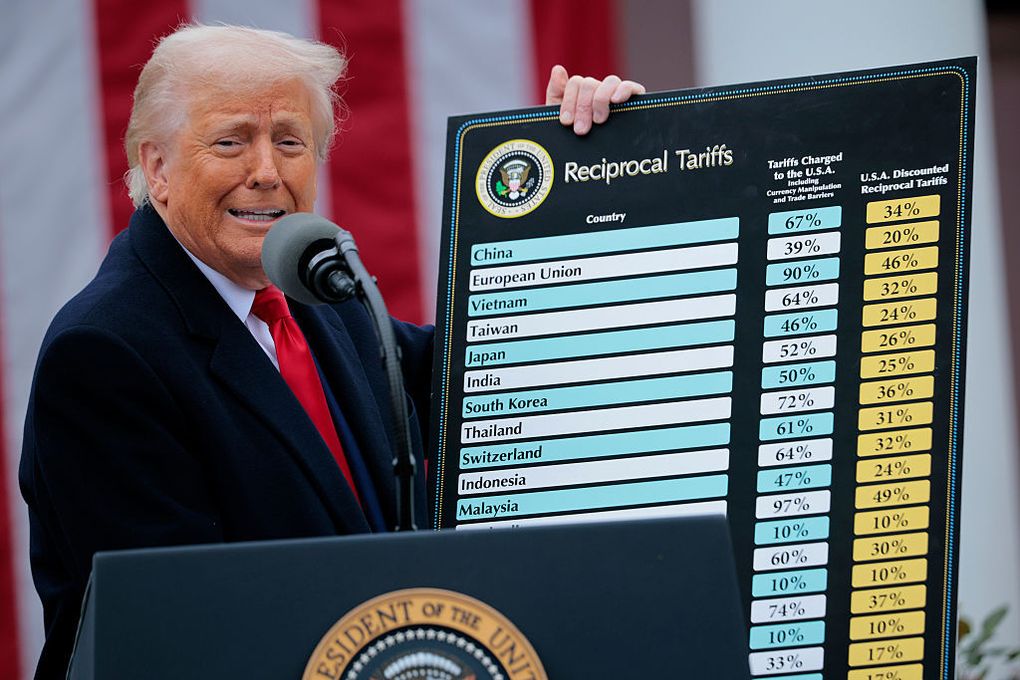
The return of aggressive tariff politics is not just a campaign talking point – it is a live stress test for how modern business actually works. When tariff threats target major trading partners, the shock does not stop at customs gates. It ripples through factories, logistics networks, retail pricing, investor confidence, and consumer demand. That is especially true in technology, where a single phone, laptop, or server can depend on components crossing borders multiple times before it reaches a buyer. The new focus on Trump tariffs revives a question executives hoped was fading: can global supply chains stay efficient when trade policy becomes a moving target? For manufacturers, importers, and even ordinary households, the answer may determine what products cost next quarter – and which companies absorb the damage.
- Trump tariffs are once again forcing companies to rethink sourcing, pricing, and expansion plans.
- Technology hardware is especially exposed because production depends on cross-border component networks.
- Businesses may try to shift assembly, but supply chains cannot be rebuilt overnight.
- Consumers often end up paying more when tariffs stack onto already fragile cost structures.
- The bigger story is strategic: trade policy uncertainty can be as disruptive as the tariffs themselves.
Why Trump tariffs matter far beyond politics
Tariffs are often pitched as a direct tool to protect domestic industry, punish rivals, or force negotiation. On paper, the logic is simple: make imported goods more expensive and domestic production becomes more competitive. In practice, the results are messier. Many industries do not import finished goods alone. They import parts, materials, subassemblies, and manufacturing equipment. Add tariffs at multiple points and the final price can rise quickly.
That is why Trump tariffs generate outsized anxiety in boardrooms. A tariff is not just a tax on a foreign exporter. It can become a tax on an entire operating model. If a company relies on semiconductors, display panels, battery cells, or networking gear sourced internationally, any added duty can force difficult choices: raise prices, shrink margins, delay hiring, or relocate production.
Trade policy is rarely surgical. Once tariffs hit a tightly integrated supply chain, the cost spreads to companies and consumers that were never the intended target.
The political appeal is obvious. The economic execution is harder. Global manufacturing evolved around efficiency, specialization, and scale. Tariffs interrupt all three.
How global tech supply chains absorb the shock
The technology sector is uniquely vulnerable because so much of its value chain is distributed. A device designed in one country may use chips fabricated in another, memory packaged elsewhere, and final assembly handled in a separate market before shipping worldwide. That system was built for speed and cost control, not for constant policy turbulence.
Component dependency is the hidden risk
Most consumers see the finished product. Companies see the bill of materials. A tariff can land on everything from raw inputs to intermediate components. If a manufacturer cannot replace those parts easily, the tariff becomes unavoidable. Even when alternative suppliers exist, qualification takes time. Hardware companies must test compatibility, reliability, and production yield before switching.
In practical terms, that means businesses cannot simply rewrite a sourcing plan in a week. They may need to redesign products around new parts, renegotiate contracts, and revise shipping schedules. The operational burden is real, and it is expensive.
Relocation is possible, but not painless
One common response to tariff pressure is geographic diversification. Companies move assembly to countries seen as lower risk or less exposed. That can help, but it is not a magic fix. Factories need infrastructure, labor, supplier proximity, and regulatory predictability. A relocation strategy might reduce tariff exposure while increasing transport complexity or quality-control risk.
That is why executives now talk less about full exits and more about a China+1 model or regional diversification. The idea is not to abandon one manufacturing base overnight. It is to build optionality. That takes capital, years of planning, and a tolerance for short-term inefficiency.
Tariff uncertainty is its own tax
Even before a tariff takes effect, the threat of one can freeze decision-making. Importers may pull shipments forward, retailers may stockpile inventory, and suppliers may hesitate to commit to long-term pricing. Finance teams then have to model multiple scenarios around margin erosion, demand weakness, and foreign exchange swings.
In that environment, uncertainty functions like a tax on confidence. Investment slows because nobody wants to make a major bet when trade rules may shift again after the next headline or negotiation round.
What businesses will likely do next
Companies facing renewed Trump tariffs usually reach for the same playbook, but the order matters. The smartest operators do not rely on a single response. They layer defensive moves.
- Reprice selectively: Firms may raise prices on premium products first, where demand is less sensitive.
- Renegotiate supplier contracts: Shared cost burdens can soften immediate margin pressure.
- Shift final assembly: Moving the last stage of production may change tariff treatment in some cases.
- Redesign sourcing: Companies may qualify alternative suppliers for high-risk components.
- Cut internal costs: Hiring pauses, lower marketing spend, or delayed capital projects often follow.
None of these steps is painless. Some protect margins but hurt growth. Others preserve market share but weaken profitability. The central problem is that tariffs often force trade-offs with no clean winner.
Why consumers usually feel it last, but still feel it
When tariffs hit, consumer prices do not always jump immediately. Retailers and brands often try to absorb the first wave, especially if demand is already soft. Public companies know that visible price hikes can trigger backlash. But that buffer is limited.
Eventually, somebody pays. If input costs stay elevated, brands either pass through increases, reduce promotional activity, or trim product quality and accessories to protect margins. In technology, that can show up as fewer discounts, smaller bundled offerings, or slower upgrade cycles.
The effect is broader than electronics. Tariff-driven cost inflation can hit appliances, vehicles, industrial tools, and even the back-end systems businesses use to run operations. A more expensive hardware stack can then feed into higher service prices elsewhere.
Consumers may not track tariff schedules, but they notice when the same product costs more and goes on sale less often.
Why this matters for markets and economic strategy
Investors tend to react to tariffs in two phases. First comes the immediate pricing of risk: selloffs in exposed sectors, pressure on multinational manufacturers, and caution around retailers with thin margins. Then comes the slower reassessment of who can adapt. Companies with diversified supply chains, stronger pricing power, and cleaner balance sheets often emerge in better shape than peers that optimized only for lowest cost.
This is where the strategic significance of Trump tariffs becomes clearer. The issue is not only trade friction. It is whether the next era of globalization looks more fragmented, more regional, and more politically contingent. That would have major implications for capital spending, factory location, inventory management, and labor markets.
For years, many businesses treated geopolitical risk as a secondary planning variable. That is no longer credible. Trade policy now sits much closer to the center of corporate strategy.
The deeper political and economic contradiction
Supporters of tariffs argue that short-term pain is worth it if domestic industry gains long-term strength. Critics counter that the burden often lands on importers, downstream manufacturers, and households while strategic rivals adapt. Both sides miss something important: modern supply chains make clean national boundaries harder to enforce economically than they appear politically.
A product stamped as domestic may still depend on imported machinery, minerals, or subcomponents. Building true industrial independence is possible in theory, but it requires years of coordinated investment across energy, workforce training, permitting, logistics, and advanced manufacturing. Tariffs alone do not create that ecosystem.
That is the contradiction at the heart of this debate. Policymakers can use tariffs quickly. Rebuilding industrial capacity takes far longer.
Pro tips for businesses navigating tariff volatility
Map exposure below the top tier
Many companies know their direct suppliers but not the deeper chain behind them. That is a mistake. Exposure often hides at tier-2 and tier-3, where key components or materials originate.
Model scenarios, not averages
Budgeting around a single expected tariff outcome is risky. Teams should stress-test best case, base case, and worst case assumptions across pricing, demand, and lead times.
Protect optionality
Long-term contracts can reduce cost volatility, but they can also trap a company in the wrong geography. The best supply strategies preserve room to pivot.
Communicate early with customers
If price changes are likely, transparency matters. Sudden increases can damage trust more than gradual, well-explained adjustments.
What comes next
The immediate future depends on how aggressively tariff policy is pursued and how trading partners respond. Retaliation is always a possibility, and once that cycle starts, businesses can get squeezed from both sides. Exporters lose access or pricing power abroad while import costs rise at home. That is a difficult equation for any multinational to solve.
Still, the most important takeaway is not that tariffs are automatically catastrophic. It is that they force a reckoning with business models built on stable, low-friction trade. Some companies will adapt faster and turn resilience into a competitive advantage. Others will discover, too late, that efficiency without flexibility is brittle.
For the tech sector in particular, this is a reminder that hardware strategy is now inseparable from geopolitics. The next great competitive edge may not come from a better chipset or sleeker industrial design alone. It may come from knowing exactly how to build, source, and ship when the policy environment stops cooperating.
Trump tariffs are not just a headline. They are a pressure test for the architecture of global commerce – and for how much disruption businesses, markets, and consumers can absorb before the real cost becomes impossible to ignore.
The information provided in this article is for general informational purposes only. While we strive for accuracy, we make no guarantees about the completeness or reliability of the content. Always verify important information through official or multiple sources before making decisions.


