Trump Tariffs Rattle Global Trade
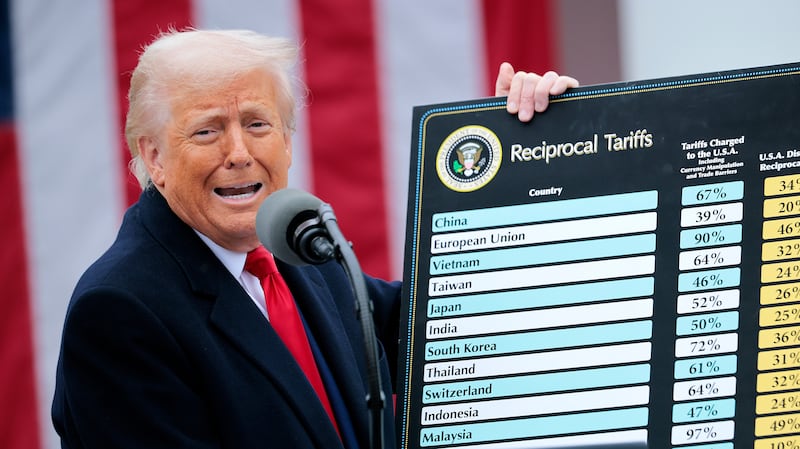
Trump Tariffs Rattle Global Trade
Trade policy has a way of looking abstract right up until it hits factory margins, grocery bills, and investor confidence. That is exactly why the latest Trump tariffs debate matters far beyond Washington campaign rhetoric. When tariff threats return to the center of the political conversation, businesses do not hear strategy first: they hear cost inflation, sourcing risk, and another round of hard decisions on pricing. For consumers, the concern is simpler and sharper. Higher import taxes rarely stay confined to shipping containers. They tend to spread through supply chains, squeeze retailers, and eventually show up in everyday purchases. The renewed focus on Trump tariffs is not just a policy story. It is a stress test for global trade, corporate planning, and the fragile assumption that the post-pandemic economy was finally settling down.
- Trump tariffs are back at the center of economic and political debate, with major implications for prices and supply chains.
- Businesses face renewed uncertainty around sourcing, inventory planning, and cross-border investment.
- Consumers could feel the impact through higher prices on imported goods and tariff-exposed products.
- Markets are watching whether tariff policy becomes negotiating leverage or a durable shift in US trade strategy.
Why Trump tariffs are back in focus
The return of tariff-heavy messaging reflects a broader political reality: trade has become a shorthand for economic strength, industrial revival, and national leverage. Supporters argue tariffs can protect domestic manufacturing, pressure trading partners, and reduce reliance on strategic rivals. Critics counter that tariffs function as a tax on imports, often raising costs for US companies that depend on overseas parts and materials.
That tension is what makes the current moment so important. Tariffs are no longer being discussed as a narrow tool aimed at one sector. The rhetoric suggests something larger: a willingness to use sweeping import duties as a central economic instrument. That instantly raises the stakes for multinational firms, logistics providers, retailers, and governments trying to model what comes next.
The core question is not whether tariffs sound tough. It is whether they can deliver industrial gains without triggering broad consumer pain and supply chain distortion.
How tariffs actually move through the economy
Tariffs are often pitched as penalties paid by foreign exporters. In practice, the mechanics are more complicated. A tariff is collected at the border, but the cost burden can be shared across importers, manufacturers, distributors, and consumers depending on market conditions and pricing power.
The importer problem
If a US company brings in goods or components subject to a new tariff, its landed cost rises. That company then has a few unattractive options: absorb the hit, renegotiate contracts, change suppliers, or pass the cost downstream. None of those moves are frictionless.
For many sectors, especially electronics, machinery, consumer goods, and auto-related manufacturing, the supply chain is too complex to rewire overnight. You cannot simply replace a specialized component or shift production with a single purchase order. Tooling, quality checks, labor availability, and transport infrastructure all matter.
The consumer effect
When tariffs apply broadly enough, some of the additional cost reaches the shelf. That does not always look dramatic on day one. Sometimes it appears as a slower kind of inflation: fewer discounts, smaller product upgrades, tighter margins, and selective price increases across categories with high import exposure.
This is where the politics gets difficult. Tariffs may be framed as a defense of domestic jobs, but voters also notice when essentials and discretionary products become more expensive. In a cost-sensitive economy, that trade-off is hard to hide.
The business confidence hit
Even before tariffs take effect, the threat alone can alter corporate behavior. Finance teams rerun forecasts. Procurement leaders build contingency plans. Boards reconsider investment timing. That uncertainty is its own economic drag, especially when companies are already managing interest rates, geopolitical risk, and uneven consumer demand.
What businesses should watch if Trump tariffs expand
If tariff policy broadens, executives will need to move quickly from political interpretation to operational response. This is not simply about reading headlines. It is about identifying exposure line by line across suppliers, categories, and customer segments.
- Supplier concentration: Companies heavily tied to one country or region face the greatest disruption risk.
- Component dependency: Finished goods made domestically can still be tariff-sensitive if critical inputs are imported.
- Contract flexibility: Long-term agreements may limit how fast firms can reprice or change sourcing.
- Inventory strategy: Some businesses may accelerate orders before duties take effect, creating short-term shipping spikes.
- Margin resilience: Premium brands may pass on costs more easily than low-margin mass retailers.
There is also a technology layer to this story. Modern supply chains run on forecasting systems, procurement software, and inventory analytics. A tariff shock does not just change what companies buy. It changes how they model risk. Teams may need to update ERP workflows, revise landed-cost assumptions, and scenario-test alternative sourcing routes.
The geopolitical gamble behind Trump tariffs
Tariffs are rarely just about economics. They are also about leverage. In theory, a large market can use import duties to force concessions from trading partners, whether on market access, industrial policy, or strategic behavior. But leverage cuts both ways.
Trading partners can retaliate. They can redirect exports, target politically sensitive sectors, or deepen commercial ties elsewhere. Allies can become uneasy if broad tariff policy sweeps them into disputes not of their making. For global companies, that creates a planning problem that extends beyond customs rates. It changes assumptions about market openness and long-term cross-border stability.
A tariff campaign can begin as a negotiation tactic and end as a structural reset of global commerce.
That possibility helps explain why financial markets react so quickly to tariff talk. Investors are not just pricing the immediate cost of import duties. They are pricing the risk that trade friction becomes a durable feature of the next economic cycle.
Trump tariffs and the case for economic nationalism
Proponents of stronger tariffs typically make three arguments. First, domestic industry needs protection from unfair competition, especially when foreign producers benefit from subsidies, lower labor standards, or state-backed overcapacity. Second, strategic sectors such as semiconductors, energy equipment, and advanced manufacturing should not depend excessively on geopolitical rivals. Third, trade policy should serve national resilience, not just lower consumer prices.
Those arguments resonate because they speak to real vulnerabilities. The pandemic exposed how brittle global supply chains could become. Recent conflicts and export controls reinforced the idea that efficiency alone is no longer enough. Redundancy, domestic capacity, and allied sourcing now carry real value.
But there is a gap between identifying the problem and choosing the right tool. Tariffs can encourage reshoring in some cases, but they can also raise costs for the very domestic firms policymakers want to help. If industrial renewal is the goal, tariffs usually work best when paired with investment incentives, workforce development, infrastructure, and predictable rules.
Why this matters for consumers and voters
The political appeal of tariffs is straightforward: they are visible, forceful, and easy to message. The economic consequences are less tidy. A tariff regime can help selected industries while hurting import-dependent businesses and price-sensitive households. That means the public debate often collapses a complex question into a simple slogan.
Voters should look past the headline number and ask better questions. Which goods are affected? How quickly could companies switch suppliers? Are there domestic alternatives? Who is most likely to absorb the cost? What happens if major trading partners retaliate?
Those questions matter because tariff policy does not operate in isolation. It interacts with inflation, wage growth, energy prices, and interest rates. In a fragile economic environment, even a policy intended to project strength can create new pressure points.
What happens next if tariff threats become policy
If Trump tariffs move from campaign language to active policy, the first wave of consequences will likely show up in three places: customs planning, corporate guidance, and diplomatic reaction. Importers will race to classify exposure, accelerate shipments, or adjust sourcing. Public companies will begin quantifying margin risk in earnings commentary. Trading partners will calculate whether to negotiate, challenge, or retaliate.
Short-term disruptions
Expect a burst of front-loading if firms believe duties are imminent. That can create congestion, warehousing pressure, and temporary distortions in freight pricing. Retailers and manufacturers may increase safety stock, tying up working capital at a moment when many are trying to stay lean.
Medium-term adaptation
Over time, companies with scale will diversify production footprints. Some may pursue a China+1 strategy or expand regional manufacturing where feasible. Others will redesign products to reduce reliance on tariffed inputs. The important point is that adaptation is possible, but rarely cheap.
Long-term structural change
If elevated tariffs become a durable policy baseline, global trade could shift toward regional blocs, politically aligned sourcing, and more active industrial policy. That would be a major change from the era when cost minimization dominated procurement logic.
Pro Tip: For operators, the smartest response is not ideological. It is operational. Build scenario models now, map tariff exposure to SKU-level economics, and identify which supplier relationships can actually flex under pressure.
The bottom line on Trump tariffs
The renewed push around Trump tariffs is not a side story in the global economy. It is a live test of how far major powers are willing to use trade barriers as economic strategy. That makes this a business story, a consumer story, and a geopolitical story at the same time.
For some sectors, tougher tariffs may look like overdue protection. For others, they may act like a fresh tax on complexity, one more cost layered onto an already fragile system. The truth is that tariffs can be both politically powerful and economically blunt. That is what makes them so consequential.
If this debate intensifies, the winners will not simply be the loudest advocates of protectionism or free trade. They will be the companies, policymakers, and consumers who understand the trade-offs clearly and prepare for them early. The era of assuming frictionless global commerce is over. The real question now is what replaces it.
The information provided in this article is for general informational purposes only. While we strive for accuracy, we make no guarantees about the completeness or reliability of the content. Always verify important information through official or multiple sources before making decisions.


