Trump Tests a Harder Iran War Stance
Trump Tests a Harder Iran War Stance
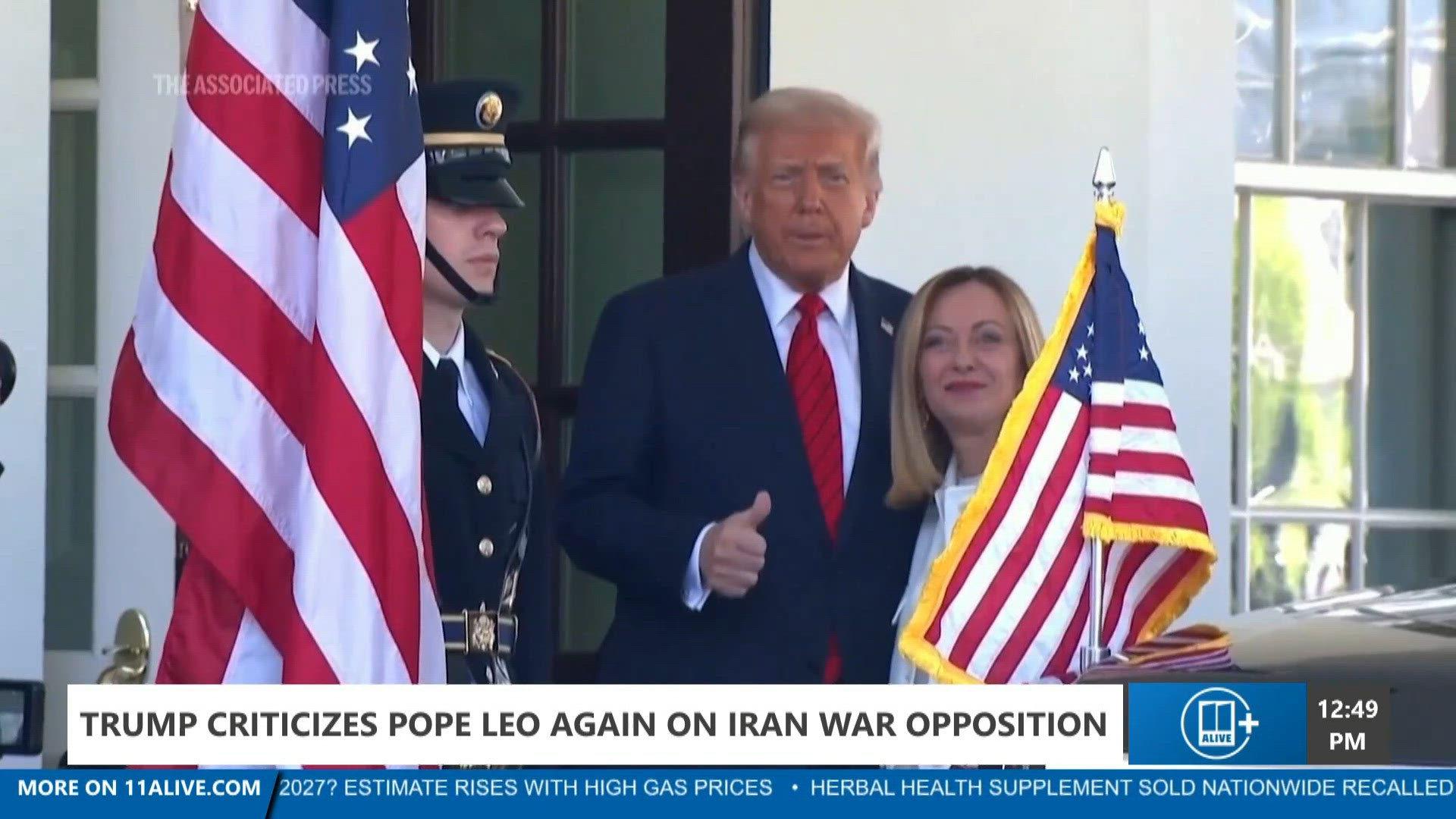
The Trump Iran war stance is no longer just campaign rhetoric or a foreign policy talking point. It is becoming a live stress test for how the United States balances deterrence, domestic politics, regional alliances, and the ever-present risk of escalation in the Middle East. That matters far beyond Washington. Energy markets react to it. Allies plan around it. Adversaries probe for weakness inside it. And voters, weary of endless conflict but anxious about global instability, are being asked to decide what kind of forceful leadership they actually want. What makes this moment especially volatile is the gap between tough language and the messy reality of military conflict: once a president signals willingness to go harder on Iran, every move after that gets judged not just for strength, but for consequence.
- Trump Iran war stance reflects a sharper, more confrontational approach to deterrence and regional power.
- Any harder line on Iran carries immediate risks for U.S. troops, allies, shipping routes, and energy prices.
- Politically, this is a high-wire act: projecting strength while avoiding another prolonged Middle East war.
- The real question is not just whether escalation is possible, but whether Washington has a credible endgame.
Why the Trump Iran war stance matters now
Presidential positioning on Iran is never isolated. It sits at the intersection of military credibility, intelligence assessments, alliance management, and domestic political incentives. A more aggressive Trump Iran war stance suggests a belief that the U.S. can restore deterrence through sharper messaging and a more visible readiness to use force. That idea has obvious appeal in moments when Tehran or its regional proxies appear emboldened. But the modern Middle East has repeatedly shown that deterrence is rarely linear.
Strength can deter, but it can also trigger asymmetric retaliation. Iran does not need to match the United States plane for plane or ship for ship. It can leverage proxy networks, cyber capabilities, maritime disruption, and calibrated regional pressure. That makes any U.S. hardening of posture both strategically legible and inherently risky.
A tougher line can project control at home, but in the region it often opens a chain reaction that no White House fully owns.
The deeper issue is whether the U.S. is pursuing a defined strategy or simply amplifying pressure without a clear framework for what success looks like. Is the goal de-escalation through fear? Regime behavioral change? Expanded deterrence? Or political signaling aimed at voters who equate caution with weakness? Without clarity, even a disciplined show of force can drift into strategic ambiguity.
The political logic behind a harder approach
Trump has long understood that foreign policy messaging can be used to communicate decisiveness. Iran, in that sense, is politically potent. It condenses several themes into one issue: American strength, distrust of diplomatic ambiguity, skepticism toward prior agreements, and the promise of restoring deterrence through firmness.
That does not mean the politics are simple. The American electorate has conflicting instincts. Many voters want a president who sounds forceful against adversaries. Many of those same voters also reject open-ended military entanglement. This creates a narrow lane for any candidate or president: be tough enough to look credible, but restrained enough to avoid ownership of another costly war.
A message built for multiple audiences
A sharper Iran posture speaks to at least three constituencies at once. First, domestic supporters who view muscular foreign policy as a marker of leadership. Second, regional allies who worry that U.S. resolve has become inconsistent. Third, Iran itself, which constantly tests whether American warnings are backed by action.
That is why rhetoric matters so much here. The signal has to travel across political, military, and diplomatic channels simultaneously. If the rhetoric is too soft, opponents see drift. If it is too maximalist, markets and allies price in war risk immediately.
The danger of credibility traps
There is another problem with elevated language: it can create a credibility trap. Once a leader frames Iran as a test of American resolve, every future incident becomes harder to ignore. A militia strike, a shipping disruption, a missile launch, or a cyberattack can suddenly carry larger symbolic weight because it is no longer just an isolated provocation. It becomes a referendum on whether the White House means what it says.
That is where policy can get boxed in. Leaders who want deterrence often discover they have reduced their own room for maneuver. The more absolute the language, the harder it becomes to choose calibrated restraint without appearing to retreat.
What escalation with Iran actually looks like
Public debate often treats conflict with Iran as a binary choice between peace and war. In practice, escalation is usually incremental, distributed, and hard to contain. It can unfold through proxy exchanges, targeted strikes, maritime harassment, drone attacks, sanctions pressure, cyber operations, or intelligence-driven covert action. Rarely does it begin with a formal declaration or a single obvious threshold.
That complexity is what makes the Trump Iran war stance such a consequential signal. The issue is not just whether force is used. It is how much pressure is applied, against which targets, with what legal rationale, and with what contingency planning for retaliation.
Regional flashpoints to watch
- U.S. troop exposure: American personnel in Iraq, Syria, and nearby bases remain vulnerable to militia and missile threats.
- Maritime chokepoints: Disruption around the Strait of Hormuz can hit shipping insurance, freight costs, and energy prices fast.
- Proxy networks: Tehran’s influence often works through partners and aligned armed groups rather than direct state-on-state confrontation.
- Israel and Gulf partners: Their threat perceptions can shape the pace and scope of U.S. decisions.
Each flashpoint creates different escalation ladders. A strike on a proxy may not stay confined to a proxy. A maritime security operation may invite broader retaliation. A cyber response may trigger physical consequences. This is the core strategic challenge: Iran-related crises are rarely tidy.
The most dangerous conflicts are the ones both sides think they can calibrate.
Why allies, markets, and adversaries care
Allies do not just watch American Iran policy for reassurance. They watch it for predictability. A forceful but coherent U.S. stance can strengthen deterrence. A forceful but improvisational one can make partners nervous, especially if they fear being drawn into a conflict without a clear diplomatic track.
Markets react even faster. Oil prices do not need a full-scale war to move. They only need plausible disruption. A harder Trump Iran war stance therefore has an immediate economic dimension. Energy traders, insurers, shipping firms, and global manufacturers all price geopolitical risk into their decisions. That means a political signal in Washington can ripple into consumer costs and inflation expectations well before any military action occurs.
Adversaries outside the region are also paying attention. Russia and China study how the U.S. handles coercion, alliance reassurance, and escalation management. If Washington appears resolute and disciplined, that can reinforce deterrence more broadly. If it appears reactive or strategically divided, the signal travels just as quickly.
The strategic question Washington cannot dodge
The hardest question in any Iran confrontation is not whether the U.S. can hit targets. Of course it can. The harder question is what comes after. What is the theory of victory? A serious strategy needs more than an opening move. It needs objectives, off-ramps, coalition management, legal grounding, domestic political durability, and plans for second- and third-order effects.
That is where skepticism is warranted. Tough postures are easy to announce. Endgames are much harder to define. If the goal is deterrence, what level of Iranian pullback counts as success? If the goal is reestablishing red lines, how are those lines communicated and enforced? If the goal is preventing a wider war, what diplomatic mechanisms remain open while pressure intensifies?
The difference between pressure and strategy
This distinction matters. Pressure is a tool. Strategy is a sequence. A White House can escalate sanctions, reposition naval assets, authorize retaliatory strikes, and tighten intelligence coordination. But unless those steps are connected to a realistic political outcome, they may create motion without control.
That is why any evaluation of the Trump Iran war stance should focus less on theatrical toughness and more on strategic architecture. Is there a coherent framework behind the posture, or is the posture itself being treated as the policy?
What this means for voters and policymakers
For voters, Iran is often filtered through broad impressions: strength, chaos, risk, patriotism, fatigue. But policymakers do not have the luxury of abstraction. They have to think in timelines, force protection measures, congressional politics, alliance coordination, intelligence reliability, and retaliation scenarios. That gap between political branding and operational reality is where the real story lives.
There is a reason Iran remains one of the most difficult files in U.S. foreign policy. It punishes simplistic thinking. Diplomatic openings can collapse under regional mistrust. Military responses can generate prestige at home while complicating the battlefield abroad. Restraint can preserve stability, but it can also be read as hesitancy. Almost every option carries a cost.
The current moment sharpens that dilemma. If Trump is signaling a more aggressive Iran doctrine, then the country is effectively revisiting an old American question with new urgency: can the U.S. project unmistakable strength without getting trapped by the consequences of its own signal?
The bottom line on the Trump Iran war stance
The Trump Iran war stance is politically potent because it promises clarity in a domain defined by ambiguity. It tells supporters that deterrence can be restored through resolve. It tells adversaries that provocation will be met with force. It tells allies that Washington may be ready to reassert hard power more visibly.
But foreign policy is where branding collides with physics. Missiles, proxies, shipping lanes, alliance commitments, and domestic war fatigue do not bend easily to campaign-style certainty. The real test is not whether a leader can sound tougher on Iran. The real test is whether that toughness is tied to a credible, sustainable strategy that avoids sleepwalking into a broader conflict.
Projecting strength is easy. Controlling escalation is the part that history keeps charging interest on.
That is why this debate matters now. A harder approach to Iran may reassure some audiences and rattle others. It may deter in the short term or destabilize in the medium term. Either way, it is not just a headline. It is a signal with military, political, and economic consequences – and the kind of signal that can define a presidency long after the messaging phase ends.
The information provided in this article is for general informational purposes only. While we strive for accuracy, we make no guarantees about the completeness or reliability of the content. Always verify important information through official or multiple sources before making decisions.