Trump Threatens BBC Lawsuit
Trump Threatens BBC Lawsuit
A political media fight has turned into a legal threat with global consequences. Trump BBC lawsuit talk is no longer just campaign-trail bluster: Donald Trump has demanded action from the BBC over a disputed edit in a documentary, sharpening a familiar but consequential question for every newsroom: where does legitimate editing end and reputational harm begin? For readers already exhausted by media bias claims, this dispute matters because it sits at the intersection of journalism, defamation law, public trust, and political power. The BBC is not a fringe outlet. Trump is not a minor public figure. When the two collide over how words were arranged, the result becomes a stress test for modern broadcasting: transparency, accountability, and whether audiences can still trust what they see on screen.
- The dispute centers on a BBC
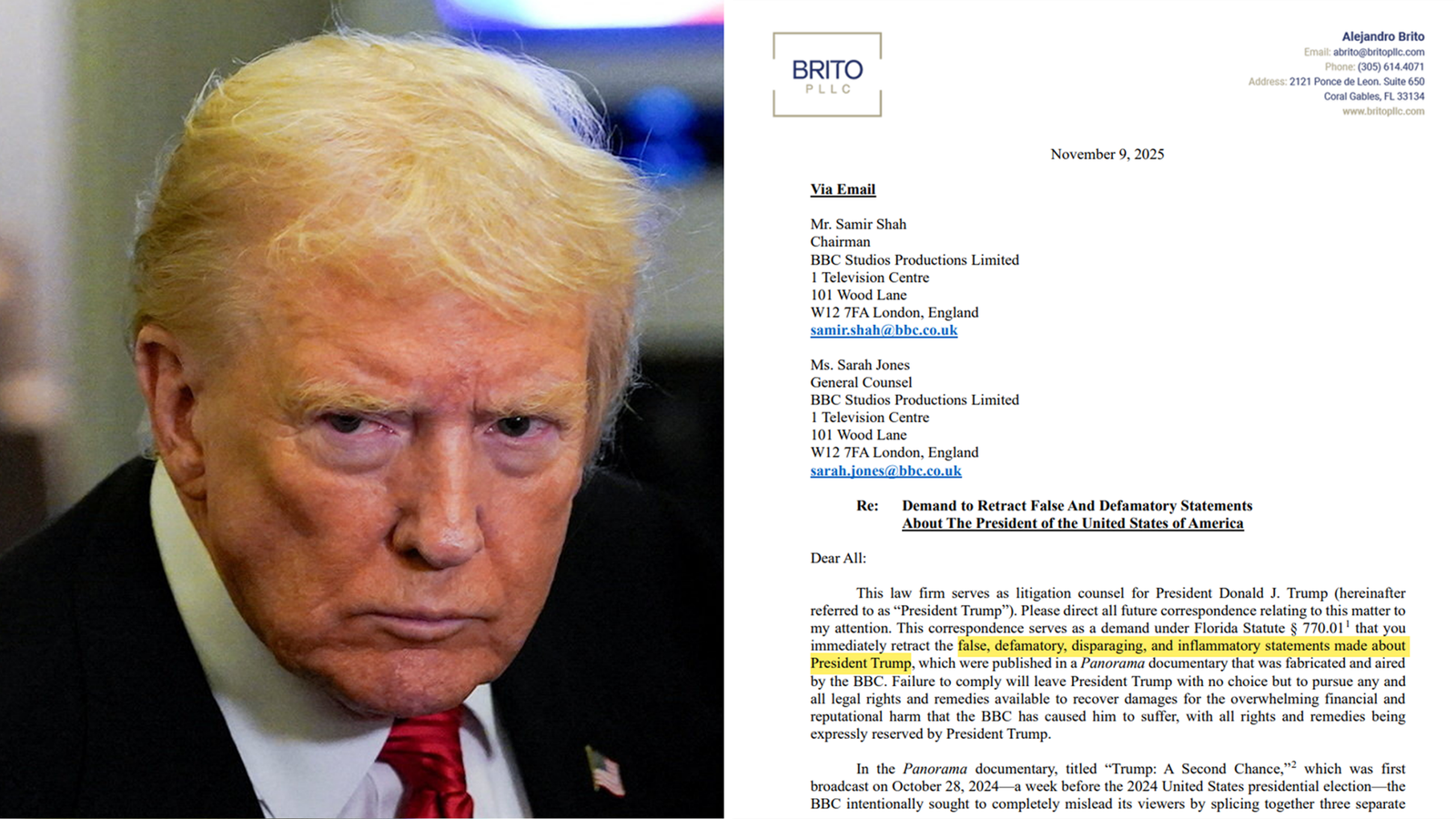
Panoramaedit of Donald Trump’s speech around the January 6 Capitol riot. - Trump has threatened legal action unless the BBC apologizes, retracts the program, and pays compensation.
- The BBC has acknowledged the edit created a misleading impression, but the legal stakes remain complex.
- The controversy raises larger questions about editorial standards, political pressure, and public trust in legacy media.
Trump BBC lawsuit threat puts editing under the microscope
The core allegation is simple but explosive: Trump’s team says the BBC edited parts of a speech in a way that made it appear he directly encouraged violence at the US Capitol. The controversy focuses on a Panorama program that included segments from Trump’s speech on January 6, 2021, the day his supporters stormed Congress.
At issue is not whether television journalism routinely edits speeches. It does. Long speeches are compressed, reordered for clarity, and cut to fit time limits. The problem is whether an edit materially changes the meaning of what was said. That is where this fight becomes more than a media spat.
Key insight: In political journalism, the edit is never neutral. The decision about what to include, what to omit, and what to place side by side can shape meaning as powerfully as the words themselves.
The BBC has faced internal scrutiny after concerns were raised that the program spliced together different parts of Trump’s remarks. Critics argue that the sequence gave viewers the impression of a more direct call to march and fight than the full speech supported. Trump’s lawyers have reportedly demanded a retraction, an apology, and compensation, while warning of a potential lawsuit.
That makes this an unusually high-profile test of how a public broadcaster responds when its editorial judgment is accused of becoming distortion.
Why the Trump BBC lawsuit threat is bigger than one documentary
The reason this story has traction is not just Trump’s history of attacking media organizations. It is that the BBC occupies a particular role in the global information system. It is publicly funded, internationally recognized, and often treated as a benchmark for impartial news. A mistake by the BBC carries more symbolic weight than a partisan cable segment or a viral social media clip.
For Trump, the dispute lands in familiar territory. His political brand has long depended on positioning mainstream media as hostile, selective, and untrustworthy. A questionable edit by one of the world’s best-known broadcasters is politically useful. It gives his argument a concrete example.
For the BBC, the stakes are different. The organization is already navigating criticism over impartiality, funding, leadership, and public relevance. If audiences believe a flagship current affairs program manipulated a major political figure’s words, the damage is not limited to one episode. It chips away at the institutional promise that the BBC is careful even when covering polarizing subjects.
The legal bar is high, but the reputational risk is immediate
Defamation claims involving public figures are difficult, especially across jurisdictions. Trump would need to show not merely that the edit was unfavorable, but that it caused serious reputational harm and met the applicable legal threshold. Depending on where any case is filed, the legal standards could differ sharply.
In the US, public figures face the demanding actual malice standard, requiring proof that a publisher knowingly made a false statement or acted with reckless disregard for the truth. In the UK, defamation law can be more claimant-friendly in some respects, but litigation would still involve complex questions: Was the broadcast defamatory? Was the meaning materially misleading? Did the BBC act responsibly? What remedy is proportionate?
Even if a lawsuit never fully materializes, the reputational cost is already real. Legal threats are not only about winning in court. They are also about forcing institutions into public explanation, apology, or settlement.
What the BBC got wrong and why it matters
Editing is a craft, but it is also a contract with the audience. Viewers understand that documentaries compress reality. They do not expect every second of a speech. But they do expect that compression will preserve meaning.
If two parts of a speech are stitched together without sufficient context, the risk is that the edit produces a sentence or sequence that never existed in that form. In political coverage, that can be decisive. A few seconds can turn ambiguity into apparent intent. A cutaway can imply causality. A missing qualifier can change the force of a statement.
Why this matters: News organizations are fighting for trust in an era where audiences increasingly assume every institution has an agenda. When a broadcaster admits an edit created a misleading impression, it validates the suspicion that media narratives are constructed rather than reported.
Pro tip for readers: watch for narrative edits
When consuming political video, look for signs of heavy construction. Are quotes separated by visible cuts? Is narration doing more work than the source material? Are clips presented in chronological order? Does the program show enough before and after the quoted line to establish context?
These are not minor media-literacy habits. They are essential defenses in a video-first political culture where short clips travel faster than full transcripts. A documentary edit can shape the initial impression, but the clipped version circulating afterward can harden that impression into supposed fact.
Trump’s media strategy meets the BBC’s institutional problem
Trump’s threat fits a broader strategy: challenge the legitimacy of critical coverage, demand correction or compensation, and use the fight itself as evidence of bias. This has been a defining feature of his relationship with the press for years.
But the BBC is not merely another opponent in that media ecosystem. Its public-service remit makes it vulnerable to a different criticism: not that it is commercially sensational, but that it is failing its own standards. The organization’s authority rests on restraint, process, and fairness. When those values are questioned, the response must be more substantial than saying all editing is selective.
A strong response would include transparency about the editorial process, a clear explanation of what happened, and a visible correction if the final product misled viewers. The worst response would be institutional defensiveness: treating critics as bad-faith actors while avoiding the underlying problem.
Editorial reality check: Newsrooms do not lose credibility because they make mistakes. They lose credibility when audiences believe the correction is smaller than the error.
The public broadcaster dilemma
Public broadcasters face a brutal challenge. They must cover aggressive political figures without amplifying misinformation, but they must also avoid making editorial choices that appear designed to confirm a narrative. That balance is hardest during coverage of events like January 6, where legal, moral, and political interpretations remain fiercely contested.
The BBC’s job was not to make Trump look better or worse. It was to make the record clearer. If the edit made the record less clear, that is a journalistic failure regardless of whether a court ever gets involved.
How this could reshape political broadcasting
The long-term impact may be felt less in courtrooms than in editing suites. Expect major broadcasters to tighten standards around political speech edits, especially for controversial public figures. Internal guidelines may become more explicit about splicing, chronology, and disclosure.
Programs may increasingly use on-screen labels such as edited for length, sequence condensed, or remarks shown out of order. That may feel clunky, but it could become a necessary trust signal. Audiences are more skeptical now, and broadcasters need to show their work.
There is also a future risk: politicians may weaponize every edit as censorship or distortion. If every shortened quote becomes grounds for legal threats, journalism gets slower, more cautious, and potentially less useful. The challenge is to distinguish between normal editorial compression and edits that alter meaning.
What happens next in the Trump BBC lawsuit fight
The immediate question is whether Trump follows through. Legal threats often function as leverage, and the BBC’s response will likely influence the next move. A full apology and settlement could close the dispute but invite criticism that the broadcaster caved to pressure. A narrow correction could be seen as insufficient. A refusal could escalate the matter further.
The BBC must also consider its own internal accountability. Who approved the edit? Were concerns raised before broadcast? Did the program follow established standards? Was the misleading impression obvious only in hindsight, or should editors have caught it earlier?
Those questions matter because institutional trust is procedural. Audiences cannot sit in the edit room, so they rely on the belief that serious people followed serious rules. When that belief cracks, transparency becomes the only repair tool available.
The bottom line on the Trump BBC lawsuit threat
The Trump BBC lawsuit controversy is not just another chapter in the endless war between a former president and the press. It is a warning about the fragility of trust in edited media. The BBC may have intended to summarize a chaotic and historically significant moment. But if the edit changed the apparent meaning of Trump’s words, intent will not be enough.
For journalists, the lesson is blunt: precision is not optional when covering polarizing figures. For viewers, the lesson is just as important: never outsource context entirely to a clip. And for the BBC, the path forward depends on whether it can treat this not as a public-relations inconvenience, but as a serious test of editorial accountability.
The legal outcome may take months or may never arrive. The trust outcome is already underway.
The information provided in this article is for general informational purposes only. While we strive for accuracy, we make no guarantees about the completeness or reliability of the content. Always verify important information through official or multiple sources before making decisions.