Typhoon Dolphin Slams China and Exposes a Bigger Climate Risk
Typhoon Dolphin Slams China and Exposes a Bigger Climate Risk
Typhoon Dolphin is not just another storm headline. Its landfall in China as the strongest storm this year is a blunt reminder that extreme weather is no longer a distant risk – it is a systems test happening now. For cities, utilities, logistics networks, and emergency planners, the question is not whether the next major storm arrives, but whether the modern world can absorb the shock without cascading failures. The pressure point is obvious: warmer oceans can feed more intense cyclones, while dense coastlines pack more people, assets, and critical infrastructure into harm’s way. That combination turns weather into an operational threat, and it is forcing governments and businesses to rethink what resilience actually means.
- Typhoon Dolphin shows how quickly a powerful storm can become a national infrastructure stress test.
- Coastal cities face the biggest exposure because population density and critical assets are concentrated near the water.
- Resilience is no longer just about forecasts – it is about power grids, transport, supply chains, and emergency response.
- Climate adaptation is shifting from long-term policy debate to immediate operational necessity.
- Storms like this are a warning that preparedness gaps can turn weather into economic disruption.
Typhoon Dolphin and the new storm reality
Typhoon Dolphin made landfall in China with enough force to become the country’s strongest storm this year, and that matters well beyond the immediate damage zone. The event illustrates a familiar but increasingly urgent pattern: tropical systems are arriving with more destructive potential, and the margin for error is shrinking. Even where forecasting improves, the challenge is no longer just predicting a storm’s path. It is coordinating shutdowns, protecting critical services, and restoring normal life fast enough to prevent secondary crises.
The uncomfortable truth is that modern societies are more connected than they are resilient. A single severe typhoon can interrupt ports, airports, manufacturing lines, power distribution, and food supply chains at once. That makes storms like Typhoon Dolphin relevant not only to meteorologists and disaster agencies, but also to business leaders, insurers, and policymakers.
When a storm becomes the strongest of the year, it stops being a weather event alone. It becomes a stress test for the systems that keep an economy functioning.
Why Typhoon Dolphin matters for China
China’s southeastern coastline is a high-stakes zone where industrial capacity, megacities, and transport infrastructure sit in the path of recurring typhoons. When a major storm comes ashore, the immediate threat is wind, rain, and flooding. The deeper risk is what happens next: suspended production, disrupted logistics, damaged housing, and strain on local governments responsible for recovery.
This is why a single landfall can have outsized consequences. China is not only managing the weather impact itself, but also the knock-on effects on manufacturing output, port activity, and interprovincial movement. Even temporary interruptions can ripple through supply chains that depend on just-in-time delivery and predictable transport windows.
Coastal concentration raises the stakes
Dense urban corridors and industrial zones magnify exposure. Factories, warehouses, data centers, and transport hubs often cluster near the coast because that is where trade and labor pools are strongest. But that same geography increases vulnerability. If roads flood or ports shut down, business continuity depends on backup plans that many firms still underinvest in.
Pro tip: organizations with coastal exposure should treat typhoon season as an annual resilience audit, not a seasonal inconvenience. That means reviewing backup power, inventory buffers, supplier diversification, and remote operations protocols before the first major system lands.
Typhoon Dolphin and the business continuity problem
For companies, the lesson from Typhoon Dolphin is not abstract. Weather events now sit inside operational risk models. The old assumption that severe storms are rare exceptions does not hold up when coastal disruption repeats year after year. Business continuity planning has to account for the possibility that transport may fail, staff may not be able to reach workplaces, and telecom networks may buckle under load or damage.
This is where the gap between theory and reality becomes visible. Many firms have continuity documents. Fewer have truly tested those documents under stress. A plan that lives in a shared drive is not resilience. Real resilience means knowing which systems can fail without taking the business down.
What companies should be checking now
Data backupand offsite replication for critical systems.Power redundancyfor offices, warehouses, and network equipment.Supplier contingencyplans for delayed shipments or closed ports.Employee safetyprotocols, including remote work triggers.Recovery timelinesthat assume infrastructure damage, not just short outages.
That may sound basic, but storms are unforgiving of assumptions. The companies that recover fastest are usually the ones that rehearsed failure before it happened. Those that did not tend to discover hidden dependencies at the worst possible moment.
What stronger storms reveal about climate adaptation
Typhoon Dolphin fits a broader pattern that climate scientists and disaster planners have been warning about for years. As oceans warm, tropical cyclones can gain more energy, and heavier rainfall can make flooding worse even when wind speeds are not the only story. The result is a new baseline of risk in which infrastructure built for yesterday’s climate may no longer be adequate.
This does not mean every storm will be catastrophic. It does mean planning thresholds are being rewritten in real time. Drainage systems, seawalls, building codes, and emergency shelters are all under pressure to match conditions that are becoming harder to model with confidence. If a region’s resilience strategy is built on historical averages, that strategy is already outdated.
Adaptation is no longer a future policy bucket. It is a present-day engineering requirement.
Why infrastructure design matters more than ever
Flood control, transport planning, and utility hardening are not glamorous investments, but they determine whether a city can absorb a storm without spiraling into prolonged disruption. Every weak point in the chain matters. A submerged substation can black out neighborhoods. A blocked arterial road can delay emergency crews. A flooded rail corridor can slow freight for days.
That is why resilience has to be built into design, not patched in after the fact. Retrofitting is almost always more expensive than planning for failure up front.
The media narrative versus the operational reality
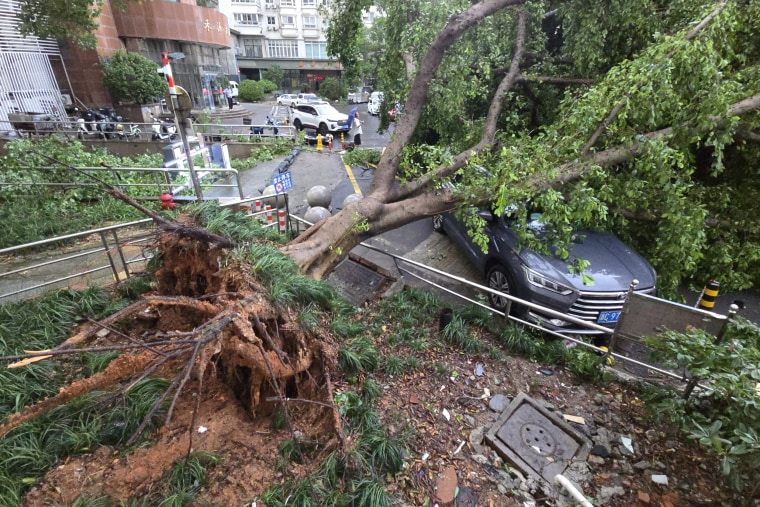
Storm coverage often focuses on dramatic visuals: toppled trees, violent rain, stranded vehicles, and the immediate damage footprint. Those images matter, but they only tell the first chapter. The larger story is the operational aftermath, where governments assess casualties, businesses tally losses, and communities deal with the cost of recovery.
That distinction matters because public attention usually fades before the real work begins. Restoring schools, transport links, power, and sanitation systems can take much longer than the storm itself. In that gap, inequality becomes visible. Wealthier districts and firms often bounce back faster, while lower-income communities face slower recovery and greater exposure to future shocks.
This is why Typhoon Dolphin should not be read as an isolated event. It is part of a recurring pattern in which climate risk is also an equity issue, an infrastructure issue, and a governance issue.
What happens next after Typhoon Dolphin
The immediate aftermath will likely focus on damage assessment, recovery operations, and helping affected communities regain basic services. But the longer-term question is whether decision-makers use this event to accelerate adaptation. That means better flood mapping, stronger building standards, improved urban drainage, and more serious investment in early warning systems and evacuation planning.
There is also a business lesson here: companies that rely on stable coastal operations need to stop treating climate resilience as optional overhead. The storms are getting more expensive, the downtime is getting riskier, and investors are paying more attention to preparedness than they used to. In practical terms, resilience is becoming a competitive advantage.
A smarter resilience playbook
To prepare for the next Typhoon Dolphin-style event, organizations and local governments should prioritize a few concrete moves:
- Map the most vulnerable assets and suppliers first, not last.
- Stress-test operations against longer outages and wider flooding.
- Build redundant communication channels for staff and responders.
- Invest in infrastructure that can fail safely and recover quickly.
- Use post-storm reviews to update plans, not just file reports.
The big takeaway: storms are no longer just events to survive. They are signals about how much strain our infrastructure, institutions, and economic models can bear. Typhoon Dolphin is one more warning that resilience cannot be improvised after the fact. It has to be engineered in advance.
That is what makes this typhoon significant. It is not merely the strongest storm China has seen this year. It is part of a larger shift in which extreme weather is exposing the real condition of modern systems. And those systems, from coastlines to supply chains, are telling us they need to be tougher than they are today.
The information provided in this article is for general informational purposes only. While we strive for accuracy, we make no guarantees about the completeness or reliability of the content. Always verify important information through official or multiple sources before making decisions.


