UFC White House Fight Rewrites Political Spectacle
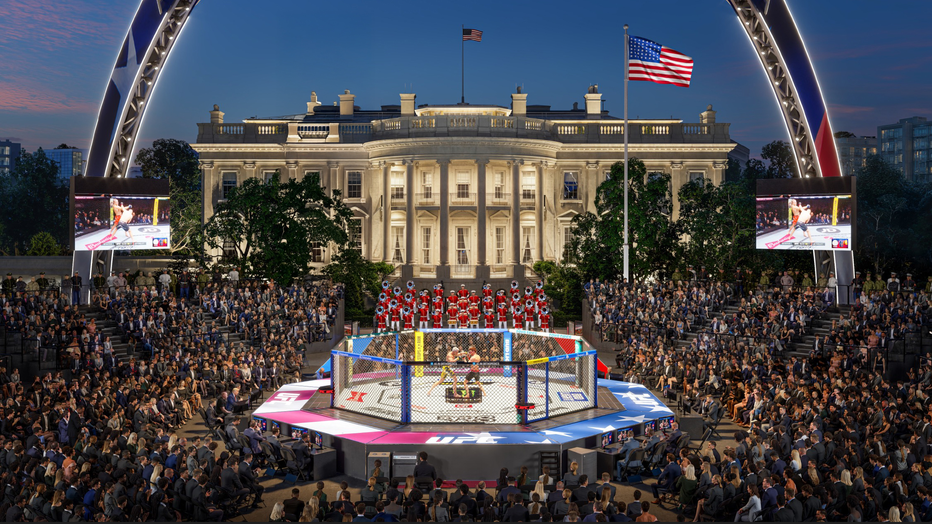
UFC White House Fight Rewrites Political Spectacle
The idea of a UFC White House fight sounds like satire until you realize it perfectly fits the current media economy. Politics is no longer just policy, campaigning, or statecraft – it is also performance, branding, and algorithm-friendly spectacle. That is why a mixed martial arts event tied to the White House immediately lands as more than a bizarre headline. It is a signal flare for where public attention now flows.
For readers trying to make sense of this crossover, the real question is not whether a fight card could physically happen near one of the most symbolically loaded buildings in the United States. The bigger question is why this kind of mash-up now feels plausible. The answer sits at the intersection of combat sports, celebrity politics, digital media, and a culture that increasingly rewards moments built for clips rather than context.
- The UFC White House fight concept is a political media event as much as a sports story.
- It reflects the merger of entertainment logic with institutions once treated as untouchable civic symbols.
- Combat sports now operate as cultural power centers, not just athletic competitions.
- The controversy is the product: attention, outrage, and spectacle all fuel the same machine.
- Whether or not it happens at scale, the idea alone shows how politics is being repackaged for viral consumption.
Why the UFC White House fight hits such a nerve
The White House is not just a building. It is a stage for executive authority, diplomacy, and national symbolism. UFC, by contrast, is built on confrontation, personality, rivalry, and high-impact entertainment. Put those two brands in the same sentence and the reaction is immediate because the collision feels intentionally provocative.
That tension is exactly why the concept has traction. Modern media rewards unexpected combinations. A standard policy speech struggles to break through. A culture-war clash, a celebrity endorsement, or a combat sports spectacle can dominate feeds for days. The attention economy does not rank events by civic merit. It ranks them by shareability, emotional charge, and tribal resonance.
When politics adopts the grammar of live entertainment, every institution becomes a potential set piece.
This is the deeper significance of the UFC White House fight narrative. It compresses several modern truths into one image: politics is personal branding, sports are ideological theater, and public institutions now compete with platforms that reward spectacle over substance.
The business logic behind the spectacle
Strip away the symbolism and there is still a brutally effective commercial logic underneath. UFC has spent years evolving from a niche combat brand into a global media property. It does not just sell fights. It sells moments, personalities, rivalries, premium access, and cultural relevance. Any event linked to a location as loaded as the White House would generate enormous earned media before a single punch is thrown.
Sports promotions now think like platform companies
That shift matters. A modern sports organization is not merely a league or promoter. It behaves more like a content engine. The key assets are no longer only athletes and venues but also clips, memes, controversy, and exclusivity. A proposal this audacious functions like a viral trailer for itself.
From a media-strategy standpoint, the formula is obvious:
- Pick a globally recognizable symbol.
- Attach it to a polarizing but highly engaged fan base.
- Create a headline people feel compelled to debate.
- Let social platforms do the distribution for free.
That does not guarantee operational feasibility, but it does guarantee relevance. And relevance is often the first and most valuable currency in sports media.
Why brands chase cultural collisions
Events that fuse politics and entertainment create an unusually broad audience overlap. Hardcore fight fans show up. Political observers show up. Casual readers who would never watch a full UFC card show up because the setting alone feels transgressive. In branding terms, that is reach expansion without needing to educate the market on what UFC is.
Pro Tip: When evaluating a high-profile sports story, ask whether the event is being designed for ticket sales, pay-per-view, social clips, or political symbolism. Increasingly, the answer is all four.
How combat sports became a political language
Combat sports occupy a unique place in public life because they project traits that political figures often want to borrow: toughness, resilience, authenticity, dominance, and refusal to back down. Those qualities may be partly theatrical, but they play well on camera and even better in short-form video.
The UFC, in particular, has become an arena where masculinity, national identity, anti-elite posture, and celebrity culture frequently intersect. That does not mean every fight is political. It means the ecosystem around the sport is highly adaptable to political messaging.
Fight sports offer a ready-made visual language for power: walkouts, staredowns, winners, losers, and zero ambiguity.
For political actors, that language is useful. It simplifies complex conflicts into winner-take-all narratives. For audiences, it offers emotional clarity in a fragmented information environment. For media organizations, it delivers images that travel instantly.
What makes the White House setting so different
The proposed setting is not interchangeable with a stadium, arena, or outdoor venue. The White House carries constitutional, diplomatic, and historical weight. That is why the reaction is not just about whether fans would watch. Of course they would. The real issue is whether a civic symbol can be transformed into a backdrop for entertainment without changing what that symbol means.
Institutional prestige is now part of the product
This is a pattern across media and business. Prestigious spaces, elite institutions, and legacy brands increasingly get repurposed as attention assets. Once that happens, their value is no longer only rooted in tradition or function. It is also rooted in their ability to produce unforgettable imagery.
Seen through that lens, the UFC White House fight is not random. It is a logical endpoint of a system that monetizes symbolic collision. The venue itself becomes a storyline. The optics become marketing. The debate becomes distribution.
The risk of turning governance into set design
There is also a cost. If every powerful institution becomes content, the line between civic legitimacy and entertainment packaging gets thinner. Viewers may struggle to distinguish between what is meant to inform the public and what is meant to provoke engagement metrics.
This is where skepticism matters. Not because sports and politics can never mix – they already do, constantly – but because the setting reframes what each is supposed to do. One is meant to govern. The other is meant to captivate. Those are not the same function, even if modern media increasingly treats them as compatible.
Why the UFC White House fight matters beyond sports
The biggest reason this story matters is that it reveals how public life is being reformatted. Institutions once buffered by protocol now operate under the pressure of constant visibility. If a moment can trend, it can shape perception. If it shapes perception, it has strategic value.
That has consequences across multiple sectors:
- Politics: Public office becomes more performative and personality-driven.
- Media: Outrage and novelty continue to outperform nuance.
- Sports: Leagues gain cultural leverage far beyond competition results.
- Business: Sponsors and partners must navigate both reach and reputational risk.
For executives, marketers, and media strategists, this is not a fringe story. It is a case study in modern narrative engineering. For citizens, it is a reminder that the packaging of power can influence how power is understood.
The likely next phase of spectacle politics
Even if a full UFC White House fight card never materializes exactly as imagined, the concept has already done its work. It has expanded the boundaries of what people consider possible in political image-making. Once a symbolic threshold is crossed rhetorically, the next version often arrives in a slightly less shocking form.
Expect more events that blend official symbolism with entertainment logic. Think less in terms of one-off stunts and more in terms of a structural shift. Campaigns, public appearances, and national ceremonies are increasingly optimized like premium live events, with built-in clip value and brand alignment.
Why This Matters: Audiences are not just consuming policy positions or sports outcomes anymore. They are consuming framed identity experiences – tightly packaged moments that signal tribe, worldview, and status in a single shareable visual.
Should we treat this as innovation or erosion?
That depends on your threshold for institutional reinvention. Supporters will argue that connecting with modern audiences requires breaking old formats and embracing cultural relevance wherever it lives. Critics will argue that not every symbol should be converted into an entertainment venue, especially one tied to state power.
Both views have merit, but they are not equally attentive to long-term consequences. Innovation in media strategy often feels exciting because it generates instant engagement. Erosion is slower. It shows up later, when institutions no longer command seriousness except as backdrops for increasingly theatrical events.
The smartest response is neither panic nor applause. It is recognizing that spectacle is now a governing force in how public meaning gets made.
The UFC White House fight story lands because it captures this transformation in a single frame. It is absurd, believable, strategic, and revealing all at once.
Final verdict on the UFC White House fight
The headline is flashy, but the implications are serious. The proposed UFC White House fight is less about one event than about a new operating system for public attention. Sports can now function as political theater. Politics can borrow the aesthetics of combat entertainment. And the institutions once thought immune to this mash-up are increasingly pulled into it.
That is why this story deserves more than a laugh or a quick take. It marks a cultural moment where the boundaries between civic symbolism, entertainment economics, and audience manipulation are getting harder to see. If you want to understand where media, politics, and sports are heading next, start here: not with whether the octagon gets set up, but with why the image feels so inevitable.
The information provided in this article is for general informational purposes only. While we strive for accuracy, we make no guarantees about the completeness or reliability of the content. Always verify important information through official or multiple sources before making decisions.


