UK Cuts Overseas Girls Education Project
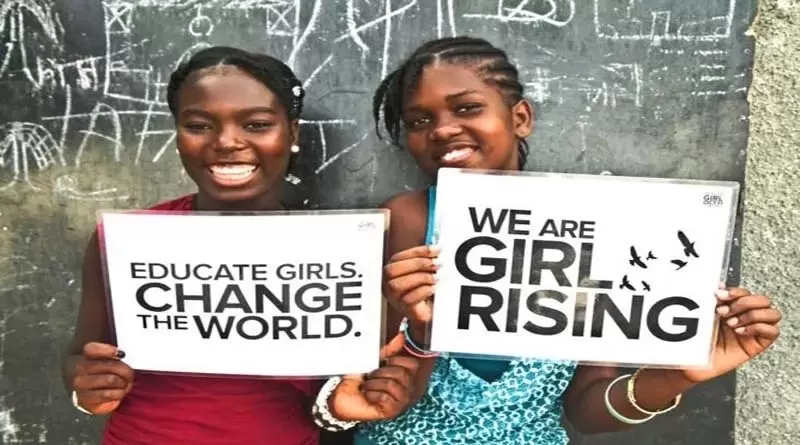
UK Cuts Overseas Girls Education Project
The UK’s decision to axe an overseas education project for women and girls after just two years lands at a brutal moment for global aid. Budgets are tighter, political patience is shorter, and every program now has to prove it can deliver visible impact fast. That is a dangerous environment for education initiatives, especially ones aimed at girls and women in places where progress is slow, fragile, and deeply tied to local politics. If the goal is long-term development, cutting support this early sends a loud signal: short-term fiscal discipline is winning over patient, evidence-based investment. The real question is not only why this happened, but what it says about the future of girls education aid, donor credibility, and the fragile trust that keeps global development projects alive.
- The UK has ended a women and girls overseas education project after two years.
- The cut highlights the tension between aid spending, political pressure, and long-term development outcomes.
- Programs like this often need more time than funding cycles allow to show measurable results.
- The decision could reshape how donors design and defend girls education aid in the future.
- For governments and NGOs, the lesson is clear: impact proof now matters as much as impact itself.
Why the girls education aid cut matters
This is not just another budget line disappearing into the spreadsheet. Education for women and girls is one of the most heavily validated tools in development policy, with effects that spill into health, economic growth, child welfare, and civic participation. When a donor government backs away early, it can undercut more than a single project. It can weaken partner confidence, disrupt delivery pipelines, and make other funders hesitate. That is the uncomfortable part of this story: the problem is not simply money, but time. Social change rarely fits neatly into a two-year funding window.
There is also a reputational cost. Aid programs survive on a mix of trust, continuity, and measured ambition. Once a donor starts signaling that it may pull funding before results can mature, implementers get pushed toward safer, smaller, less transformative bets. The result is a development ecosystem that rewards quick wins over durable outcomes.
Short funding cycles can produce neat reports, but they rarely produce lasting social change.
What the UK decision signals about aid strategy
The project’s cancellation suggests a broader shift in how governments are treating international development. Aid is increasingly being judged through the lens of domestic politics, public scrutiny, and value-for-money rhetoric. That makes sense on paper. Taxpayers want proof. Parliaments want defensible priorities. Ministers want programs that can survive headlines. But the logic breaks down when it is applied too rigidly to education interventions, where the payoff curve is often long and nonlinear.
For projects targeting women and girls, the challenge is even sharper. These programs often have to overcome structural barriers such as early marriage, distance to school, safety concerns, household labor, and weak local infrastructure. Success is rarely immediate, because the barrier is not awareness alone. It is a system.
Why this matters: when donors cut support before a project reaches scale, they may mistake implementation lag for failure. That creates a perverse incentive to fund only the easiest interventions, not the most important ones.
How girls education aid is supposed to work
Good education aid is not just about building classrooms or handing out supplies. It is about removing the friction that keeps girls out of school and women out of training pipelines. The strongest programs combine several layers of support:
- Access: making schools reachable and safe.
- Retention: helping students stay enrolled through economic shocks and social pressure.
- Quality: ensuring teachers, materials, and learning outcomes improve together.
- Transition: creating pathways into secondary school, vocational training, or work.
That stack is hard to build and even harder to measure in a short window. It is why some of the most effective interventions begin as pilots but need years to prove whether they can scale sustainably. A project can look modest on a dashboard while still laying the groundwork for lasting change.
Funding cycles versus social change
The mismatch here is structural. Government funding cycles are often built around annual reviews, spending ceilings, and election timing. Social change, especially in education, operates on a generational rhythm. A girl who stays in school because of a program today may not show up in a headline until years later, when she enters the labor market, delays marriage, or raises healthier children. That is not a bug in the system. That is the system working as intended.
When policymakers demand instant proof, they privilege interventions with easy metrics over interventions with deep consequences. And that is where development strategy starts to look less like strategy and more like theater.
The political pressure behind the project’s end
Any aid decision is ultimately political, even when it is dressed up as technical assessment. The UK, like other major donors, is navigating a climate where foreign spending is regularly challenged as too distant, too expensive, or too vague. Education projects can be especially vulnerable because their benefits are widely distributed and hard to assign to one visible success story.
There is also a communications problem. Aid agencies are often better at implementing than explaining. They can show enrollment gains, improved literacy, or stronger community support, but those gains are less dramatic than a photo op or a ribbon-cutting. In a political environment obsessed with immediacy, that is a real disadvantage.
Donor governments often cut the projects that need the longest runway, precisely because they are hardest to defend in the short term.
What NGOs and partners should do next
If there is a practical lesson here, it is that education projects need stronger resilience planning from day one. Implementers cannot assume political support will last. They need to build models that can survive funding shocks, withstand scrutiny, and show progress early without pretending the work is complete.
That means sharper monitoring, better storytelling, and a more explicit link between activities and outcomes. It also means designing projects with modularity in mind, so that if funding drops, the most critical components can continue.
- Build milestone reporting that shows progress every quarter, not just at the end of a grant.
- Document local ownership so the project is not seen as donor-dependent forever.
- Separate short-term metrics from long-term outcomes in reporting.
- Use scenario planning for funding cuts and political transitions.
Pro tip: the best defense against premature cuts is not a glossy impact report. It is a program design that makes the cost of stopping visibly higher than the cost of continuing.
What to watch for in future aid policy
Expect more pressure on aid programs to demonstrate measurable outputs quickly. That could mean more emphasis on digital tracking, third-party evaluation, and tighter budget discipline. It could also mean fewer ambitious multi-country projects and more targeted, narrow interventions that are easier to justify politically.
That may sound efficient, but it comes with risk. A narrower aid portfolio can be easier to defend while being less capable of tackling the root causes of inequality. Education for women and girls is exactly the kind of issue that suffers when policy gets overly transactional.
The best-case scenario is that governments become more disciplined without becoming more cynical. That would mean funding programs long enough to learn, not just long enough to launch. It would mean treating early setbacks as information rather than failure. And it would mean remembering that the most valuable development outcomes are often the ones that take the longest to appear.
The bigger lesson for girls education aid
The UK’s move is a warning shot for the entire aid sector. If support for women and girls can be withdrawn after two years, then every future project will have to operate under the assumption that continuity is conditional. That is bad for planning, bad for partner trust, and bad for the very communities these programs are supposed to serve.
Still, there is a constructive reading. This cut exposes a weakness that has long been hidden in plain sight: too many good projects are designed for ideal funding conditions that no longer exist. The answer is not to abandon education aid. It is to harden it. Make it more transparent. Make it more adaptive. Make it easier to defend, but also harder to kill.
Because if the global development sector cannot protect its most durable investments, then it risks becoming an industry that celebrates intent while surrendering on follow-through.
And for women and girls waiting on that follow-through, the difference is not theoretical. It is the difference between another canceled promise and a real path forward.
The information provided in this article is for general informational purposes only. While we strive for accuracy, we make no guarantees about the completeness or reliability of the content. Always verify important information through official or multiple sources before making decisions.


