UK Data Leak Exposes Health Records Risk
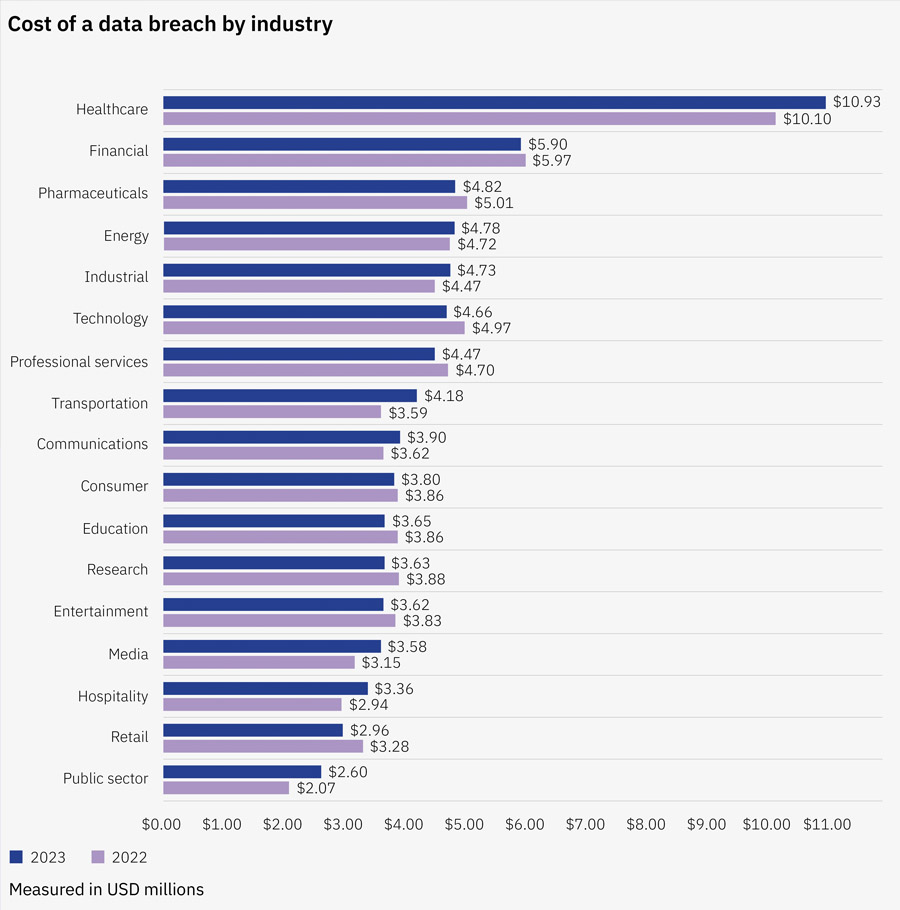
UK Data Leak Exposes Health Records Risk
The UK data leak story is bigger than a single security lapse. It cuts straight to a fear that governments, hospitals, researchers, and patients have spent years trying to contain: once sensitive health information is placed into vast digital systems, trust becomes only as strong as the weakest operational decision. When databases tied to medical research and health records are exposed, the fallout is not just technical. It is political, ethical, and deeply personal.
That is why this case matters far beyond one headline. It lands at the intersection of cloud dependency, cross-border data governance, biomedical research, and public accountability. For a country pushing hard on AI, life sciences, and digitized public services, a leak involving high-value health-related data is not an isolated embarrassment. It is a warning shot.
- Health data is uniquely sensitive because it can expose identity, medical history, and long-term personal risk.
- Cloud misconfiguration and weak oversight remain common causes of major data exposure events.
- The Alibaba angle raises strategic questions about where data is hosted, who can access it, and how governance is enforced.
- Research institutions and health systems need stricter operational discipline, not just better PR after the fact.
- This incident could accelerate regulatory scrutiny across UK health, biotech, and public-sector technology programs.
Why this UK data leak hits so hard
Not all breaches carry the same weight. A leak involving shopping data or marketing profiles is serious, but health records operate in a different category. They often include combinations of names, dates of birth, contact information, diagnosis details, treatment history, laboratory results, and sometimes genomic or research-linked data. Even where data is described as anonymized or pseudonymized, the practical risk can still be significant if datasets are rich enough to enable re-identification.
That is the central problem with any UK data leak tied to health systems or major biomedical repositories: the data is valuable to everyone from cybercriminals to hostile state actors to insurance fraud networks. It can be used for extortion, phishing, identity theft, social engineering, and reputational harm. It also damages confidence in the institutions that ask the public to keep sharing data in the name of science and better care.
When health data is exposed, the breach is not only of infrastructure – it is a breach of consent.
That point matters especially in the UK, where public trust is a prerequisite for national-scale research initiatives. If patients begin to believe that their information may be stored carelessly, transferred opaquely, or governed inconsistently, participation in future health and research projects gets harder.
The Alibaba question is really a cloud governance question
It is easy for public debate to fixate on a recognizable vendor name. But the real issue is broader than any single provider. The involvement of cloud infrastructure linked to a major international technology company raises a more urgent question: did the organizations handling the data have the right controls, visibility, contractual safeguards, and operational processes in place?
Cloud platforms are not inherently insecure. In many cases, they are more secure than on-premises systems run by under-resourced organizations. But cloud security is rarely automatic. It depends on correct configuration, access management, encryption policy, logging, data minimization, and relentless auditing.
Where cloud projects usually go wrong
The pattern is familiar across sectors:
- Overexposed storage buckets or repositories are left accessible due to bad permissions.
- Credentials are mishandled, shared too broadly, or not rotated fast enough.
- Test environments end up containing live or near-live sensitive data.
- Third-party integrations expand the attack surface without enough monitoring.
- Responsibility gets blurred between vendor, contractor, institution, and regulator.
That last point may be the most dangerous. Cloud environments run on a shared-responsibility model, but in practice many organizations behave as if outsourcing infrastructure also outsources accountability. It does not. If health-related data is exposed, the public will not care whether the root cause sat with a platform setting, a contractor workflow, or an internal team. They will reasonably ask why no one prevented it.
Why cross-border concerns keep resurfacing
Any incident touching an international cloud provider also revives difficult questions about data sovereignty and legal jurisdiction. Where exactly was the data stored? Which teams could administer the systems? What legal frameworks applied to access requests, backups, replication, or incident response? Were there sufficient contractual and technical controls to prevent inappropriate exposure?
These questions matter because health and research data is not politically neutral infrastructure. It sits inside national security, industrial strategy, and public trust debates. Countries increasingly view large-scale medical datasets as strategic assets that support pharmaceutical development, AI training, population health research, and scientific competitiveness.
What this means for UK health and research institutions
If the facts behind this story continue to solidify, boards and security teams across the UK should treat it as a live-fire drill. The concern is not only whether one institution made mistakes. It is whether the wider ecosystem has normalized risky behavior under the banner of digital transformation.
That ecosystem includes hospitals, universities, biobanks, genomics programs, outsourced IT providers, cloud vendors, analytics firms, and government agencies. Sensitive datasets often move through more hands than the public realizes. Every additional handoff creates another potential weakness.
The uncomfortable gap between ambition and discipline
The UK wants to lead in health AI, precision medicine, and data-driven biomedical discovery. That ambition is understandable. But ambition without operational rigor turns national advantage into national vulnerability.
Too many institutions still struggle with security basics:
- Asset inventories that are incomplete or outdated.
- Access controls that drift over time.
- Legacy systems connected to modern cloud services.
- Incident response plans that look solid on paper but fail under pressure.
- Board-level oversight that emphasizes compliance checkboxes over practical resilience.
That is why this story should not be treated as a niche technical controversy. It is a management story. It is a procurement story. It is a governance story.
Digital health succeeds only when security is designed as a clinical and civic responsibility, not as a back-office feature.
How organizations should respond after a UK data leak
There is no painless version of breach response, especially when health records or research-linked data may be involved. But institutions can still reduce harm by moving faster, communicating better, and acting with more precision than many do in the first 72 hours.
Immediate operational priorities
- Contain exposure: Lock down affected
storage,APIs, identities, and integrations immediately. - Preserve evidence: Retain
logs, snapshots, and access records for forensic review. - Classify exposed data: Distinguish between anonymized, pseudonymized, and directly identifiable records.
- Notify stakeholders quickly: Regulators, impacted individuals, research partners, and public bodies need timely updates.
- Rotate secrets and credentials: Assume related access paths may also be compromised.
What better long-term hygiene looks like
Organizations handling sensitive medical data should be operating with controls that are both technical and institutional. A decent baseline would include:
- Least-privilege access enforced across all
IAMroles. - Default encryption for data at rest and in transit.
- Continuous configuration monitoring for public exposure risks.
- Segregated research and production environments.
- Strict data retention policies so unnecessary records do not linger indefinitely.
- Independent audits that test actual controls rather than policy language.
For technical teams, the principle is simple: if a storage object, dataset, or endpoint does not need broad visibility, it should not have it. Sensitive health data should be discoverable only to explicitly authorized systems and people. Anything looser is an invitation to trouble.
Pro tip for security leaders
Run recurring exposure simulations against your cloud estate. Do not ask only whether your controls exist. Ask whether they fail safely. For example:
Check public object permissionsReview stale service accountsAudit backup replication regionsTest alerting on unusual data export volumes
That kind of operational discipline catches the boring mistakes that often trigger the biggest headlines.
Why the public reaction may matter as much as the forensic report
The long-term damage from a breach often comes from perception, not just exposure volume. If patients, donors, and research participants conclude that institutions were evasive, defensive, or structurally careless, trust erodes faster than any press office can repair it.
That has downstream consequences. Recruitment into future studies becomes harder. Consent models face more scrutiny. Partnerships with private-sector technology firms become politically hotter. And every future announcement about AI-driven health breakthroughs gets met with a more skeptical public.
For policymakers, this is the hard lesson: data strategy is inseparable from trust strategy. You cannot build durable national health-data platforms while treating transparency as a reputational risk to be managed. Transparency is part of the product.
What comes next for regulation and oversight
This incident is likely to intensify scrutiny from regulators, lawmakers, campaigners, and institutional review bodies. Expect several lines of pressure.
First, stronger demands for accountability
There will be more insistence on clear ownership of data governance decisions: who approved architecture choices, who reviewed vendor risk, who signed off on data transfers, and who monitored compliance in practice.
Second, tighter expectations for cloud assurance
Organizations may face tougher requirements around where health data is stored, how it is segmented, and what independent assurance is required before systems go live.
Third, a broader political debate
The UK is trying to balance innovation, public-private collaboration, and national resilience. A high-profile UK data leak tied to sensitive records puts pressure on that balancing act. It gives critics ammunition against expansive data-sharing models, while forcing technology advocates to prove that innovation can coexist with robust safeguards.
The bottom line on this UK data leak
The most important takeaway is not that digital health is too risky to pursue. It is that the sector can no longer afford magical thinking. Sensitive health and research data needs elite operational stewardship because the consequences of failure are uniquely severe.
If this case leads to tougher audits, clearer governance, better cloud configuration discipline, and more honest public communication, it could become a badly needed corrective. If it gets reduced to vendor blame and temporary outrage, the underlying weaknesses will remain.
That is the real stakes of this UK data leak. It is not just about one exposure. It is about whether the institutions asking for the public’s most intimate information are prepared to protect it like the strategic, human, and deeply personal asset it is.
The information provided in this article is for general informational purposes only. While we strive for accuracy, we make no guarantees about the completeness or reliability of the content. Always verify important information through official or multiple sources before making decisions.